

2026 Kia Sorento Hybrid vs Toyota Highlander Hybrid: Which Hybrid SUV Wins in Daphne, AL?

If you are deciding between the 2026 Kia Sorento Hybrid and the 2026 Toyota Highlander Hybrid before your next test drive in Daphne, AL, here is the direct answer. The Sorento Hybrid wins on starting price, standard Terrain Mode traction on AWD trims, and a longer powertrain warranty, while the Highlander Hybrid holds an edge in maximum cargo volume and top-trim seating capacity. Kia of Daphne walks Eastern Shore families through this exact comparison several times a week, and the right pick usually comes down to how you use the third row and how far you commute.
For a Fairhope driver making the daily run up Highway 98 into Daphne, the difference between 34 and 37 MPG combined adds up over a year of fill-ups, and it is often the first number we get asked about on our lot. That kind of commuter math sits right at the center of why so many Daphne shoppers cross-shop these two three-row hybrids in the first place.
We put both hybrid SUVs side by side in this guide. We cover powertrain and fuel economy, seating and cargo, trim ladders, warranty coverage, and how each one handles Gulf Coast humidity, summer storms, and hurricane season traffic. We also break down real ownership costs over a five-year window, because sticker price only tells part of the story. By the end of this guide, you will know which hybrid three-row SUV fits your household, your commute, and your budget, and you will know exactly which Sorento Hybrid trim we recommend for your specific situation, whether you are commuting daily across the Bayway or hauling the whole family to Gulf Shores on the weekend.
Definition: A Kia Sorento Hybrid vs Toyota Highlander Hybrid comparison evaluates two three-row hybrid SUVs on fuel economy, seating, cargo space, pricing, and warranty coverage. It helps a buyer choose the hybrid SUV that best matches commute distance, family size, and budget. For drivers in Daphne, AL and the Eastern Shore, it also highlights which vehicle handles Gulf Coast humidity and hurricane season conditions most efficiently.
Table of Contents
2026 Sorento Hybrid vs Highlander Hybrid Overview
Key Takeaway: The Sorento Hybrid delivers better fuel economy in front-wheel-drive form, while the Highlander Hybrid offers more interior cargo room, and the right choice depends on whether you prioritize MPG or space.
Hybrid Performance, Fuel Efficiency, and Daily Driving
The 2026 Kia Sorento Hybrid pairs a turbocharged 1.6-liter four-cylinder engine with a pair of electric motors for a combined 227 horsepower and 258 pound-feet of torque, routed through a six-speed automatic transmission. We carry the Sorento Hybrid EX starting near $38,890 with front-wheel drive, and it earns an EPA-estimated 37 MPG combined, one of the stronger combined ratings in the three-row hybrid class. Add all-wheel drive, which is standard on the SX Prestige trim and a $1,800 option on EX, and the combined rating settles at 34 MPG.
The 2026 Toyota Highlander Hybrid uses a 2.5-liter hybrid four-cylinder system rated at 243 combined horsepower, a stronger output on paper. Every 2026 Highlander Hybrid trim comes standard with all-wheel drive, so buyers do not get the same front-wheel-drive efficiency bump Sorento Hybrid shoppers can choose. Highlander Hybrid trims are EPA-rated at 35 MPG combined across the lineup.
Based on our experience at Kia of Daphne, the practical difference shows up at the pump over a full year of Eastern Shore driving. Here is what the numbers mean for a typical Daphne household:
- A Sorento Hybrid EX driver covering 15,000 miles a year at 37 MPG combined uses roughly 405 gallons of gas.
- A Highlander Hybrid driver covering the same distance at 35 MPG combined uses roughly 429 gallons.
- Over a year of regular commuting between Daphne and Mobile, that gap can add up to real savings at the pump, especially with Gulf Coast gas prices.
For a commuter driving Highway 98 or the Mobile Bayway into work five days a week, we recommend the Sorento Hybrid EX in front-wheel drive because the 37 MPG combined rating and lower starting price make the most sense for a daily 30-mile-plus commute, and most Daphne commuters do not need AWD for that kind of driving.
Seating, Cargo Space, and Family Practicality
Cargo and seating tell a different part of the story. The Highlander Hybrid offers up to 84.3 cubic feet of total cargo volume with both rear rows folded, along with roughly 48.4 cubic feet with the third row down and about 16 cubic feet behind a raised third row on most trims. The Sorento Hybrid is more compact, with 12.6 cubic feet behind the third row, 45 cubic feet with the third row folded, and 75.5 cubic feet maximum with both rear rows down.
Seating tells a similar story. The 2026 Sorento Hybrid now comes standard with a second-row bench for seven-passenger seating, with a six-passenger captain’s chair layout available through the Premium package. The Highlander Hybrid offers seven or eight passengers depending on whether you choose captain’s chairs or a bench in the second row.
Our sales team walks customers through both layouts on the lot, because the right pick often comes down to how often the third row actually gets used. Families who fold the third row down for most trips will not notice the Sorento Hybrid’s smaller footprint nearly as much as families who need every seat and every cubic foot for weekend trips to Gulf Shores or Orange Beach.
What most buyers do not realize is that the Sorento Hybrid’s smaller footprint also makes it easier to park and maneuver around tighter Eastern Shore neighborhoods, parking areas near the Fairhope pier, and busy summer beach-access lots, a real advantage the raw cargo numbers do not capture.
Trims, Packages, and Technology
The 2026 Sorento Hybrid lineup keeps things simple with two trims: EX and SX Prestige, with the X-Line appearance package now standard on SX Prestige for 2026, adding blacked-out wheels and exterior trim. AWD is a $1,800 option on EX and standard on SX Prestige, and Terrain Mode, which adjusts throttle and traction settings for mud, sand, or snow, is now standard on every AWD Sorento Hybrid.
The Highlander Hybrid spreads across more trims, typically XLE, Limited, and Platinum, with all-wheel drive standard across every 2026 hybrid trim. Higher Highlander Hybrid trims add a larger 12.3-inch touchscreen, leather-trimmed seating, and a premium JBL audio system, features that push the price well past $50,000 on Limited and Platinum.
What we see here in Daphne is that first-time three-row SUV buyers in Fairhope and Spanish Fort often start their search assuming they need a bigger, pricier SUV, then realize the Sorento Hybrid EX covers their actual daily needs at a lower monthly payment. For a young family in Spanish Fort buying their first three-row SUV on a set budget, we recommend the Sorento Hybrid EX because it pairs a lower starting price with Kia’s 10-Year/100,000-Mile Limited Powertrain Warranty, giving new owners long-term protection without stretching the monthly payment.
Which Hybrid SUV Fits Your Daphne Routine Better?
Key Takeaway: When we line up the full spec sheet, the Sorento Hybrid wins on price, warranty, and standard AWD traction control, while the Highlander Hybrid wins on cargo space and top-trim seating, making the Sorento Hybrid the stronger overall value for most Daphne-area families.
Full Comparison: Sorento Hybrid vs Highlander Hybrid
| Category | 2026 Kia Sorento Hybrid | 2026 Toyota Highlander Hybrid | Best For |
|---|---|---|---|
| Starting MSRP | ~$38,890 (EX, FWD) | ~$48,020 (XLE, AWD) | Budget-focused buyers: Sorento Hybrid |
| Combined Output | 227 hp / 258 lb-ft | 243 hp | Buyers who want more output: Highlander Hybrid |
| EPA-Est. Combined MPG | Up to 37 (FWD) / 34 (AWD) | 35 (all trims) | Daily commuters: Sorento Hybrid EX |
| Seating Capacity | 6 or 7 passengers | 7 or 8 passengers | Larger families: Highlander Hybrid |
| Max Cargo Volume | 75.5 cu ft | 84.3 cu ft | Cargo-heavy trips: Highlander Hybrid |
| Standard AWD Availability | Standard on SX Prestige only | Standard on every 2026 hybrid trim | Rain/snow traction shoppers: Highlander Hybrid |
| Towing Capacity | 2,000 lbs | 3,500 lbs | Light trailer towing: Highlander Hybrid |
| Powertrain Warranty | 10-Year/100,000-Mile | 5-Year/60,000-Mile | Long-term ownership: Sorento Hybrid |
| Best For / Ideal Use Case | Value-focused commuters and first-time 3-row buyers should look at the Sorento Hybrid; larger families needing maximum cargo and seating should look at the Highlander Hybrid | – | |
Based on Kia official website.
When we weigh the full spec sheet, the Sorento Hybrid comes out ahead for most Daphne-area shoppers. It starts roughly $9,000 lower than the Highlander Hybrid XLE, backs every purchase with Kia’s 10-Year/100,000-Mile Limited Powertrain Warranty compared to Toyota’s 5-Year/60,000-Mile powertrain coverage, and delivers stronger combined fuel economy in its front-wheel-drive EX trim. The Highlander Hybrid wins on raw cargo volume and available eight-passenger seating, which matters for a smaller group of larger families, but for the typical Daphne household cross-shopping these two SUVs, we recommend the Sorento Hybrid.
Choosing the Right Hybrid SUV for Your Lifestyle
Choosing between these two hybrids often comes down to matching the SUV to your actual routine rather than the spec sheet alone. Our customers who drive the Sorento Hybrid tell us the smaller footprint and lower payment matter more than a few extra cubic feet they rarely use.
- If you commute daily across the Mobile Bayway or up Highway 98 and want the best fuel economy, we recommend the Sorento Hybrid EX FWD because its 37 MPG combined rating keeps fuel costs down on a long commute.
- If you regularly haul a small boat or Jet Ski trailer to Mobile Bay or Perdido Bay, we recommend the Highlander Hybrid because its 3,500-pound towing capacity outpaces the Sorento Hybrid’s 2,000-pound rating.
- If you are a first-time three-row buyer in Fairhope or Spanish Fort on a set budget, we recommend the Sorento Hybrid EX because it pairs a lower starting price with Kia’s longer powertrain warranty.
- If your family regularly packs the third row full for trips to Gulf Shores or Orange Beach and needs every cubic foot of cargo room, the Highlander Hybrid’s 84.3 cubic feet of maximum cargo space may fit your routine better.
Most Daphne families we talk with fall into the first or third scenario, which is why the Sorento Hybrid remains our most frequently recommended hybrid SUV for local commuters and first-time three-row buyers.
We would love to get you behind the wheel of both the Sorento Hybrid and a comparable three-row SUV so you can feel the difference for yourself, not just read about it. Our showroom on Frederick Boulevard keeps Sorento Hybrid EX and SX Prestige trims in stock, and our sales team can pull the exact configuration you are considering before you arrive. We will walk you through the fuel economy difference on a real Daphne commute, show you how the second-row bench and captain’s chair layouts feel with your own family in the seats, and answer every warranty question side by side. If you already know which trim fits your budget, you can request a quote on a Sorento Hybrid trim online before you ever set foot on the lot. Call us at phone-sales to set up a test drive on your schedule, including evenings and weekends, or stop by and we will have a Sorento Hybrid ready for you to drive on the same Bayway and Highway 98 routes you use every day. We think a five-minute drive answers more questions than any spec sheet, including this one.
Why Daphne and Eastern Shore Drivers Choose the Sorento Hybrid
Key Takeaway: Gulf Coast humidity, hurricane season traffic, and heavy summer rain make AWD traction and long driving range just as important as MPG for Daphne-area hybrid SUV shoppers.
Gulf Coast Driving Conditions and Hurricane Season
Daphne sits at the center of Eastern Shore driving conditions that do not always show up on an EPA sticker. Summer humidity and afternoon thunderstorms are a daily fact of life between Daphne and Fairhope, and hurricane season brings the added need for range and traction when evacuation traffic backs up along I-10 and the Bayway.
The Sorento Hybrid’s standard Terrain Mode on AWD trims adjusts throttle response and traction for wet pavement, which matters during a downpour on the drive home from Spanish Fort. Its EX FWD trim’s roughly 655-mile total range also means fewer stops during a hurricane evacuation toward Pensacola, when gas stations along I-10 can have long lines.
Based on our experience at Kia of Daphne, here is how local conditions map to the right hybrid SUV configuration:
| Local Driver Scenario | Primary Need | Recommended Vehicle/Trim | Why It Fits |
|---|---|---|---|
| Daphne to Mobile Bayway commute | Fuel savings on a long daily commute | Sorento Hybrid EX FWD | 37 MPG combined, lower payment |
| Hurricane season evacuation from Eastern Shore | Long range, fewer fuel stops | Sorento Hybrid EX FWD | 655-mile total range |
| Heavy rain commute from Fairhope or Spanish Fort | AWD traction in wet conditions | Sorento Hybrid AWD SX Prestige | Standard Terrain Mode |
| Salt-air coastal exposure near Dauphin Island or Gulf Shores | Corrosion protection, service access | Either hybrid, serviced regularly | Kia of Daphne genuine parts and service |
| Weekend trips to 30A or Pensacola Beach with a full third row | Maximum cargo room | Highlander Hybrid | 84.3 cu ft max cargo |
| Cross-state commute toward NAS Pensacola | Efficient AWD for longer highway miles | Sorento Hybrid AWD | Terrain Mode, e-AWD traction |
For families weathering hurricane season on the Eastern Shore, we recommend the Sorento Hybrid EX in front-wheel drive specifically for its combined range and fuel economy advantage, since a full tank stretches further when evacuation routes get congested.
Whichever hybrid SUV you drive home, keeping it running well on the Eastern Shore takes a service team that understands salt air, summer heat, and hybrid components. Our certified technicians service every Sorento Hybrid we sell using genuine Kia parts, and we handle the specific maintenance a turbocharged hybrid powertrain needs, from battery health checks to cooling system service before hurricane season. If you are coming from Fairhope, Spanish Fort, or as far as Foley, we make it easy to schedule a Kia Express Service visit around your work schedule rather than the other way around. Military families stationed near NAS Pensacola can also ask us about our Military Rebate program when they purchase a Sorento Hybrid, and returning Kia owners in Daphne and Mobile can ask about loyalty pricing on their next hybrid. Call our service center at phone-service to get on the schedule, or stop by our Frederick Boulevard location any weekday to talk with our parts and service team directly. We treat every Sorento Hybrid that rolls through our service bay the same way we would treat our own family’s SUV.
The Real 5-Year Cost Difference Between Sorento Hybrid and Highlander Hybrid
Key Takeaway: Over five years, the Sorento Hybrid’s lower purchase price and longer powertrain warranty typically outweigh the Highlander Hybrid’s small MPG and cargo advantages, based on what we see across real ownership costs in Alabama.
Sticker price is only part of the ownership picture. The Sorento Hybrid EX starts roughly $9,000 to $10,000 below a comparably equipped Highlander Hybrid XLE, and that gap alone can offset several years of fuel savings even if the Highlander Hybrid’s slightly better MPG numbers held up perfectly in daily driving.
Warranty coverage widens the gap further. Kia backs the Sorento Hybrid with a 10-Year/100,000-Mile Limited Powertrain Warranty and a 5-Year/60,000-Mile Limited Basic Warranty. Toyota covers the Highlander Hybrid with a 3-Year/36,000-Mile basic warranty and a 5-Year/60,000-Mile powertrain warranty, with hybrid-specific components covered for 10 years or 150,000 miles. In practical terms, a Sorento Hybrid owner gets twice the powertrain coverage of a Highlander Hybrid owner on the core engine, electric motor, and transmission, which matters most once a vehicle passes the 60,000-mile mark and typical bumper-to-bumper coverage runs out on either brand.
Based on our experience at Kia of Daphne, here is what this means for a typical five-year ownership window: a Sorento Hybrid buyer starts with a lower monthly payment, carries powertrain protection three years longer than a Highlander Hybrid owner, and spends less on routine maintenance thanks to the Sorento Hybrid’s simpler two-trim lineup and widely available parts inventory at our Frederick Boulevard parts department. If financing is part of your decision, we encourage you to review our Friendly Financing options before you compare monthly payments side by side. For most Daphne-area buyers who keep a vehicle five years or longer, the Sorento Hybrid’s combination of lower entry cost and extended powertrain coverage adds up to a stronger long-term value than the Highlander Hybrid.
How the Sorento Hybrid’s Terrain Mode Handles Eastern Shore Weather
Key Takeaway: Standard Terrain Mode on every AWD Sorento Hybrid gives Eastern Shore drivers a practical edge in the heavy rain, sandy beach access roads, and occasional cold snaps that define Gulf Coast driving.
Kia added Terrain Mode to every AWD Sorento Hybrid for the 2026 model year, letting the driver select settings tuned for mud, sand, or snow rather than relying on a single all-weather traction setting. That flexibility shows up in a few specific Eastern Shore scenarios our customers deal with regularly:
- Heavy summer thunderstorms on the Bayway or I-10, where standing water on the roadway calls for smoother throttle response and better wheel-slip control.
- Sandy access roads near Gulf Shores, Orange Beach, and Dauphin Island, where a beach parking area can catch a stock traction setting off guard.
- Occasional winter cold snaps that bring light frost to Eastern Shore overpasses and bridges, conditions Gulf Coast drivers see only a handful of times a year but still need to handle safely.
- Salt-air exposure near the coast, which we address separately with fluid film treatments and undercarriage inspections available through our service department.
The Highlander Hybrid’s standard AWD system is capable in its own right, but it does not offer a comparable driver-selectable terrain setting across the lineup the way the 2026 Sorento Hybrid does. For a young professional commuting from Daphne toward NAS Pensacola on I-10, we recommend the Sorento Hybrid AWD SX Prestige because Terrain Mode adds a layer of confidence on unfamiliar overpasses and bridge crossings during sudden Gulf Coast rain, without sacrificing the efficient hybrid powertrain that makes the daily drive affordable.
Key Takeaways
- Sorento Hybrid EX starts near $38,890 with up to 37 MPG combined; Highlander Hybrid XLE starts near $48,020 with 35 MPG combined.
- Kia’s 10-Year/100,000-Mile Powertrain Warranty doubles the Highlander Hybrid’s 5-Year/60,000-Mile coverage.
- Highlander Hybrid offers more max cargo space (84.3 cu ft) and available eight-passenger seating.
- For Bayway or Highway 98 commuters, we recommend the Sorento Hybrid EX FWD.
- Standard Terrain Mode on AWD Sorento Hybrid trims adds traction confidence in Gulf Coast storms.
2026 Kia Sorento Hybrid vs Toyota Highlander Hybrid FAQs
Is the 2026 Kia Sorento Hybrid better than the 2026 Toyota Highlander Hybrid?
For most Daphne-area buyers, we consider the Sorento Hybrid the stronger overall value. It starts roughly $9,000 below a comparably equipped Highlander Hybrid XLE, earns up to 37 MPG combined in front-wheel-drive form, and carries Kia’s 10-Year/100,000-Mile Limited Powertrain Warranty, twice the powertrain coverage Toyota offers on the Highlander Hybrid. The Highlander Hybrid does offer more maximum cargo space and available eight-passenger seating, which matters for larger families who regularly fill every seat. If your household prioritizes price, fuel economy, and long-term warranty coverage over maximum interior volume, we recommend the Sorento Hybrid for daily driving around Daphne, Fairhope, and Spanish Fort.
Which hybrid SUV gets better gas mileage?
The Sorento Hybrid EX in front-wheel drive earns an EPA-estimated 37 MPG combined, the best rating in this comparison, while AWD Sorento Hybrid trims settle at 34 MPG combined. The Highlander Hybrid earns 35 MPG combined across its lineup, since every 2026 hybrid trim comes standard with all-wheel drive. In practical terms, a Sorento Hybrid EX driver covering 15,000 miles a year uses roughly 24 fewer gallons of gas than a Highlander Hybrid driver covering the same distance. For a Daphne commuter driving the Bayway or Highway 98 daily, we recommend the front-wheel-drive Sorento Hybrid EX specifically for that mileage advantage.
Is the Sorento Hybrid or Highlander Hybrid more affordable to own?
The Sorento Hybrid costs less to buy and, in most cases, less to own over time. Its EX trim starts near $38,890 compared to roughly $48,020 for a Highlander Hybrid XLE, and Kia’s 10-Year/100,000-Mile Powertrain Warranty covers major components three years longer than Toyota’s 5-Year/60,000-Mile powertrain coverage. Our service department also stocks genuine Kia parts for the Sorento Hybrid’s simpler two-trim lineup, which keeps routine maintenance straightforward. Between the lower starting price, longer warranty, and better fuel economy in FWD form, we generally see Sorento Hybrid ownership costs come in lower than Highlander Hybrid ownership costs over a typical five-year window.
Can I get all-wheel drive on both hybrid SUVs?
Yes. AWD is standard on every 2026 Highlander Hybrid trim, while the Sorento Hybrid offers AWD as a $1,800 option on EX and standard on SX Prestige, which also includes Terrain Mode for adjustable traction settings in rain, sand, or light snow.
Visit Kia of Daphne
We built this comparison because we want Daphne, Fairhope, and Spanish Fort families to walk into our Frederick Boulevard showroom already knowing which questions matter most. Whether you land on the Sorento Hybrid’s lower price and longer warranty or decide the Highlander Hybrid’s extra cargo room fits your family better, our sales team is ready to put both side by side so you can compare them in person. We carry Sorento Hybrid EX and SX Prestige trims in stock, back every purchase with Kia’s 10-Year/100,000-Mile Limited Powertrain Warranty, and offer Friendly Financing options tailored to Eastern Shore budgets. Military families near NAS Pensacola can also ask about our Military Rebate program when they visit. Call us at phone-sales or schedule a test drive online, and we will have the right Sorento Hybrid trim ready for you to drive on your own Daphne commute.

For military families near Daphne, the lease vs finance decision is not just about monthly payment. PCS orders, deployments, mileage, household size, base access, long-distance travel, spouse scheduling, and the possibility of moving out of Alabama all matter. At Kia of Daphne, we help military households compare leasing and financing through that real-life lens, so your next Kia fits your duty schedule, your family routine, and your long-term ownership plan.
Military life can change quickly. A vehicle that makes sense for a normal civilian commute may not be the best fit when a family may receive orders, relocate across the country, deploy overseas, or need to manage school drop-offs while one spouse is away. That is why this guide keeps the military-family angle central from start to finish.
Leasing can work well for some service members because it may offer lower monthly payments, shorter commitment, and the option to move into a newer Kia every few years. Financing can work better for families that drive heavy mileage, want to build equity, need more control over the vehicle, or plan to keep the Kia beyond the loan term. The right answer depends on orders, mileage, family needs, credit profile, trade value, and how long you expect to keep the vehicle.
This article is written for military households around Daphne, Mobile, Spanish Fort, Fairhope, Pensacola, and the Gulf Coast who want a practical way to think through PCS uncertainty, deployment timelines, lease protections, documentation, Alabama tax considerations, and online buying tools before signing a contract.
Quick Answer: Military families should consider leasing if they want shorter-term flexibility, lower monthly payments, and the ability to move into a different Kia when family needs change. Financing may be better if they expect high mileage, want ownership equity, plan to keep the vehicle through multiple assignments, need fewer lease-return limits, or may drive cross-country during PCS moves. Qualifying SCRA protections can help with certain vehicle leases, but they do not make every PCS move a penalty-free lease termination.
Table of Contents
- Why Military Families Should Compare Lease vs Finance Differently
- PCS Orders, Deployments, and Vehicle Flexibility
- SCRA Lease Protections and What They Mean
- When Financing May Fit a Military Household Better
- When Leasing May Fit a Military Household Better
- Mileage, Family Travel, and PCS Road Trips
- Military Incentives and Documents to Prepare
- Alabama Tax, Registration, and Residency Notes
- Online Buying Steps for Busy Military Families
- Military Family Lease vs Finance FAQs
Why Military Families Should Compare Lease vs Finance Differently
Key Takeaway: Military families need a vehicle plan that accounts for orders, mileage, family logistics, deployment risk, and flexibility, not only monthly payment.
A lease vs finance decision usually starts with payment. For a military household, that is only the beginning. A service member stationed near the Gulf Coast may need a vehicle for local commuting today, then face a relocation timeline later. A spouse may need dependable transportation during deployment. A family may need more cargo space after a move, or lower monthly costs during a transition period.
That is why we start with the military household’s real schedule. How many miles will the vehicle see each year? Could a PCS move require a long drive? Will the vehicle need to be shipped? Is there a deployment on the horizon? Will one spouse manage the vehicle while the other is away? Are children, pets, sports gear, or base access part of the routine?
Financing and leasing answer those questions differently. Financing gives you ownership control and no lease mileage cap, but it usually requires a longer commitment and you remain responsible for the loan. Leasing may give you a shorter cycle and lower monthly payment, but mileage, wear, modification limits, and lease-end timing matter.
Our team helps military families compare those tradeoffs before they commit. The goal is not to push every service member toward the same answer. The goal is to match the contract structure to how your family actually moves, serves, commutes, and plans.
| Military-Family Factor | Leasing May Fit If… | Financing May Fit If… |
|---|---|---|
| PCS uncertainty | You want a shorter contract cycle and may qualify for SCRA protections in specific situations | You want to keep, sell, trade, or ship your vehicle on your own timeline |
| Annual mileage | Your driving is predictable and stays within the lease mileage allowance | You drive long distances, visit family often, or expect PCS road trips |
| Family changes | You may want a different Kia size every few years | You know the vehicle will fit your family for the long term |
| Vehicle control | You are comfortable with lease-return condition rules | You want ownership equity and more freedom with accessories or use |
| Monthly budget | You prioritize a lower monthly payment on a newer Kia | You prioritize long-term ownership and title after payoff |
| Best next step | Review lease mileage, PCS scenarios, and lease-end choices | Review payment, equity, trade value, and loan timeline |
PCS Orders, Deployments, and Vehicle Flexibility
Key Takeaway: PCS orders and deployments should be part of the vehicle decision before you sign, especially if you are considering a lease.
PCS orders can change the way a vehicle contract feels. A 36-month lease may look comfortable today, but if orders arrive and the family needs to move overseas, ship a vehicle, or restructure household transportation, flexibility becomes more important. Financing may feel more flexible in one way because the vehicle is your asset, but a loan does not disappear because of a move.
For military families, the lease vs finance question should include a few practical scenarios. What happens if you stay local for three years? What happens if you PCS to another state? What happens if you receive qualifying OCONUS orders? What happens if your spouse needs the vehicle while you deploy? What happens if you drive thousands of extra miles visiting family before or after a move?
Leasing can be helpful for families who like a shorter commitment and newer-vehicle cycle. Kia Finance America describes lease-end choices that can include moving into a new Kia, buying the current leased vehicle, or returning it. That flexibility at the end of the lease can be appealing if family needs may change.
Financing gives a different kind of flexibility. If you own or are paying toward ownership, you can keep the vehicle, sell it, trade it, or take it to the next duty station, subject to your loan terms, registration requirements, insurance, and shipping rules. For families who prefer control over mileage and long-term planning, that can be the better fit.
| Military Scenario | Lease Planning Question | Finance Planning Question |
|---|---|---|
| PCS within the United States | Will mileage, registration, and return logistics still work? | Will you drive, ship, keep, sell, or trade the vehicle? |
| PCS outside the continental United States | Could SCRA lease protections apply? | What are loan, shipping, insurance, and storage options? |
| Deployment of 180 days or more | Could SCRA lease protections apply depending on contract timing and orders? | Who will manage payments, storage, insurance, and maintenance? |
| Spouse manages the vehicle | Are both spouses aligned on mileage and lease-end choices? | Is the title, loan, insurance, and payment access clear? |
| Heavy family travel | Will mileage allowance be enough? | Can the family benefit from no lease mileage cap? |
| Best next step | Review contract rules before signing | Review total cost, loan payoff, and equity timeline |
SCRA Lease Protections and What They Mean
Key Takeaway: SCRA can protect qualifying service members from early termination penalties on certain vehicle leases, but the rules are specific and documentation matters.
The Servicemembers Civil Relief Act, often called SCRA, gives service members important legal protections in certain financial and contract situations. For vehicle leases, the Consumer Financial Protection Bureau explains that SCRA can allow qualifying service members to terminate an auto lease without early termination charges or penalties in specific situations.
The details matter. Under CFPB guidance, SCRA vehicle lease termination may apply if the lease was entered before active duty and the service member is then called to active duty for 180 days or longer. It may also apply if the lease was entered during active duty and the service member receives PCS orders from CONUS to OCONUS, PCS orders from OCONUS to any new location, or deployment orders for 180 days or longer.
This means not every PCS move automatically qualifies. A CONUS-to-CONUS relocation may not trigger the same lease termination protection. That is why military families should speak with the leaseholder, Kia Finance America if applicable, and base legal assistance before assuming a lease can be ended without cost.
If qualifying SCRA protections apply, the process generally requires written notice and a copy of official military orders. Keep copies of everything you send, ask for confirmation, and start early. We can help you understand what information a lender or lessor may request, but legal questions should be reviewed with your military legal assistance office.
| SCRA Lease Topic | What Military Families Should Know | Why It Matters |
|---|---|---|
| Pre-active-duty lease | May qualify if followed by active duty for 180 days or longer | Can affect early lease termination rights |
| Lease signed during active duty | May qualify with PCS from CONUS to OCONUS, OCONUS to any new location, or deployment for 180 days or longer | Important for overseas moves and deployments |
| CONUS-to-CONUS move | May not qualify under the same SCRA auto lease termination rules | Review before relying on SCRA protection |
| Documentation | Written notice and official orders are typically required | Proper paperwork helps avoid delays |
| Legal review | Base legal assistance can help confirm rights | Protects the family before contract decisions |
| Best next step | Ask before signing how orders would be handled | Prevents surprises later |
Based on CFPB and U.S. Department of Justice SCRA guidance.
When Financing May Fit a Military Household Better
Key Takeaway: Financing may be the better fit when a military family expects high mileage, wants ownership equity, or needs more control through multiple assignments.
Financing means you are working toward ownership. Once the loan is paid off, the vehicle can become your asset without monthly loan payments, subject to your ownership costs. For military families that expect to keep a Kia through multiple duty stations, financing can make sense because it avoids lease mileage caps and lease-return condition rules.
Ownership can also help if your family drives a lot. Long trips home on leave, cross-country PCS drives, weekend travel, school routes, and daily base commuting can add mileage quickly. If a family already knows that mileage will be high, a lease may feel restrictive unless the mileage allowance is planned carefully.
Financing also gives more control over accessories and long-term use. If your family needs roof storage, cargo organizers, towing accessories, pet protection, all-weather mats, or other gear, owning the vehicle can be simpler. Some accessories may be available on leases, but lease-return rules and condition standards still matter.
The main tradeoff is commitment. A longer finance term may create a lower payment, but it can also extend the time before equity builds. Our finance team can help compare term length, down payment, trade value, estimated mileage, and payment comfort so your family is not choosing based on monthly payment alone.
| Financing Advantage | Military-Family Use Case | Planning Note |
|---|---|---|
| No lease mileage cap | PCS drives, leave travel, base commute, family road trips | Great for high-mileage households |
| Ownership equity | Family wants a long-term vehicle asset | Trade or sell when the time is right |
| Accessory flexibility | Cargo, pets, kids, travel, relocation gear | Fewer lease-return restrictions |
| Long-term planning | Family expects vehicle to serve multiple assignments | Works best when the vehicle size fits future needs |
| Loan responsibility | PCS does not automatically cancel the loan | Plan payments, insurance, shipping, or sale before moving |
| Best For | Drivers who want control and ownership | Heavy-mileage and long-term military families |
When Leasing May Fit a Military Household Better
Key Takeaway: Leasing may fit military families that value shorter cycles, lower payments, newer vehicles, and predictable mileage.
Leasing can be a smart path for military households that want a newer Kia without committing to long-term ownership. Kia Finance America states that leasing benefits can include lower down payments, lower monthly payments compared with a financed purchase for the same term, and the ability to move into a new Kia with more features.
That can appeal to families whose needs are changing. A young military couple may want an efficient commuter today, then need a larger SUV later. A family with children may want a newer vehicle cycle with current safety and convenience technology. A household that may move soon may prefer a shorter commitment than a long loan.
The tradeoff is that leases have rules. Mileage allowance, excess wear, use, return condition, maintenance, and lease-end timing all matter. Kia Finance America lease-end information explains that drivers may choose to move into a new Kia, buy the current leased Kia, or return it at lease end. Those options are useful, but the family still needs to manage mileage and condition during the lease.
For a military family, the lease decision should start with expected mileage and orders risk. If your driving is predictable and your family likes a new-vehicle cycle, leasing may fit. If orders, leave travel, or family obligations make mileage unpredictable, financing may be easier.
| Leasing Advantage | Military-Family Use Case | Planning Note |
|---|---|---|
| Lower payment potential | Family needs budget room during active-duty life | Compare total due at signing and monthly payment |
| Shorter vehicle cycle | Household needs may change after assignment | Helpful if family size or commute may change |
| Newer vehicle features | Driver wants current safety and tech every few years | Lease-end options can support this |
| SCRA awareness | Some qualifying orders may allow lease termination | Rules are specific, so review before relying on them |
| Mileage limits | High-mileage families need careful planning | Choose mileage allowance thoughtfully |
| Best For | Predictable-mileage families wanting short-term flexibility | Military households that want newer-vehicle cycles |
Mileage, Family Travel, and PCS Road Trips
Key Takeaway: Mileage is one of the biggest military-family lease vs finance factors because PCS moves, leave travel, and family visits can add miles quickly.
For many military families, mileage is not predictable in the same way it is for a household with a fixed commute. A family may drive to see relatives during leave, make multiple trips before a move, commute between base and home, travel for training schedules, or drive cross-country during a PCS.
That matters because leases include a mileage allowance. If your family exceeds that allowance, the lease agreement may include excess mileage charges. Financing avoids lease mileage caps, which can make it simpler for high-mileage military households.
Before choosing a lease, we recommend mapping out realistic mileage. Include daily commute, spouse driving, school and childcare routes, leave travel, weekend trips, and potential PCS driving. If the number feels uncertain, discuss higher-mileage lease options or compare financing instead.
For financing, mileage still matters because it affects resale value, maintenance, tire wear, and depreciation. The difference is that you are managing the vehicle as an owner rather than returning it under lease terms.
| Mileage Source | Why Military Families Should Count It | Lease or Finance Planning |
|---|---|---|
| Base commute | Daily routes add up quickly | Estimate weekly and annual mileage |
| Spouse driving | Family errands may continue during deployment | Include all household drivers |
| Leave travel | Long drives to family can exceed lease assumptions | Plan mileage before choosing a lease |
| PCS road trip | One move can add thousands of miles | Financing may offer more mileage flexibility |
| Training or temporary duty | Schedules can change with limited notice | Build flexibility into the decision |
| Best next step | Estimate honestly before signing | Choose the contract around real use |
Military Incentives and Documents to Prepare
Key Takeaway: Military offers can help eligible families, but eligibility, amount, model rules, documentation, and compatibility with other incentives should be verified for the current offer period.
Kia Finance America lists military offers for active members of the United States Armed Forces, reserves, and the immediate family of the participant, including spouse or child. Program details can change by month, model, and offer period, so our finance team verifies current eligibility before finalizing numbers.
For military families, the key is to prepare documentation early. Depending on the current program and applicant, documentation may include military identification, current service documentation, proof of relationship for an eligible spouse or child, DD Form 214, Leave and Earnings Statement, or other proof requested by the program rules.
Incentives may also have compatibility rules. Some offers can be combined, while others cannot. That is why the safest approach is to ask our finance team to review all qualifying offers together rather than assuming that every rebate, APR offer, lease special, and military incentive stacks.
We can also help spouses plan the process when the service member is unavailable, deployed, or working around duty obligations. Bring identification, proof of insurance, income details if needed, trade information, and any military documentation you want us to review.
| Document or Detail | Why It May Be Needed | Military-Family Tip |
|---|---|---|
| Military documentation | May verify eligibility for current military offer | Ask our team what the current offer period requires |
| Spouse or dependent proof | May be needed if immediate family member is applying | Bring relationship documentation if applicable |
| Driver’s license and insurance | Needed for purchase, lease, or delivery steps | Make sure information reflects current address needs |
| Orders or deployment documents | Relevant for SCRA or upcoming move planning | Keep copies for your records |
| Trade information | Helps calculate equity and budget | Get trade value early if PCS timing is tight |
| Budget details | Helps compare lease and finance honestly | Include mileage, relocation, and family expenses |
Based on Kia Finance America special program information and standard dealership documentation workflow.
Alabama Tax, Registration, and Residency Notes
Key Takeaway: Military families should review Alabama tax, local tax, title, registration, residency, and insurance details before deciding how to lease or finance.
Tax and registration questions can be more complex for military families because a service member may be stationed in Alabama while maintaining legal residence in another state. Alabama Department of Revenue materials list a 2% state tax rate on the gross proceeds from the sale of automotive vehicles, and local taxes can also apply depending on the city, county, and transaction structure.
Because lease, purchase, registration, residency, and home-of-record details can vary, we avoid giving one-size-fits-all tax advice. Instead, we help gather the information needed for the transaction and recommend that military families confirm special tax or residency questions with the proper Alabama office, their home state, a tax professional, or military legal assistance.
For many families, the practical question is not only the tax rate. It is how much is due at signing, how taxes are handled in the payment structure, how registration will work if the family moves, and whether the vehicle will stay in Alabama or leave the state after purchase.
Our finance team can walk through the dealership side of the process and show how taxes, title, registration, dealer fees, incentives, trade value, and down payment affect the final numbers. That clarity is especially helpful if PCS timing is part of the decision.
| Planning Topic | Military-Family Question | Who Can Help |
|---|---|---|
| Alabama vehicle tax | What taxes apply to this transaction? | Kia of Daphne finance team and Alabama tax resources |
| Local taxes | Do city or county rates affect the final number? | Finance team and local tax guidance |
| Home of record | Does legal residency affect registration or tax treatment? | Military legal assistance or tax professional |
| Registration | Where will the vehicle be titled and registered? | Finance team and state registration office |
| PCS move | Will the vehicle leave Alabama soon? | Finance team and receiving state guidance |
| Best next step | Confirm details before signing | Review documents early |
Based on Alabama Department of Revenue sales and use tax information. Tax guidance is not legal or tax advice.
Online Buying Steps for Busy Military Families
Key Takeaway: Online tools can help military families handle more of the buying process around duty schedules, deployments, childcare, and PCS preparation.
Military schedules are not always dealership-friendly. Duty days, training, childcare, deployment preparation, and relocation planning can make it difficult to spend hours in a showroom. That is why our online tools are useful for military households comparing lease and finance options.
You can start by reviewing current Kia vehicles, estimating payment, valuing your trade, and submitting a credit application online. From there, our team can help compare lease and finance structures, apply qualifying incentives, review documentation, and prepare next steps before you visit.
If a spouse is handling the process while the service member is away, contact us early. We can help clarify what documents may be needed, whether signatures can be coordinated, how trade details should be handled, and what information the lender may request.
The goal is to reduce stress. Military families already have enough to coordinate. A clear online process can help you choose the right Kia, understand the contract, and schedule the final visit around your family’s actual availability.
| Online Step | Why It Helps Military Families | Start Here |
|---|---|---|
| Credit application | Starts financing or leasing review before visiting | Apply for financing |
| Pre-approval | Helps establish a working budget | Get pre-approved |
| Payment estimate | Compares payment scenarios | Calculate payments |
| Trade value | Helps plan equity before PCS or vehicle change | Value your trade |
| Quote request | Gets current numbers on a specific vehicle | Request a quote |
| Dealership contact | Lets us tailor the process to duty schedules | Contact Kia of Daphne |
Military Family Lease vs Finance FAQs
Is leasing or financing better for military families?
It depends on orders, mileage, budget, family size, and long-term plans. Leasing may fit families that want shorter vehicle cycles and predictable mileage. Financing may fit families that expect high mileage, want ownership equity, or need more control during multiple assignments.
Can SCRA help me end a Kia lease early because of military orders?
SCRA can help qualifying service members terminate certain auto leases without early termination charges or penalties, but the rules are specific. CFPB guidance includes situations such as certain OCONUS PCS orders or deployments of 180 days or longer. Review your orders, lease documents, and legal guidance before assuming eligibility.
Does SCRA cancel a financed vehicle loan after PCS orders?
No. SCRA auto lease termination rules are different from a financed vehicle loan. A PCS move generally does not erase a loan balance. SCRA may provide other protections in certain situations, such as interest-rate protections on qualifying pre-service obligations, but military families should review details with legal assistance or the lender.
Should a military family lease if a PCS move is likely?
Leasing may still work if mileage is predictable and the family wants a shorter vehicle cycle, but PCS risk should be discussed before signing. Some orders may qualify for SCRA lease termination, while others may not. Ask our team to review lease terms and speak with base legal assistance for legal questions.
Why might financing be better for PCS road trips?
Financing avoids lease mileage caps, which can matter if your family may drive cross-country, visit family often, or put on heavy commute miles. You still need to plan loan payments, insurance, registration, and vehicle shipping if you move.
Are spouses eligible for Kia military offers?
Kia Finance America lists military offers for active members of the United States Armed Forces, reserves, and immediate family of the participant, including spouse or child. Eligibility, documents, amount, model rules, and compatibility can change by offer period, so our finance team verifies the current program before final numbers are set.
What documents should military families bring?
Bring driver’s license, proof of insurance, income details if requested, trade information, and current military-related documentation. Depending on the program, proof of service, proof of relationship for spouse or child eligibility, orders, or other documents may be requested.
Can military incentives combine with lease or finance offers?
Sometimes, but not always. Compatibility depends on the current offer period, model, lender rules, and incentive structure. Our finance team can review current Kia offers and show which incentives apply together.
Can Kia of Daphne help if my spouse is deployed or unavailable?
Yes. Contact our team early so we can help clarify documents, signatures, timing, trade information, and financing steps. Military families often need extra scheduling flexibility, and we can help make the process easier to manage.
How should I choose a Kia for military family life?
Start with your real use case: daily commute, family size, cargo needs, mileage, PCS risk, deployment planning, and long-distance travel. Then compare lease and finance terms around that use case instead of choosing based on payment alone.
2027 Kia Telluride Hybrid Guide for Daphne Families
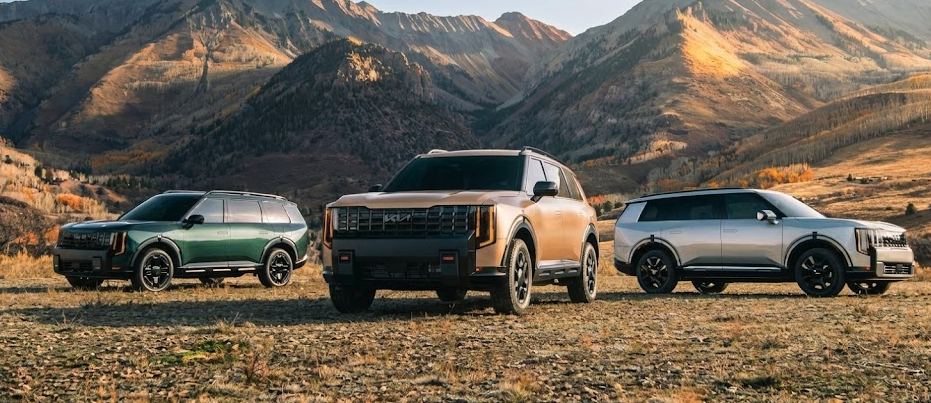
The 2027 Kia Telluride Hybrid is the first hybrid version of Kia’s three-row Telluride SUV, built for families who want strong performance, long driving range, three-row comfort, and better fuel economy in one package. Kia lists the Telluride Hybrid with a turbo-hybrid powertrain, 329 horsepower, EPA-estimated 35 MPG combined on the EX FWD trim, up to 637 miles of total driving range, 7-passenger seating, and a 10-year/100,000-mile Hybrid Powertrain Limited Warranty. At Kia of Daphne, we see the Telluride Hybrid as a strong fit for local families who want a more efficient three-row SUV for Daphne, Fairhope, Spanish Fort, Mobile, Gulf Shores, Orange Beach, and longer Gulf Coast trips.
The 2027 Telluride Hybrid deserves its own focused guide because this is not simply a regular Telluride discussion with a hybrid mention added on. The hybrid powertrain changes the ownership conversation in a real way. Families who drive long weekly routes, commute between the Eastern Shore and Mobile, travel often with kids or gear, or want fewer fuel stops on road trips now have a Telluride option built around efficiency and range.
This article stays hybrid-first. We are not covering rugged gas-only variants, competing three-row SUVs, or broad Telluride trim comparisons here. The goal is simple: help Daphne-area shoppers understand what the 2027 Kia Telluride Hybrid offers, how the turbo-hybrid system works, what the official numbers mean, what pricing looks like, and why this version may be the right fit for a family that wants three rows with better MPG.
For many local drivers, hybrid ownership is appealing because it does not require a home charger. The Telluride Hybrid is not a plug-in hybrid. It uses its gasoline engine, electric motors, hybrid battery, and regenerative braking to support efficiency automatically while you drive. That makes it easier for shoppers who want hybrid benefits without changing their daily refueling routine.
Quick Answer: The 2027 Kia Telluride Hybrid is a 7-passenger three-row SUV with a 2.5-liter turbo-hybrid system, a 1.65-kWh lithium-ion battery, electric motors, 329 horsepower, 339 pound-feet of torque, a 6-speed automatic transmission, available AWD, up to 4,500 pounds of towing when properly equipped, EPA-estimated 35 MPG combined on EX FWD, and up to 637 miles of total driving range.
Table of Contents
- Why the 2027 Telluride Hybrid Matters
- Turbo-Hybrid Powertrain, Horsepower, and Torque
- MPG, Range, and Daily Driving Efficiency
- Transmission, Available AWD, and Smooth Power Delivery
- Telluride Hybrid Towing Capacity
- 7-Passenger Cabin, Comfort, and Technology
- 2027 Telluride Hybrid Pricing and Planning
- Best Fit for Daphne-Area Families
- Hybrid Warranty, Service, and Ownership Notes
- 2027 Kia Telluride Hybrid FAQs
Why the 2027 Telluride Hybrid Matters
Key Takeaway: The 2027 Telluride Hybrid gives families a three-row Kia SUV with hybrid efficiency, strong combined output, long range, and everyday usability.
The Telluride Hybrid matters because many families want three-row space without accepting frequent fuel stops as part of the routine. A large family SUV is often asked to do everything: commute, school drop-off, grocery runs, weekend sports, beach trips, family road trips, and holiday travel. The hybrid version helps make that kind of use more efficient.
Kia lists the 2027 Telluride Hybrid with 7-passenger seating and a turbo-hybrid powertrain rated at 329 horsepower. That means the hybrid is not only about fuel economy. It is also designed to feel confident when carrying people and cargo. For families who want a smooth, quieter, more efficient three-row SUV, this version brings a compelling balance.
The biggest difference for local shoppers is the driving range. Kia lists up to 637 miles of total driving range on the Telluride Hybrid EX FWD. For drivers traveling between Daphne, Mobile, Pensacola, Gulf Shores, Orange Beach, and beyond, that kind of range can reduce how often you need to stop for fuel during busy family weeks or longer trips.
Because this page is focused on the Telluride Hybrid, we are keeping the conversation centered on hybrid benefits: fuel economy, range, turbo-hybrid power, available AWD, towing, technology, cabin comfort, warranty coverage, and buying considerations. That keeps the article useful for shoppers who already know they want to understand the hybrid version first.
| Hybrid Highlight | 2027 Kia Telluride Hybrid | Why It Matters for Families |
|---|---|---|
| Powertrain | 2.5L turbo-hybrid system | Pairs turbocharged gas power with electric motor assistance |
| Combined Output | 329 hp and 339 lb-ft | Strong response for a three-row family SUV |
| Fuel Economy Highlight | EPA-estimated 35 MPG combined on EX FWD | Helpful for commuters and long-distance family drivers |
| Total Driving Range | Up to 637 miles on EX FWD | Fewer fuel stops during busy weeks and road trips |
| Passenger Layout | 7-passenger seating | Three-row flexibility with a comfortable family-focused layout |
| Best For | Families wanting three rows plus hybrid efficiency | Daphne-area drivers balancing space, range, and MPG |
Based on Kia official 2027 Telluride Hybrid information and Kia Media specifications.
Turbo-Hybrid Powertrain, Horsepower, and Torque
Key Takeaway: The Telluride Hybrid combines a 2.5-liter turbocharged engine, electric motors, and a 1.65-kWh lithium-ion battery for 329 horsepower and 339 pound-feet of torque.
The heart of the 2027 Kia Telluride Hybrid is its turbo-hybrid powertrain. Kia Media states that the system combines a 2.5-liter turbo powertrain with a 1.65-kWh lithium-ion battery and electric motors. Combined output is rated at 329 horsepower and 339 pound-feet of torque.
That output gives the Telluride Hybrid the kind of confidence families expect from a three-row SUV. The electric motors help support smooth response, while the turbocharged engine provides strong highway power. For Daphne drivers merging onto I-10, passing slower traffic, or loading the vehicle with passengers and luggage, that added hybrid torque can make the SUV feel more relaxed and ready.
The hybrid setup also gives the Telluride a more modern driving personality. Instead of choosing between space and efficiency, families can now choose a Telluride that is built around both. That is the main reason this version deserves a hybrid-first look.
Drivers moving from a traditional gas SUV may notice that hybrid power feels different at lower speeds. Electric motor assistance can help smooth initial acceleration, especially in stop-and-go traffic. Around Mobile Bay, school lines, shopping areas, and busy local roads, that smoothness can make daily driving feel easier.
| Powertrain Detail | 2027 Telluride Hybrid | Why It Matters |
|---|---|---|
| Gas Engine | 2.5L turbocharged engine | Provides strong highway power and confident response |
| Hybrid Battery | 1.65-kWh lithium-ion battery | Supports the electric motor assistance system |
| Electric Motors | Part of the hybrid powertrain | Help support smooth low-speed response and efficiency |
| Horsepower | 329 hp combined | Strong output for a three-row hybrid SUV |
| Torque | 339 lb-ft combined | Useful for passing, merging, and carrying passengers |
| Ideal Use Case | Family SUV power with hybrid efficiency | Daily driving, road trips, and three-row family use |
MPG, Range, and Daily Driving Efficiency
Key Takeaway: The Telluride Hybrid reaches up to an EPA-estimated 35 MPG combined and up to 637 miles of total driving range on the EX FWD trim.
Fuel economy is the main reason many shoppers will start with the Telluride Hybrid. Kia lists the 2027 Telluride Hybrid at up to an EPA-estimated 35 MPG combined on the EX FWD trim. Kia also lists up to 637 miles of total driving range for that configuration. Actual mileage and range will vary based on trim, drivetrain, weather, speed, terrain, cargo, passengers, and driving habits.
For a family in Daphne, that efficiency can matter every week. A parent commuting to Mobile, a family driving between Fairhope and Spanish Fort, or a weekend traveler heading toward Gulf Shores or Pensacola may appreciate a three-row SUV that can go farther between fuel stops.
The Telluride Hybrid is also convenient because it does not require plug-in charging. There is no need to install a home charger or plan public charging stops. The hybrid system works automatically while you drive, using the engine, electric motors, battery, and regenerative braking to support efficiency.
That makes the Telluride Hybrid a practical transition for families who want to reduce fuel use but are not ready for full EV ownership. It keeps familiar gas-station refueling while adding hybrid efficiency in a large family SUV format.
| Efficiency Question | Telluride Hybrid Answer | Family Benefit |
|---|---|---|
| Best MPG highlight | EPA-estimated 35 MPG combined on EX FWD | Useful for long commutes and family road trips |
| Total driving range | Up to 637 miles on EX FWD | Fewer fuel stops during busy weeks |
| Charging needed? | No plug-in charging required | Easy for first-time hybrid shoppers |
| Best daily route | Mixed local and highway driving | Works well for Daphne, Mobile, and Eastern Shore routines |
| Range varies? | Yes, based on configuration and driving conditions | Ask our team about the exact vehicle you are considering |
| Best For | Three-row SUV shoppers who care about MPG | Families who want space and lower fuel use |
Based on Kia official Telluride Hybrid EPA-estimated rating and total range information.
Transmission, Available AWD, and Smooth Power Delivery
Key Takeaway: The Telluride Hybrid uses a 6-speed automatic transmission and offers available AWD for drivers who want extra traction confidence.
Kia Media states that the Telluride Hybrid routes power through a 6-speed automatic transmission and sends it to an available all-wheel-drive system. This is helpful for shoppers who prefer a geared transmission feel rather than the feel of some continuously variable hybrid systems.
The hybrid’s power delivery is designed to feel smooth and confident. Electric motor assistance can support low-speed response, while the turbocharged engine contributes stronger acceleration when more power is needed. That combination can be useful during everyday family driving, especially when the SUV is carrying passengers, school gear, luggage, or weekend supplies.
Available AWD may appeal to Gulf Coast drivers who spend time in heavy rain or on changing road surfaces. AWD does not replace careful driving, good tires, or safe speeds, but it can add confidence for drivers who want extra traction support during wet weather.
Kia Media also notes that the Telluride Hybrid is standard with Electrification Vehicle Motion Control, or e-VMC. The system is designed to help the driver achieve improved handling and stability by using braking and motor control. For families, the result is meant to be smooth, quiet, composed driving rather than a performance-only feel.
| Driving Feature | Telluride Hybrid Detail | Why It Matters |
|---|---|---|
| Transmission | 6-speed automatic | Provides a familiar geared transmission feel |
| AWD | Available all-wheel drive | Useful for shoppers who want extra traction confidence |
| Electric assist | Supports smooth low-speed response | Helpful in traffic and parking-lot driving |
| e-VMC | Uses braking and motor control to support handling and stability | Designed for composed hybrid driving |
| Local fit | Rain, traffic, highways, and family trips | Works well for Gulf Coast driving routines |
| Best For | Drivers who want hybrid smoothness without giving up SUV confidence | Families moving into a more efficient three-row SUV |
Telluride Hybrid Towing Capacity
Key Takeaway: The 2027 Telluride Hybrid can tow up to 4,500 pounds when properly equipped.
Hybrid efficiency does not mean the Telluride Hybrid gives up family utility. Kia Media lists the Turbo-Hybrid with up to 4,500 pounds of towing capacity when properly equipped. That gives shoppers useful capability for lighter towing needs while keeping the focus on hybrid efficiency.
For local families, that may support items such as small utility trailers, light recreational equipment, or properly matched weekend gear. Towing always requires the correct equipment, proper loading, attention to weight ratings, and careful driving. Drivers should review the owner’s manual and confirm the exact vehicle configuration before towing.
If towing is part of your plan, our team can help you discuss hitch equipment, accessories, payload, tire condition, service readiness, and driving expectations. The key is to match the trailer to the vehicle instead of assuming that one number tells the whole story.
The Telluride Hybrid is best viewed as a family-first three-row SUV with meaningful towing ability. It is not trying to be a heavy-duty tow vehicle. It is built for families who want hybrid efficiency, three rows, long range, and enough utility for real-life weekend needs.
7-Passenger Cabin, Comfort, and Technology
Key Takeaway: The Telluride Hybrid is listed with spacious 7-passenger seating and modern technology designed for family travel.
Kia’s official Telluride Hybrid page describes the SUV as a spacious 7-passenger hybrid. That layout is important for families that want three-row flexibility without moving into a minivan-style vehicle. The 7-passenger configuration can make second-row access easier and help the cabin feel more open for passengers.
Kia highlights comfort and convenience features such as available heated and ventilated first- and second-row seats, an available 12-inch Head-Up Display, an available Full Display Mirror, ambient interior lighting, available wireless smartphone convenience, and Kia Connect features depending on trim and equipment. Feature availability can vary, so shoppers should confirm the exact vehicle before purchase.
For local families, technology matters because the SUV is often used as a daily command center. Navigation, phone connection, charging, driver-assistance displays, passenger comfort, and cargo access all affect how the vehicle feels during the week. The Telluride Hybrid adds those family-friendly details to the hybrid efficiency story.
Kia also notes Stay Mode for the Telluride Hybrid. This feature can use the hybrid battery pack to operate climate control, cabin lighting, stereo, and other vehicle systems for up to an hour or until the hybrid battery drains to about 20 percent. That kind of feature can be useful when parked safely and waiting with passengers.
| Cabin Priority | Telluride Hybrid Benefit | Why Families Care |
|---|---|---|
| Passenger space | 7-passenger seating | Three-row flexibility for family routines |
| Road-trip comfort | Available heated and ventilated seating features | Comfort during hot Gulf Coast weather and long drives |
| Driver information | Available Head-Up Display and digital features | Keeps key information easier to see |
| Visibility support | Available Full Display Mirror | Helpful when passengers or cargo affect rear visibility |
| Parked comfort | Stay Mode | Can operate select cabin systems using hybrid battery power |
| Best For | Families wanting comfort plus hybrid efficiency | Daily use, road trips, and school-week routines |
2027 Telluride Hybrid Pricing and Planning
Key Takeaway: Kia Media lists 2027 Telluride Hybrid pricing from $46,490 MSRP for EX FWD to $57,590 MSRP for X-Line SX-Prestige AWD, with a $1,545 destination charge listed separately.
Kia Media lists the 2027 Telluride Hybrid lineup starting at $46,490 MSRP for the EX FWD. Other listed hybrid configurations include SX FWD at $51,490, EX AWD at $48,490, X-Line SX AWD at $54,490, SX-Prestige AWD at $56,590, and X-Line SX-Prestige AWD at $57,590. Kia Media also lists a destination charge of $1,545.
Actual pricing can vary based on destination, taxes, title, license, accessories, options, dealer-installed equipment, market conditions, availability, and local offers. Kia Media also states that dealers are free to establish their own selling prices, so shoppers should request current numbers on the exact vehicle they are considering.
For many families, the best way to plan is to compare the hybrid’s monthly payment with expected fuel savings, trade value, down payment, loan term, and annual mileage. A family that drives many miles each week may value the hybrid MPG and range more than a family that drives only short local trips.
Our finance team can help you prepare before visiting the showroom. You can apply online, estimate payment, value your trade, and request current Telluride Hybrid availability or incoming allocation updates.
| Hybrid Configuration | Kia Media MSRP | Planning Note |
|---|---|---|
| Telluride HEV EX FWD | $46,490 | Hybrid entry point listed by Kia Media |
| Telluride HEV EX AWD | $48,490 | Entry hybrid configuration with AWD |
| Telluride HEV SX FWD | $51,490 | Higher-feature hybrid configuration |
| Telluride HEV X-Line SX AWD | $54,490 | Hybrid configuration with AWD and X-Line styling |
| Telluride HEV SX-Prestige AWD | $56,590 | Premium hybrid configuration |
| Telluride HEV X-Line SX-Prestige AWD | $57,590 | Highest listed hybrid MSRP before destination and applicable charges |
Based on Kia Media 2027 Telluride Hybrid pricing. Destination charge listed separately at $1,545.
Best Fit for Daphne-Area Families
Key Takeaway: The Telluride Hybrid is a strong fit for families who need three rows, drive often, and want fewer fuel stops without switching to plug-in charging.
The Telluride Hybrid fits a specific type of family shopper. It makes sense if you want three rows, a comfortable cabin, strong combined output, long range, and a hybrid system that works automatically. It is especially appealing if your family drives enough miles for fuel economy to matter.
A Daphne family commuting to Mobile may appreciate the smoother hybrid response and lower fuel use. A Fairhope household that regularly travels for school, sports, or weekend trips may appreciate the driving range. A Gulf Shores or Orange Beach family may value the combination of room, comfort, and efficiency during seasonal traffic or longer highway drives.
The Telluride Hybrid also makes sense for shoppers who are curious about electrified driving but do not want to install a charger. You still refuel with gasoline, but the hybrid system supports efficiency in the background. That makes the ownership experience familiar while still offering a meaningful MPG improvement.
Our recommendation is to start with your weekly use case. How many passengers do you carry? How far do you drive? Do you take long road trips? Do you want AWD? How important is fuel economy compared with maximum features? Those answers will tell us whether the Telluride Hybrid is the right first vehicle to test drive.
| Local Driver Profile | Why Telluride Hybrid Fits | What to Discuss With Our Team |
|---|---|---|
| Daphne commuter family | Three rows plus better MPG for weekly driving | Expected mileage, MPG goals, payment range |
| Fairhope road-trip family | Up to 637 miles of total driving range | Range, cabin comfort, seating needs |
| Spanish Fort to Mobile driver | Smooth hybrid response and available AWD | Traffic patterns, drivetrain preference |
| Gulf Coast weekend traveler | Family space, fuel economy, and long-distance comfort | Cargo needs, passengers, towing plans |
| First-time hybrid shopper | No plug-in charging required | How hybrid driving works and what to expect |
| Best Overall Fit | Family wants three rows and hybrid efficiency | 2027 Kia Telluride Hybrid |
Hybrid Warranty, Service, and Ownership Notes
Key Takeaway: Kia lists a 10-year/100,000-mile Hybrid Powertrain Limited Warranty for the Telluride Hybrid, and regular service remains important for long-term performance.
Kia’s official Telluride Hybrid page lists a 10-year/100,000-mile Hybrid Powertrain Limited Warranty. Warranty terms, limitations, exclusions, and transfer rules should be reviewed carefully, but the coverage is a major part of the ownership conversation for families considering their first hybrid SUV.
Hybrid ownership still requires routine maintenance. The gasoline engine, tires, brakes, fluids, filters, cooling systems, software systems, and electrical components all need proper care. The difference is that the hybrid system adds electric assistance and battery-related components that should be serviced according to Kia guidance.
For Daphne-area families, we recommend staying current on scheduled service, tire rotations, brake inspections, fluid checks, cabin filter replacement, and any hybrid system warnings. A well-maintained hybrid SUV is more likely to deliver the smoothness, efficiency, and reliability shoppers expect.
If you are planning to trade into a Telluride Hybrid, we can also help you value your current vehicle and prepare your financing. Getting those steps handled early makes it easier to move quickly when the right hybrid configuration is available.
2027 Kia Telluride Hybrid FAQs
Is the 2027 Kia Telluride Hybrid available as a plug-in hybrid?
No. The 2027 Kia Telluride Hybrid is a traditional hybrid, not a plug-in hybrid. It does not need to be charged from an outlet. The hybrid system works automatically while you drive.
How much horsepower does the 2027 Telluride Hybrid have?
Kia lists the 2027 Telluride Hybrid with 329 horsepower from its turbo-hybrid powertrain.
How much torque does the 2027 Telluride Hybrid have?
Kia Media lists the 2027 Telluride Hybrid at 339 pound-feet of combined torque.
What is the MPG of the 2027 Kia Telluride Hybrid?
Kia lists the Telluride Hybrid EX FWD at up to an EPA-estimated 35 MPG combined. MPG can vary by trim, drivetrain, road conditions, weather, and driving habits.
How far can the Telluride Hybrid drive on a full tank?
Kia lists up to 637 miles of total driving range for the Telluride Hybrid EX FWD. Other configurations may have different range estimates.
How many passengers does the Telluride Hybrid seat?
Kia describes the 2027 Telluride Hybrid as a spacious 7-passenger SUV.
What transmission does the Telluride Hybrid use?
Kia Media states that the Telluride Hybrid uses a 6-speed automatic transmission.
Is AWD available on the 2027 Telluride Hybrid?
Yes. Kia Media lists available all-wheel drive for the Telluride Hybrid.
How much can the 2027 Telluride Hybrid tow?
Kia Media lists the Telluride Hybrid with up to 4,500 pounds of towing capacity when properly equipped. Always confirm equipment, loading, and owner’s manual guidance before towing.
How much does the 2027 Telluride Hybrid cost?
Kia Media lists 2027 Telluride Hybrid pricing from $46,490 MSRP for the EX FWD to $57,590 MSRP for the X-Line SX-Prestige AWD, with a $1,545 destination charge listed separately. Local pricing, taxes, title, license, options, dealer-installed equipment, availability, and offers can vary.
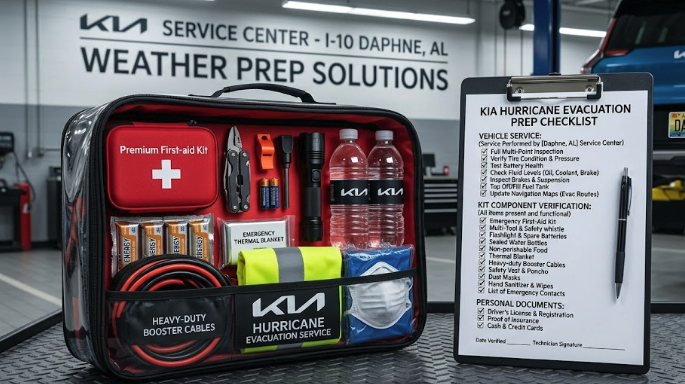
Hurricane evacuation readiness service helps confirm that your Kia is prepared for the specific stress of leaving the Gulf Coast during a storm threat. This is not a generic maintenance checklist. A pre-evacuation inspection focuses on the systems that matter most when traffic is slow, rain is heavy, visibility is poor, fuel stops are crowded, and your family may spend hours on the road. At Kia of Daphne, our service team can inspect battery health, tires, brakes, fluids, belts, hoses, lights, wipers, A/C performance, emergency readiness, and warning concerns before storm conditions make scheduling harder.
Heavy rainfall, tropical wind gusts, sudden flood warnings, and changing evacuation guidance are part of life along the Gulf Coast. When a hurricane or tropical storm threatens Baldwin County, a normal drive can become a long, slow-moving evacuation route. Your vehicle may idle for extended periods, run the air conditioning for hours, carry extra passengers and supplies, and operate in heavy rain while road conditions change quickly.
That is why the right service conversation before hurricane season is not just “is my car due for maintenance?” The better question is “is my vehicle ready to carry my family through a possible evacuation?” That focus changes what matters most. Battery reserve, tire tread, brake response, coolant condition, windshield visibility, exterior lights, spare tire condition, and warning lights all become evacuation-readiness items.
Ready.gov recommends learning evacuation routes, following instructions from local emergency managers, taking an emergency supply kit, and keeping a portable emergency kit in the car. NHTSA also recommends checking road conditions, local stations, road closures, and evacuation routes before heading out in severe weather. Our role at Kia of Daphne is to help make sure the vehicle itself is ready before your family ever needs to make that decision.
Quick Answer: Schedule hurricane evacuation readiness service if your Kia has an older battery, worn tires, brake concerns, weak wipers, overdue fluids, warning lights, cooling system concerns, A/C problems, or any symptom that could become serious during a long evacuation. The inspection should focus on evacuation-specific reliability, visibility, stopping power, wet-road traction, heat management, and emergency preparedness.
Table of Contents
- Why Hurricane Evacuation Readiness Is Different
- Battery and Electrical Readiness Before a Storm
- Tires, Tread, Spare Tire, and Wet Evacuation Roads
- Brakes for Stop-and-Go Evacuation Traffic
- Fluids, Cooling System, Belts, and Hoses
- Visibility, Wipers, Headlights, and Hazard Lights
- Flooded Roads and Why You Should Turn Around
- Vehicle Emergency Supplies for Evacuation
- When to Schedule Pre-Hurricane Service
- Hurricane Evacuation Service FAQs
Why Hurricane Evacuation Readiness Is Different
Key Takeaway: A hurricane evacuation readiness inspection prioritizes the systems that can affect safety, visibility, reliability, and comfort during a long, slow, wet evacuation drive.
A regular service checklist looks at routine maintenance. A hurricane evacuation readiness visit is more targeted. The goal is to identify anything that could make your vehicle less dependable when roads are crowded, rain is heavy, fuel stations are busy, and the drive takes longer than expected.
During an evacuation, your Kia may face conditions that are harder than a typical commute. Long idling can increase heat load on the cooling system. Repeated braking can reveal worn brake components. Heavy rain can expose weak wiper blades, poor tire tread, or headlight issues. Extra passengers and supplies can add weight. Phone charging, headlights, wipers, A/C, infotainment, and safety systems can all add electrical demand.
That is why we anchor this article to hurricane evacuation readiness instead of a general summer checklist. Oil changes, tire service, batteries, brakes, and fluids are all common maintenance topics, but here they matter because they directly affect whether your vehicle is ready to leave the coast safely if local officials issue evacuation guidance.
Our service team recommends thinking about readiness in three layers: can the vehicle start and stay running, can it stop and steer safely in heavy rain, and can your passengers remain safe and comfortable if the trip takes hours longer than planned?
| Evacuation Concern | Why It Matters During a Storm | Service Focus |
|---|---|---|
| Long idle time | Traffic may move slowly for hours | Battery, charging system, cooling system, A/C performance |
| Heavy rain | Visibility and traction can change quickly | Wipers, headlights, tires, tread depth, brake response |
| Extra cargo | Emergency supplies and passengers add load | Tire pressure, spare tire, brakes, suspension warning signs |
| Route changes | Drivers may face detours, closures, or delays | Fuel planning, warning lights, fluid condition, emergency kit |
| Flood risk | Road depth and roadbed condition may be unknown | Do not drive through flooded roads; follow local guidance |
| Best next step | Prepare before warnings create appointment demand | Schedule a pre-storm evacuation readiness inspection |
Battery and Electrical Readiness Before a Storm
Key Takeaway: A weak battery can become a serious evacuation problem because storm driving increases electrical demand from lights, wipers, A/C, phone charging, and safety systems.
Battery health matters before a hurricane because your vehicle may need to operate under a heavier electrical load than usual. During evacuation traffic, your Kia may run headlights, hazard lights, brake lights, windshield wipers, A/C, defogging, phone chargers, USB ports, navigation, and driver-assistance systems for long stretches.
Heat can also weaken automotive batteries over time. A battery that starts the vehicle on a normal morning may still struggle during an evacuation, especially if it is older, corroded, or already showing slow-start symptoms. That is why a pre-storm battery check should include more than a quick glance under the hood.
Our team can test battery condition, inspect terminals, check for corrosion, verify hold-down security, and look for charging system concerns. If your battery is near the end of its service life, replacing it before storm season is often far less stressful than dealing with a no-start condition when roads are crowded and weather is deteriorating.
Drivers should also consider the small electrical items that help during evacuation. Phone charging, battery-powered lights, and navigation access matter when routes change. Keeping the vehicle’s 12-volt system healthy helps protect those basics.
| Battery Readiness Item | Why It Matters for Evacuation | What We Check |
|---|---|---|
| Battery age and strength | Older batteries are more vulnerable under heat and electrical load | Battery test and service history review |
| Terminal condition | Corrosion can interfere with starting and charging | Terminal inspection and cleaning recommendation if needed |
| Charging system | The vehicle must keep the battery supported during long drives | Charging output and warning light review |
| Accessories | Phones, lights, and chargers may be used for hours | 12-volt and USB function check when needed |
| No-start warning signs | Slow cranking can become failure under stress | Diagnostic check before evacuation demand |
| Best next step | Test before storm season peaks | Schedule battery inspection if starts feel weak |
Tires, Tread, Spare Tire, and Wet Evacuation Roads
Key Takeaway: Tires are evacuation-critical because tread depth, pressure, and spare tire readiness affect wet-road traction, stopping distance, and roadside options.
Tires are the only contact point between your Kia and the road, so they deserve special attention before hurricane season. During an evacuation, road surfaces may be wet for long periods, debris may be present, and drivers may need to brake or steer around sudden hazards. Worn or underinflated tires reduce your margin of safety.
A tire inspection should include tread depth, uneven wear, visible damage, age concerns, sidewall condition, valve stems, and cold tire pressure. The recommended tire pressure is listed on the Tire and Loading Information Label, usually on the driver-side door jamb. That recommendation matters more than the maximum pressure printed on the tire sidewall.
The spare tire or tire mobility kit also matters. A spare with low pressure may not help when you need it most. If your Kia uses a tire mobility kit instead of a spare, check that the kit is present, accessible, and not expired. If you are unsure what your vehicle has, our team can help you check.
For evacuation planning, tire condition is not only about blowout prevention. It is also about steering control, wet braking, and confidence when rain reduces visibility. If your tires are already near replacement depth before hurricane season, do not wait until a named storm is approaching to make a decision.
| Tire Readiness Item | Why It Matters During Evacuation | Service Action |
|---|---|---|
| Tread depth | Helps channel water away from the tire contact patch | Measure tread and inspect wear bars |
| Cold tire pressure | Supports load, handling, and tire temperature control | Set pressure to vehicle label specification |
| Uneven wear | Can point to alignment or suspension concerns | Inspect wear pattern and recommend correction if needed |
| Sidewall damage | Cracks, cuts, or bulges can become dangerous under load | Inspect for visible tire damage |
| Spare tire or mobility kit | Gives you a roadside option during delays | Check pressure, condition, location, and kit expiration |
| Best next step | Correct tire concerns before a storm threat | Schedule tire inspection or replacement early |
Brakes for Stop-and-Go Evacuation Traffic
Key Takeaway: Evacuation traffic can mean hours of repeated braking, so brake pads, rotors, fluid condition, pedal feel, and warning lights should be checked before storm season.
Brakes are important every day, but evacuation traffic changes the way they are used. Slow-moving highway traffic, sudden stops, wet pavement, loaded cargo areas, and long routes can all increase brake demand. If your brakes already squeak, grind, pulse, feel soft, or trigger warning lights, those symptoms should be checked before a storm threat.
Brake readiness should include pad thickness, rotor condition, fluid level, hydraulic line inspection, pedal feel, warning lights, and any ABS or stability-control concerns. The goal is not only to make the vehicle stop, but to make sure braking feels predictable when weather and traffic are already stressful.
Brake fluid also deserves attention. If the brake fluid level is low, there may be pad wear or a leak concern. If the pedal feels soft or spongy, the vehicle should be inspected before a long evacuation drive. Brake issues do not become less important because traffic is moving slowly. Stop-and-go conditions can make them more noticeable.
Our technicians can inspect your Kia’s braking system and explain whether the vehicle is ready for wet evacuation driving or needs service before hurricane season peaks.
| Brake Symptom or Check | Evacuation Concern | Recommended Action |
|---|---|---|
| Squealing or grinding | Possible worn brake pads or rotor concern | Schedule brake inspection |
| Soft pedal | Possible hydraulic or fluid concern | Do not delay diagnosis |
| Steering wheel shake when braking | Possible rotor or tire-related issue | Inspect before long-distance evacuation |
| Brake warning light | System may require immediate attention | Schedule diagnostic service |
| Heavy cargo load | More weight can affect stopping distance | Check brakes before evacuation travel |
| Best next step | Confirm predictable stopping power | Complete brake inspection before storm season |
Fluids, Cooling System, Belts, and Hoses
Key Takeaway: Evacuation traffic can stress the cooling system because long idle time and slow speeds reduce natural airflow through the radiator.
During a coastal evacuation, engines may run for hours while traffic moves slowly. That can place extra stress on the cooling system because the vehicle is not getting as much natural airflow as it would at steady highway speed. Coolant level, coolant condition, radiator airflow, hoses, belts, and fans all matter.
Our pre-hurricane service focus includes checking engine oil level, coolant level, brake fluid, windshield washer fluid, visible leaks, belts, hoses, and warning lights. The exact inspection depends on your Kia’s model, mileage, service history, and current symptoms.
Coolant concerns are especially important. Low coolant, leaks, worn hoses, or cooling fan issues can lead to overheating, and overheating during evacuation traffic is one of the last problems any family wants to face. If you have noticed temperature gauge movement, coolant smell, visible leaks, or warning lights, schedule service before a storm threat becomes urgent.
Windshield washer fluid also matters because tropical rain can leave road spray, salt residue, debris, and grime on the windshield. A full reservoir and working washer system can help preserve visibility when road conditions are already difficult.
| Fluid or Component | Why It Matters for Evacuation | Inspection Focus |
|---|---|---|
| Engine coolant | Supports temperature control during long idle periods | Level, condition, leaks, hoses, fan operation concerns |
| Engine oil | Protects engine during extended driving | Level, condition, service interval |
| Brake fluid | Supports reliable braking response | Level and visible concerns |
| Washer fluid | Helps maintain visibility in road spray and rain | Reservoir level and spray operation |
| Belts and hoses | Cracks or leaks can become breakdowns under heat | Visual inspection for wear, leaks, softness, cracking |
| Best next step | Resolve visible leaks or overdue service before storm season | Schedule a pre-evacuation inspection |
Visibility, Wipers, Headlights, and Hazard Lights
Key Takeaway: During hurricane evacuation, visibility systems matter because heavy rain, spray, wind, and road debris can quickly make driving harder.
Visibility is one of the most important parts of hurricane evacuation readiness. Your vehicle needs to help you see the road, and it also needs to help other drivers see you. Wiper blades, washer spray, headlights, brake lights, turn signals, reverse lights, and hazard lights should all be checked before storm season.
Wiper blades should be replaced if they streak, chatter, skip, smear, split, or leave large areas of water behind. Heavy rain can turn weak wipers into a major safety problem. If your wipers are already marginal in a normal storm, they are not ready for tropical weather.
Headlights and taillights matter because evacuation traffic can include rain, low light, early morning departures, nighttime driving, and sudden stops. Hazard lights may also be needed if your vehicle becomes disabled or if traffic slows unexpectedly. Before hurricane season, it is worth confirming that every exterior light works properly.
Fogging also belongs in this conversation. If your windshield fogs repeatedly in humid weather and defrost does not clear it properly, the A/C system may not be dehumidifying the cabin as expected. That is a climate-control concern that should be checked before a long evacuation drive.
| Visibility Item | Storm-Readiness Concern | What to Check |
|---|---|---|
| Wiper blades | Heavy rain can overwhelm worn blades | Streaking, skipping, chatter, torn rubber |
| Washer system | Road spray can coat the windshield | Fluid level and spray pattern |
| Headlights | Rain and low light reduce visibility | Low beam, high beam, lens condition |
| Brake lights and turn signals | Other drivers need to see your intentions | All exterior lights and signals |
| Hazard lights | Useful if stopped or disabled | Confirm hazard operation |
| Defrost and A/C | Cabin fogging can affect forward visibility | Check defrost, airflow, and A/C dehumidification |
Flooded Roads and Why You Should Turn Around
Key Takeaway: If you encounter flooded roads during evacuation, turn around. Vehicle service readiness does not make it safe to drive through floodwater.
No inspection, tire, battery, or drivetrain feature makes it safe to drive through flooded roads. The National Weather Service warns drivers never to drive around barricades blocking a flooded road because the road may have collapsed under the water. NWS also states that it is never safe to drive or walk into flood waters.
Flooded roads are dangerous because depth is difficult to judge, water can move faster than it appears, and roadbeds can wash out. Even if your vehicle feels stable at first, water can reduce traction, hide debris, damage electrical systems, and enter the engine intake. A stalled vehicle in rising water can become life-threatening quickly.
For evacuation planning, the best flood strategy is route awareness. Follow local emergency management guidance, listen for road closure updates, use official information sources, and never move barricades or drive around them. If the road is flooded, turn around and choose a safer route.
Our service team can help prepare your Kia for storm-season driving, but we will always give the same safety advice: a ready vehicle is not a flood vehicle. Avoid flooded roads and follow official evacuation instructions.
Vehicle Emergency Supplies for Evacuation
Key Takeaway: A vehicle emergency kit supports your evacuation plan if traffic stalls, routes change, or your family faces a long delay.
Ready.gov recommends keeping a portable emergency kit in the car for evacuation planning. The kit should be easy to reach, packed in a durable container, and updated before hurricane season. Think of it as support for your family if the trip takes longer than expected.
Your vehicle kit should not replace your household hurricane kit, but it should include the items most useful on the road. Focus on communication, visibility, basic safety, hydration, and comfort. Keep the kit secured so it does not move around the cabin during sudden stops.
For families, evacuation supplies may also include medications, pet needs, child supplies, chargers, documents, and printed route information. Do not rely only on a phone if power or cellular service becomes unreliable. Physical notes, paper maps, and a charged battery bank can help.
Also plan how the vehicle will be loaded. Keep emergency items accessible rather than buried under luggage. Leave room for passengers to sit safely with seatbelts properly fastened. Cargo should be secured so it does not become a hazard during sudden braking.
| Emergency Kit Area | Suggested Vehicle Items | Why It Matters During Evacuation |
|---|---|---|
| Communication | Phone chargers, power bank, written contacts | Keeps family reachable if plans change |
| Visibility | Flashlight, extra batteries, reflective triangles | Helps if stopped in low visibility |
| Basic safety | First-aid kit, gloves, rain ponchos | Supports minor roadside needs |
| Navigation | Paper map, written evacuation route, shelter information | Provides backup if cell service is unreliable |
| Comfort | Water, snacks, medications, child or pet supplies | Helps during long traffic delays |
| Vehicle support | Tire pressure gauge, portable inflator, jump starter if available | Adds practical roadside preparedness |
Based on Ready.gov car and evacuation preparedness guidance.
When to Schedule Pre-Hurricane Service
Key Takeaway: Schedule pre-hurricane service before a storm is named or evacuation traffic begins, because appointment demand and parts demand can rise quickly.
The best time to prepare your vehicle is before there is an active evacuation order. Once a storm enters the Gulf, local drivers may rush to schedule batteries, tires, brakes, wipers, fluid services, and repairs. Waiting can make appointment times harder to find and can reduce the time available for parts or follow-up repairs.
We recommend scheduling an evacuation-readiness inspection before peak hurricane season if your vehicle is due for service, if you have warning lights, if the battery is older, if tires are near replacement, if brakes make noise, if wipers streak, if the A/C struggles, or if you have not had the vehicle checked recently.
When you schedule, tell our service team that your goal is hurricane evacuation readiness. That helps us focus the visit on reliability, wet-road traction, stopping power, visibility, heat management, and emergency readiness rather than treating the visit as a generic service appointment.
At Kia of Daphne, we want local drivers to have a clear plan before the weather turns stressful. A service visit cannot control the storm, the route, or traffic, but it can reduce the risk of a preventable vehicle issue during the trip.
Hurricane Evacuation Service FAQs
What is hurricane evacuation readiness service?
Hurricane evacuation readiness service is a pre-storm vehicle inspection focused on reliability, visibility, wet-road traction, braking, heat management, and emergency preparedness. It is designed around the conditions your Kia may face during a coastal evacuation.
How is this different from a regular service checklist?
A regular service checklist looks at routine maintenance. An evacuation-readiness inspection focuses on what could affect your ability to leave safely during heavy rain, long traffic delays, road closures, and storm-related uncertainty.
When should I schedule pre-hurricane vehicle service?
Schedule before a storm is named or evacuation guidance is issued. Appointment demand can rise quickly once a storm threatens the Gulf Coast, and early service gives you more time to handle batteries, tires, brakes, wipers, fluids, or repairs.
What should be checked before a hurricane evacuation?
Key areas include battery health, charging system condition, tire tread and pressure, spare tire or mobility kit, brake condition, coolant level, engine oil, washer fluid, belts, hoses, wipers, headlights, brake lights, turn signals, hazard lights, A/C performance, and warning lights.
Should I replace my battery before hurricane season?
If your battery is older, slow to start, corroded, or fails a battery test, replacement before hurricane season may be the safer choice. Evacuation traffic can increase electrical demand from A/C, wipers, lights, phone chargers, and safety systems.
Why are tires so important during evacuation?
Tires affect wet-road traction, braking, steering response, and load support. Before evacuation season, check tread depth, cold tire pressure, uneven wear, damage, and spare tire condition or tire mobility kit status.
Is it safe to drive through standing water during evacuation?
No. The National Weather Service advises drivers not to drive into flooded roadways or around barricades. Floodwater can hide washed-out roads, reduce traction, damage the vehicle, and create life-threatening conditions.
What should I keep in my vehicle for evacuation?
Ready.gov recommends having a portable emergency kit in the car. Useful items include phone chargers, a power bank, flashlight, first-aid kit, water, snacks, medications, pet or child supplies, paper maps, written contacts, rain gear, and visibility items such as reflective triangles.
Should I get my A/C checked before evacuating?
Yes, especially if cooling is weak, airflow is low, the cabin fogs, or the system smells musty. A/C is important during evacuation because long traffic delays in humid weather can make cabin comfort and windshield clarity more difficult.
Can Kia of Daphne help me prepare before a storm?
Yes. Kia of Daphne can inspect key evacuation-readiness items, explain any concerns, and help you prioritize service before hurricane season becomes urgent.
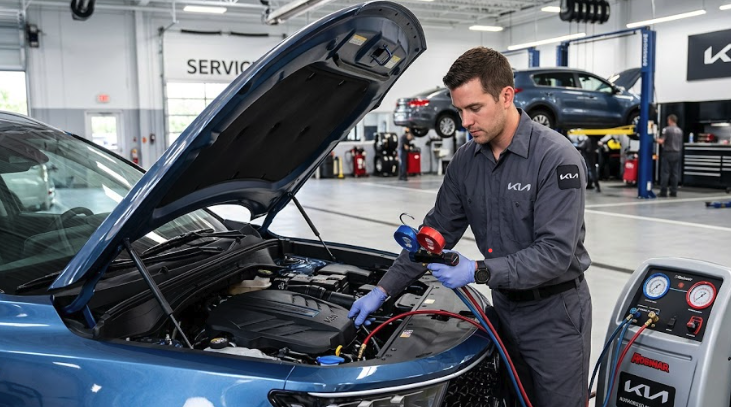
Kia A/C diagnostics and service help identify why your climate system is blowing warm air, producing weak airflow, creating musty odors, fogging the glass, cycling irregularly, or failing to cool the cabin during humid Gulf Coast weather. At Kia of Daphne, our service team focuses on the full A/C system, including vent temperature, airflow, cabin filter condition, refrigerant level, refrigerant type, system pressure, compressor operation, condenser condition, leak points, drain flow, sensors, controls, and electrical operation. If your cabin no longer feels cool, dry, and comfortable, the best next step is a focused A/C inspection rather than a general summer checklist.
Summer humidity around Daphne, Fairhope, Spanish Fort, Mobile, Foley, Gulf Shores, Orange Beach, Robertsdale, Loxley, Bay Minette, and Pensacola places real demand on your vehicle’s air conditioning system. The system is not only cooling air. It is also helping remove moisture from the cabin, support windshield clarity, and keep interior comfort stable while outside temperatures and humidity rise.
That is why A/C symptoms should not be ignored. Warm air, intermittent cooling, a musty smell, poor defogging, water inside the cabin, loud blower noise, or sudden airflow loss can all point to different causes. Some problems are simple, such as a dirty cabin air filter. Others require specialized equipment, such as refrigerant recovery, evacuation, leak detection, and precise recharge by weight.
This article stays focused on A/C diagnostics and service. We are not turning this into a broad summer maintenance list. Tires, batteries, oil changes, and wipers matter for vehicle care, but this guide is written specifically for drivers trying to understand climate control issues, cooling performance, refrigerant service, cabin airflow, and when to schedule A/C service at Kia of Daphne.
Quick Answer: Schedule Kia A/C diagnostics when the system blows warm air, cools only sometimes, has weak airflow, smells musty, makes unusual noises, fogs the glass, leaks water into the cabin, or stops cooling during humid weather. A proper A/C inspection checks airflow, vent temperature, cabin filter condition, refrigerant charge, system pressure, leak points, compressor operation, condenser condition, drain flow, and climate control operation.
Table of Contents
- Why Gulf Coast Humidity Makes A/C Diagnostics Important
- What a Kia A/C Diagnostic Service Checks
- Why Your Kia A/C May Blow Warm Air
- Weak Airflow, Cabin Filters, and Vent Performance
- Refrigerant Type, System Pressure, and Leak Testing
- Musty Vents, Evaporator Moisture, and Drain Concerns
- Foggy Glass, Defrost, and Cabin Humidity Symptoms
- Hybrid and EV A/C Diagnostic Notes
- When to Schedule A/C Service at Kia of Daphne
- Kia A/C Service FAQs
Why Gulf Coast Humidity Makes A/C Diagnostics Important
Key Takeaway: In Daphne-area humidity, your A/C system has to cool the cabin and remove moisture, so small problems can become noticeable quickly.
Heavy, moisture-laden air is part of summer driving near the bay. When the outdoor air feels thick and damp, your vehicle’s climate control system becomes the main barrier between a comfortable drive and a sticky, foggy cabin. A healthy A/C system helps cool the air, reduce cabin humidity, and keep the windshield clearer during hot, wet weather.
When the system is not working correctly, the symptoms can feel different from a simple “not cold enough” complaint. You might notice that the air starts cold and turns warm, the windshield fogs even with defrost selected, the cabin smells musty after the A/C starts, or the blower sounds loud while airflow still feels weak. Those symptoms point to different possible causes, which is why a diagnostic check matters.
Gulf Coast driving also gives the system fewer easy days. Short trips, stop-and-go traffic, high humidity, frequent rain, and long periods of A/C use can all make small weaknesses more obvious. A system that felt acceptable in spring may feel overwhelmed by July or August.
Our team approaches A/C service by looking at the symptom first, then testing the system that produces that symptom. Warm air may involve refrigerant charge, compressor operation, blend door function, condenser airflow, or an electrical issue. Weak airflow may involve the cabin air filter, blower motor, evaporator icing, or vent control. Musty vents may involve evaporator moisture or drain concerns. A focused diagnostic path helps avoid guessing.
| A/C Symptom | Possible A/C-Related Cause | Diagnostic Focus |
|---|---|---|
| Warm air from vents | Low refrigerant, compressor issue, system pressure concern, condenser restriction, control issue | Vent temperature, pressure readings, leak check, compressor command |
| Cold air at first, then warm | Evaporator icing, low charge, airflow restriction, sensor or control concern | Airflow, cabin filter, evaporator behavior, refrigerant charge |
| Weak airflow | Dirty cabin filter, blower concern, restricted evaporator, vent door issue | Cabin filter inspection, blower speed, air distribution |
| Musty odor | Moisture on evaporator, dirty filter, drain concern, microbial growth | Filter condition, evaporator area, drain flow, odor treatment need |
| Foggy windshield | Humidity control issue, A/C not dehumidifying, recirculation or defrost concern | Defrost function, A/C operation, humidity removal, air intake mode |
| Best next step | Focused A/C inspection | Diagnose the system before replacing parts |
What a Kia A/C Diagnostic Service Checks
Key Takeaway: A proper A/C diagnostic service checks performance, airflow, refrigerant condition, leak points, controls, electrical operation, and cabin comfort symptoms.
A/C diagnosis should be more precise than adding refrigerant and hoping for the best. If a system is low, there may be a leak. If airflow is weak, the problem may not be refrigerant at all. If the cabin smells musty, the concern may involve moisture and filtration. If the windshield keeps fogging, the system may not be removing humidity properly.
At Kia of Daphne, our A/C service process begins with your symptom. We want to know when the problem happens, how long it lasts, whether it changes with fan speed, whether it happens at idle or highway speed, and whether there are odors, noises, or fogging concerns. Those details help our technicians choose the right diagnostic path.
From there, the inspection can include vent temperature testing, blower operation checks, cabin air filter inspection, visual inspection of A/C lines and condenser, pressure testing, refrigerant recovery and recharge when needed, leak detection, drain inspection, electrical testing, and climate control function checks. The exact process depends on the symptom and the vehicle.
Kia owner information notes that low refrigerant reduces A/C performance and that overfilling also has a negative effect on the system. That is why refrigerant service needs to be measured and performed with proper equipment rather than treated as a quick top-off.
| Diagnostic Area | What We Check | Why It Matters |
|---|---|---|
| Customer symptom | Warm air, weak airflow, odor, fogging, noise, intermittent cooling | Guides the diagnostic process |
| Vent temperature | Temperature output at selected vents | Confirms actual cooling performance |
| Airflow | Fan speed, vent output, filter restriction, distribution modes | Separates airflow problems from refrigerant problems |
| Refrigerant system | Correct refrigerant type, amount, system pressure, leak concerns | Protects compressor and cooling performance |
| Compressor and condenser | Compressor operation, condenser airflow, visible damage or restriction | Supports heat transfer and pressure control |
| Cabin comfort | Humidity removal, defrost function, odor source, drain behavior | Restores cool, dry, comfortable cabin conditions |
Based on Kia owner manual guidance and Kia of Daphne service workflow.
Why Your Kia A/C May Blow Warm Air
Key Takeaway: Warm air can come from refrigerant level, compressor operation, condenser performance, electrical faults, or climate control issues, so diagnosis should happen before parts are replaced.
Warm air is the most obvious A/C complaint, but it has several possible causes. If the system is low on refrigerant, the A/C may not absorb and move heat properly. If the compressor is not operating correctly, the refrigerant may not circulate as needed. If the condenser is restricted or damaged, the system may struggle to release heat. If a control module, sensor, relay, fuse, blend door, or switch is not operating correctly, the system may not respond to driver input.
That is why our service advisors will ask whether the air is always warm, warm only at idle, cold at first and then warm, or cold on one side and warm on the other. Each pattern tells us something different. A system that cools at highway speed but not at idle may have a different issue than a system that never cools at all.
Low refrigerant also deserves careful attention because refrigerant should not simply disappear from a sealed system. If the charge is low, our technicians may need to locate the leak rather than only recharge the system. Leak points can include hoses, seals, service ports, condenser damage, evaporator concerns, or compressor-related areas.
A correct repair plan depends on measured results. The service team may need to recover refrigerant, measure the amount removed, inspect the system, perform leak detection, evacuate the system, recharge by the specified amount, and retest performance. That process protects the vehicle better than guesswork.
Weak Airflow, Cabin Filters, and Vent Performance
Key Takeaway: Weak airflow is often an airflow problem first, so the cabin air filter, blower motor, vents, and evaporator area should be checked before assuming the refrigerant is low.
Weak airflow can make a healthy cooling system feel broken. If air cannot move through the vents properly, the cabin will take longer to cool, the blower may sound louder, and the A/C may feel less effective during hot weather. In many cases, the cabin air filter is one of the first areas to inspect.
Kia owner information says the climate control air filter should be replaced according to the maintenance schedule, and if the vehicle is operated in severe conditions such as dusty or rough roads, more frequent inspections and changes may be required. A clogged filter can reduce airflow and place extra strain on the blower system.
Daphne-area driving can make filter condition important. Pollen, dust, road debris, moisture, and coastal humidity can all affect cabin air quality and airflow. If the filter becomes damp or dirty, the cabin may cool more slowly and may also develop odors.
Weak airflow is not always a filter issue, though. The blower motor, blower resistor or control module, vent doors, evaporator icing, or duct restrictions can also affect output. Our diagnostic process checks the likely causes in a logical order so we can recommend the right repair.
| Weak Airflow Clue | Possible Cause | What A/C Service Checks |
|---|---|---|
| Low airflow at all fan speeds | Cabin filter restriction or blower concern | Filter condition, blower operation, air intake path |
| Airflow changes by vent setting | Mode door or vent distribution issue | Climate control modes and vent operation |
| Blower is loud but air is weak | Restriction in filter, evaporator area, or duct path | Filter and airflow path inspection |
| Air starts strong, then fades | Possible evaporator icing or control issue | Temperature behavior, airflow change, refrigerant and sensor checks |
| Musty smell plus weak airflow | Dirty filter or damp evaporator area | Filter replacement and odor source inspection |
| Best next step | Airflow-focused A/C diagnostic | Check airflow before replacing cooling components |
Based on Kia owner manual guidance for climate control air filter replacement.
Refrigerant Type, System Pressure, and Leak Testing
Key Takeaway: Refrigerant service requires the correct type, correct amount, proper recovery equipment, and trained technicians because A/C systems operate under pressure.
Modern automotive A/C systems are sensitive to refrigerant type and amount. Kia owner information states that the actual refrigerant type and amount should be checked on the vehicle’s A/C refrigerant label. That label is typically located under the hood or inside the motor room area, depending on the vehicle.
This is important because different Kia vehicles and model years may use different refrigerants, lubricant specifications, and charge amounts. We do not recommend assuming the refrigerant type from a generic online chart. The correct approach is to verify the vehicle label and service information for the exact model and system.
Kia owner information also warns that vehicles equipped with R-1234yf use refrigerant that is mildly flammable and operates at high pressure, and that the A/C system should only be serviced by trained and certified technicians. The same official guidance notes that using the correct type and amount of refrigerant and oil is important, and that refrigerants should be reclaimed with proper equipment rather than vented.
If refrigerant is low, the cause must be found. Refrigerant does not get “used up” like gasoline. A low charge may indicate a leak, and recharging without leak testing can lead to repeated loss of cooling performance. Our technicians can inspect for visible signs, test pressure, use leak-detection methods, and recommend the correct repair before recharging the system by the specified amount.
| Refrigerant Service Step | Why It Matters | Customer Benefit |
|---|---|---|
| Check refrigerant label | Confirms refrigerant type, amount, and lubricant classification | Prevents incorrect service |
| Measure system performance | Identifies whether cooling is truly below expected range | Avoids unnecessary repairs |
| Recover refrigerant properly | Protects people, vehicle components, and the environment | Supports proper certified service |
| Inspect for leaks | Low refrigerant usually has a cause | Helps prevent repeat warm-air issues |
| Recharge by weight | Both low charge and overfill can hurt performance | Restores system operation correctly |
| Retest performance | Confirms cooling, pressure, and airflow after service | Gives the driver confidence before leaving |
Based on Kia owner manual refrigerant label and A/C service warnings.
Musty Vents, Evaporator Moisture, and Drain Concerns
Key Takeaway: A musty odor from the vents usually points to moisture, filter condition, evaporator area concerns, or drain issues, not a general maintenance problem.
A musty odor when the A/C first turns on is one of the most common humidity-related complaints. The evaporator is cold during operation, so moisture from the cabin air can condense on it. Normally, that moisture drains out of the vehicle through the condensate drain. In humid weather, the system may produce a noticeable amount of water underneath the vehicle, which can be normal.
Problems start when moisture stays where it should not. A dirty cabin filter, a damp filter, restricted airflow, or a drain concern can create conditions where odor-causing buildup develops. The result is a sour or musty smell that enters the cabin through the vents.
Our diagnostic process for musty vents can include cabin filter inspection, drain flow inspection, evaporator area evaluation, and odor treatment recommendations. If the filter is dirty, replacing it may be part of the solution. If the evaporator area needs treatment, our team can recommend a service designed for that concern.
It is also important to distinguish between normal condensation and a problem. Water dripping under the vehicle while the A/C is running can be normal. Water dripping into the passenger footwell, damp carpet, or a persistent mildew smell inside the cabin is different and should be inspected.
| Odor or Moisture Symptom | Likely A/C Area to Inspect | Recommended Service Path |
|---|---|---|
| Musty smell at startup | Cabin filter and evaporator area | Filter inspection and odor source evaluation |
| Weak airflow with odor | Filter restriction or damp filter | Replace filter if needed and inspect airflow path |
| Water under vehicle | Normal condensate drain operation | Usually normal if water is outside the cabin |
| Water inside cabin | Drain restriction or case concern | Inspect drain and evaporator housing |
| Odor returns quickly after cleaning | Moisture source not fully corrected | Check drain, airflow, and filter condition |
| Best next step | Odor-focused A/C diagnostic | Treat the cause, not just the smell |
Foggy Glass, Defrost, and Cabin Humidity Symptoms
Key Takeaway: Foggy glass during humid weather can mean the A/C system is not removing moisture properly or the climate controls are not directing air correctly.
In Gulf Coast humidity, visibility can change quickly. If your windshield fogs even when the defrost setting is selected, the A/C system may not be dehumidifying the air properly. It may also mean the air intake mode, temperature blend, blower output, or vent distribution is not operating as expected.
Modern climate systems often use A/C operation during defrost because dry air helps clear glass more effectively. If the A/C compressor is not operating, the refrigerant charge is incorrect, airflow is restricted, or the cabin filter is heavily clogged, defogging performance can suffer.
Fogging can also happen if recirculated cabin air holds too much moisture. Switching to fresh air can help in some conditions, but if the vehicle keeps fogging unexpectedly, the system should be inspected. A persistent fogging problem is a safety concern because it can reduce forward visibility during rain, night driving, or heavy traffic.
Our team can test defrost operation, A/C performance, air intake function, vent modes, cabin filter condition, and humidity-related symptoms. The goal is to restore a cabin that cools, dries, and clears the glass properly.
Hybrid and EV A/C Diagnostic Notes
Key Takeaway: Hybrid and EV climate systems may use electric A/C components, so diagnosis should be handled by technicians familiar with Kia system requirements.
Kia hybrid and electric vehicles can have climate systems that operate differently from traditional belt-driven setups. Some systems use electric compressors or integrated thermal management components that support cabin comfort and vehicle system temperature control. Because of that, diagnosis should be handled carefully and according to the exact vehicle’s service information.
If you drive a Kia hybrid or EV and notice weak cooling, reduced range during heavy A/C use, unusual climate system noises, or inconsistent pre-cooling, we recommend scheduling a focused A/C diagnostic visit. The service approach may involve high-voltage safety precautions, software checks, compressor command verification, temperature sensor review, or cooling system inspection depending on the model.
The important point is that hybrid and EV A/C concerns should not be treated like a generic recharge job. The system needs to be identified correctly, and the repair should follow Kia service information for the exact vehicle. That protects the climate system, electrical components, and overall vehicle performance.
Our advisors can help route the appointment properly when you tell us the model, symptom, and whether the problem happens during remote climate start, normal driving, charging, or after the vehicle has been parked in the sun.
When to Schedule A/C Service at Kia of Daphne
Key Takeaway: Schedule A/C service as soon as cooling performance, airflow, odor, noise, fogging, or water drainage changes noticeably.
Many A/C problems are easier to correct when they are caught early. A slightly weak system today can become a no-cooling complaint during the hottest part of the season. A small leak can lead to low refrigerant, poor compressor lubrication, and more expensive repairs. A clogged cabin filter can reduce airflow, strain the blower, and make the cabin feel damp.
We recommend scheduling A/C diagnostics if the system is not cooling like it used to, if one vent feels warmer than another, if airflow is weak, if the blower is noisy, if the cabin smells musty, if glass fogs unexpectedly, if water appears inside the cabin, or if the A/C cycles in a way that feels unusual.
When you schedule, tell us exactly what you are experiencing. “Warm at idle,” “cold for five minutes then warm,” “musty smell on startup,” and “foggy windshield in rain” are all more helpful than simply saying “A/C not working.” Clear symptom details help our technicians reproduce and diagnose the concern.
Our team can also review current service and parts specials, discuss genuine Kia parts when replacement is needed, and explain the inspection results before any repair work begins. The goal is straightforward: restore cool, dry, reliable cabin comfort for Daphne-area driving.
Kia A/C Service FAQs
Why is my Kia A/C blowing warm air?
Warm air can be caused by low refrigerant, a refrigerant leak, compressor operation concerns, condenser restriction, electrical issues, or climate control faults. A proper diagnostic check measures system performance before recommending parts or a recharge.
Can I just add refrigerant to my Kia A/C system?
We do not recommend guessing or topping off without diagnosis. Kia owner information notes that low refrigerant reduces A/C performance and that overfilling can also negatively affect the system. The correct refrigerant type and amount should be verified for the exact vehicle.
How do I know what refrigerant my Kia uses?
Kia owner information says the refrigerant type and amount can be found on the A/C refrigerant label located under the hood or inside the motor room area, depending on the vehicle. Our technicians verify the vehicle label and service information before performing refrigerant work.
Why does my Kia A/C smell musty?
A musty A/C smell usually comes from moisture in the evaporator area, a dirty or damp cabin air filter, poor airflow, or drain concerns. The service path may include cabin filter replacement, drain inspection, and odor treatment depending on the findings.
Is water dripping under my Kia normal when the A/C is running?
Yes, water dripping under the vehicle can be normal because the A/C system removes moisture from cabin air and drains condensation outside the vehicle. Water inside the cabin, wet carpet, or a persistent mildew smell should be inspected.
Why is my A/C airflow weak?
Weak airflow can come from a clogged cabin air filter, blower motor concern, vent door issue, evaporator icing, or an airflow restriction. The cabin filter is often one of the first items to inspect because it directly affects airflow through the climate system.
Why does my windshield fog even when I use defrost?
Fogging can happen when the climate system is not removing enough moisture, the A/C is not operating correctly, the air intake mode is wrong for the conditions, or airflow is restricted. Persistent fogging should be inspected because it can affect visibility.
Can a dirty cabin air filter affect A/C performance?
Yes. Kia owner information says the climate control air filter should be replaced according to the maintenance schedule and inspected more frequently under severe conditions. A dirty filter can reduce airflow and make the A/C feel weaker.
Do hybrid and EV Kia models need different A/C diagnostics?
They can. Hybrid and EV climate systems may use electric compressors or integrated thermal management components. Service should follow the exact vehicle’s Kia service information and may require technicians familiar with hybrid or EV system precautions.
When should I schedule A/C diagnostics?
Schedule A/C diagnostics when you notice warm air, weak airflow, musty odors, fogging, unusual noises, water inside the cabin, intermittent cooling, or reduced performance during hot and humid weather. Early diagnosis can help prevent more expensive repairs.
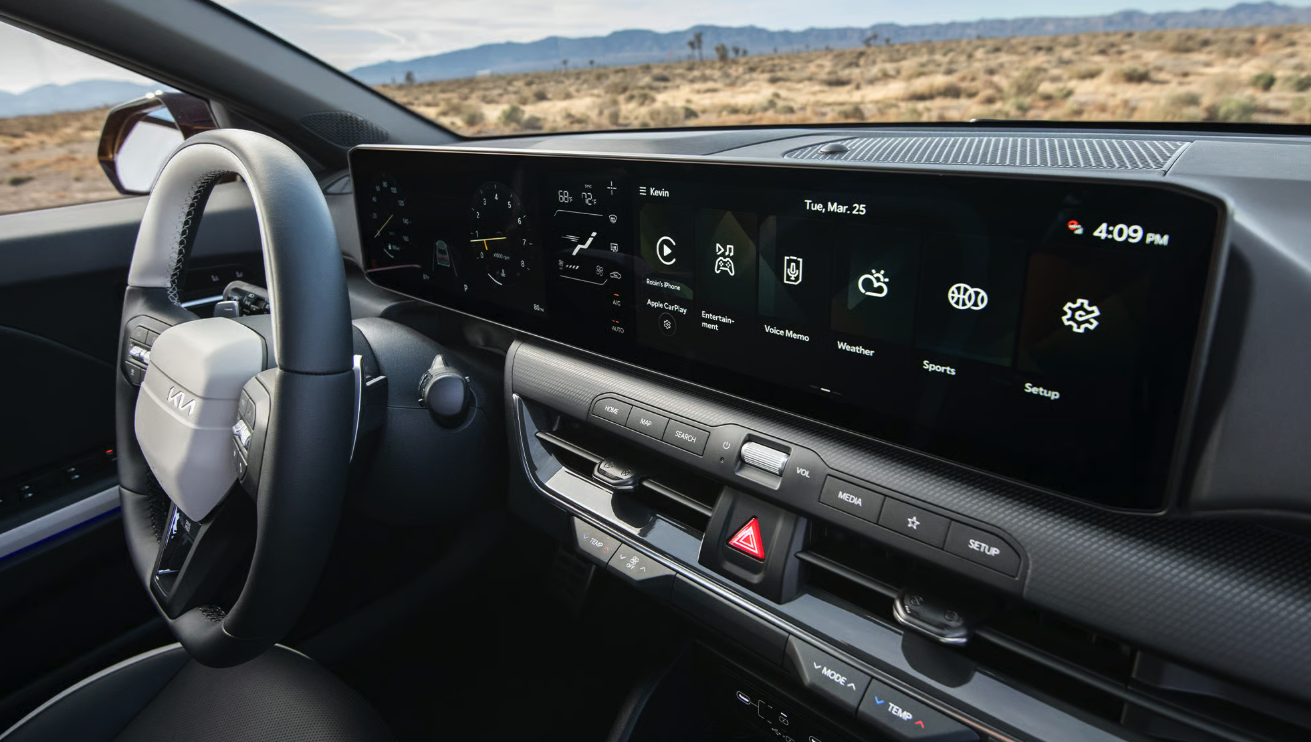
The 2026 GT-Line Turbo is built for drivers who want a sportier Kia sedan experience without giving up everyday comfort, fuel economy, and value. It brings a 1.6-liter turbocharged GDI engine with 190 horsepower and 195 pound-feet of torque, an 8-speed automatic transmission, front-wheel drive, bold GT-Line styling, and available advanced technology. At Kia of Daphne, we recommend GT-Line Turbo for shoppers who want sharper response, a more distinctive design, and practical daily driveability around Daphne, Fairhope, Spanish Fort, Mobile, and the Gulf Coast.
GT-Line Turbo is the trim to focus on when you want more than a basic commuter car. The appeal starts with the turbocharged engine, but it does not stop there. This trim also adds a more athletic personality, larger front brakes, 18-inch wheels, paddle shifters, available premium driver-assistance features, and a cabin that feels ready for both weekday driving and weekend plans.
This guide stays focused on the GT-Line Turbo experience: turbocharged response, sport-inspired design, daily-drive comfort, available technology, MPG, pricing considerations, warranty coverage, and how this trim fits Daphne-area drivers. It is not meant to be a broad model overview. The goal is to help you decide whether GT-Line Turbo is the right trim for the way you actually drive.
From weekday commutes along US-98 to weekend drives toward Gulf Shores, Pensacola, or Mobile, GT-Line Turbo gives drivers a practical sedan with a more energetic personality. It keeps the footprint easy to live with while adding the performance and design details that make this trim stand apart.
Quick Answer: GT-Line Turbo is the turbocharged Kia sedan trim for shoppers who want stronger acceleration, sportier styling, and practical everyday fuel economy. It includes a 1.6-liter turbocharged engine, 190 horsepower, 195 pound-feet of torque, an 8-speed automatic transmission, front-wheel drive, EPA-estimated 26 city / 33 highway / 28 combined MPG, and a Kia Media MSRP of $28,390 before destination and applicable charges.
Table of Contents
- GT-Line Turbo Performance and Driving Feel
- GT-Line Turbo MPG and Daily Driveability
- GT-Line Turbo Price and Value
- GT-Line Turbo Design, Comfort, and Technology
- GT-Line Turbo Safety and Driver Assistance
- GT-Line Turbo Technology Package
- Is GT-Line Turbo Right for Daphne Drivers?
- Warranty, Service, and Ownership Notes
- GT-Line Turbo FAQs
GT-Line Turbo Performance and Driving Feel
Key Takeaway: GT-Line Turbo is the trim to choose if you want turbocharged response, 190 horsepower, and stronger low-end torque for daily driving.
The defining feature of GT-Line Turbo is its engine. Kia Media lists this trim with a 1.6-liter turbocharged 4-cylinder gasoline direct-injection engine. Output is rated at 190 horsepower at 6,000 rpm and 195 pound-feet of torque from 1,700 to 4,500 rpm. That torque range matters because it means the car is designed to feel responsive in the everyday speeds where drivers spend most of their time.
For Daphne-area drivers, that extra response can be useful when merging onto I-10, passing slower traffic, leaving a crowded intersection, or moving through traffic near Mobile Bay. GT-Line Turbo is not trying to be extreme. It is built to make daily driving feel more confident, more alert, and more enjoyable.
The 8-speed automatic transmission is another important part of the GT-Line Turbo experience. It gives the trim a more traditional shift feel and a stronger connection between throttle input and acceleration. Drivers who prefer a familiar automatic transmission feel will likely appreciate that setup.
GT-Line Turbo also includes hardware that supports its sportier personality. Kia Media lists larger front brakes for the turbo trim, and Kia’s official feature language highlights performance-focused touches such as paddle shifters, 18-inch alloy wheels, and sport-inspired design elements. Together, those details help the trim feel more complete than an engine upgrade alone.
| Performance Detail | GT-Line Turbo | Why It Matters |
|---|---|---|
| Engine | 1.6L Turbo I-4 GDI | Turbocharged response for more engaging daily driving |
| Horsepower | 190 hp @ 6,000 rpm | Strong output for a compact Kia sedan trim |
| Torque | 195 lb-ft @ 1,700-4,500 rpm | Useful low- and mid-range response |
| Transmission | 8-speed automatic | Traditional shift feel and confident acceleration response |
| Drivetrain | Front-wheel drive | Efficient, familiar, easy-to-live-with layout |
| Best For | Drivers who want extra punch without moving into a larger vehicle | Daily commuting, highway merging, and weekend drives |
Based on Kia Media 2026 GT-Line Turbo specifications.
GT-Line Turbo MPG and Daily Driveability
Key Takeaway: GT-Line Turbo balances extra performance with practical fuel economy, earning EPA-estimated 26 city / 33 highway / 28 combined MPG.
A sporty trim still needs to work for everyday driving. GT-Line Turbo does that by pairing its turbocharged power with practical fuel economy. Kia Media lists GT-Line Turbo at 26 MPG city, 33 MPG highway, and 28 MPG combined. Actual mileage will vary based on driving habits, traffic, speed, tire condition, weather, vehicle load, and maintenance.
For a Daphne driver who spends time on US-98, I-10, and local roads between Fairhope, Spanish Fort, and Mobile, that balance is the point. GT-Line Turbo feels more responsive than a non-turbo setup, but it does not ask you to move into a much larger or less efficient vehicle. It gives you a more energetic drive while keeping the sedan practical for regular use.
The front-wheel-drive layout also supports predictable handling and efficient packaging. For Gulf Coast rain, proper tires, safe speeds, and routine maintenance remain the most important factors. GT-Line Turbo gives you a confident everyday foundation, and our service team can help keep tires, brakes, alignment, and wipers ready for changing conditions.
Drivers moving from an older compact car may notice that GT-Line Turbo feels more modern in the way it responds. The turbo engine builds torque early, the 8-speed automatic gives a familiar shift pattern, and the cabin remains practical enough for the daily routine. It is a strong fit for shoppers who want a vehicle that feels like an upgrade every time they drive it.
| Driving Detail | GT-Line Turbo Rating or Feature | Best Local Use Case |
|---|---|---|
| City MPG | 26 MPG | Daphne errands, school routes, and stop-and-go traffic |
| Highway MPG | 33 MPG | I-10, Mobile, Pensacola, and weekend highway drives |
| Combined MPG | 28 MPG | Mixed Gulf Coast driving |
| Transmission | 8-speed automatic | Drivers who prefer a more traditional shift feel |
| Turbo Torque | 195 lb-ft from 1,700-4,500 rpm | Passing, merging, and responsive everyday acceleration |
| Ideal Use Case | Sporty sedan feel with practical MPG | Commuters who want more personality from daily driving |
Based on Kia Media 2026 GT-Line Turbo fuel economy and specifications.
GT-Line Turbo Price and Value
Key Takeaway: Kia Media lists GT-Line Turbo at $28,390 MSRP, with a $1,245 destination charge listed separately.
Pricing is one reason GT-Line Turbo is such an interesting choice. Kia Media lists GT-Line Turbo at $28,390 MSRP before destination and applicable charges. The destination charge is listed at $1,245. Actual local pricing can vary based on taxes, title, license, accessories, dealer-installed equipment, availability, market conditions, and current offers.
That pricing positions GT-Line Turbo as a strong option for shoppers who want sportier performance and premium features without jumping into a much more expensive performance vehicle. You get the turbocharged engine, 8-speed automatic transmission, GT-Line styling, 18-inch wheels, and a more feature-rich driving experience while keeping the overall package focused on everyday affordability.
For shoppers comparing monthly payment, our team recommends looking beyond MSRP alone. Trade value, down payment, loan term, credit profile, taxes, fees, and available offers all affect the final payment. We can help you compare payment options, trade-in value, and current availability for GT-Line Turbo.
GT-Line Turbo also makes sense for shoppers who want their next vehicle to feel like a long-term step up. Instead of choosing a basic commuter vehicle and wishing it had more power later, this trim gives you the turbocharged engine and sportier personality from the beginning. That can make the ownership experience more satisfying if you enjoy driving.
| Price or Planning Detail | GT-Line Turbo | Why It Matters |
|---|---|---|
| MSRP | $28,390 | Official Kia Media listed MSRP before destination |
| Destination Charge | $1,245 | Listed separately by Kia Media |
| Powertrain | 1.6L turbo with 8-speed automatic | Core value reason to choose GT-Line Turbo |
| Available Package | GT-Line Turbo Technology Package | Adds advanced convenience and driver-assistance features |
| Local Pricing | Can vary by vehicle and market factors | Request a quote on the exact vehicle |
| Best Next Step | Compare price, trade value, and payment options | Helps match the trim to your budget |
Based on Kia Media 2026 GT-Line Turbo pricing.
GT-Line Turbo Design, Comfort, and Technology
Key Takeaway: GT-Line Turbo adds the performance hardware shoppers expect, but it also brings the visual attitude and cabin technology that make it feel special every day.
GT-Line Turbo has the kind of design that makes a compact sedan feel more expressive. Kia’s official feature language highlights GT-Line styling elements such as 18-inch alloy wheels, gloss black exterior trim, a sport steering wheel, paddle shifters, and a 10-way power driver’s seat. Those details matter because they help GT-Line Turbo feel more distinctive and more driver-focused.
Inside, GT-Line Turbo is built for drivers who want technology close at hand. The cabin layout feels modern, but it remains practical for daily use. The available Technology Package can add a stronger mix of comfort, convenience, and driver-assistance features, which is especially useful if you spend a lot of time commuting or sharing the vehicle with another driver.
For Daphne drivers, comfort is not a small detail. Summer heat, longer commutes, and busy family schedules make seating, cabin layout, and technology more important. A sporty-looking trim still needs to feel comfortable every day. GT-Line Turbo works because it gives you a more engaging personality while still staying manageable, efficient, and easy to live with.
The design also helps GT-Line Turbo feel more upscale than many shoppers expect from a compact Kia sedan. It can work for commuting, dinner plans, campus parking, office use, and weekend drives without feeling plain. That mix of style and practicality is one of the biggest reasons this trim deserves its own focused guide.
- Sport-inspired GT-Line exterior design with a more aggressive look.
- 18-inch alloy wheels that help give the sedan a planted stance.
- Turbocharged powertrain with strong low- and mid-range torque.
- 8-speed automatic transmission for a familiar, responsive shift feel.
- Available advanced technology features through the GT-Line Turbo Technology Package.
- Compact sedan size that stays easy to park and efficient to drive.
GT-Line Turbo Safety and Driver Assistance
Key Takeaway: GT-Line Turbo can be equipped with advanced driver-assistance technology that supports highway driving, parking confidence, and daily awareness.
Kia positions this trim as a technology-forward choice for drivers who want performance and available driver assistance in the same package. Kia’s official K4 page notes up to 29 available driver-assistance features on select trims, and GT-Line Turbo can be equipped with a Technology Package that adds several high-value assistance and convenience features.
Kia Media lists the GT-Line Turbo Technology Package with Forward Collision-Avoidance Assist Fusion+, Parking Distance Warning for front, rear, and side, Surround View Monitor, Blind-Spot View Monitor, memory driver seat and mirrors, ventilated front seats, ambient lighting, and Digital Key 2.0. Package content, availability, and pricing can change, so we recommend confirming equipment on the exact vehicle before purchase.
These features are useful for real Gulf Coast driving. Surround View Monitor can help in tight parking lots. Blind-Spot View Monitor can support lane-change awareness. Parking Distance Warning can help in crowded shopping centers. Ventilated seats can make the cabin more comfortable during hot Daphne summers.
Safety technology is never a replacement for attentive driving, proper following distance, or safe speeds. It is best viewed as support. For a driver who spends time commuting between Daphne and Mobile, parking at busy shopping centers, or driving in changing weather, the available assistance features can make GT-Line Turbo feel easier to live with.
| Feature Area | GT-Line Turbo Technology Package Highlight | Why Shoppers Ask About It |
|---|---|---|
| Collision Support | Forward Collision-Avoidance Assist Fusion+ | Added confidence in busy traffic |
| Parking | Parking Distance Warning front, rear, and side | Helpful in tight lots and garages |
| Camera Visibility | Surround View Monitor and Blind-Spot View Monitor | Improves awareness around the sedan |
| Comfort | Ventilated front seats | Useful for Gulf Coast heat and daily commuting |
| Convenience | Memory driver seat and mirrors, Digital Key 2.0 | Helpful for shared vehicles and modern access |
| Best For | Drivers who want the most complete GT-Line Turbo setup | Tech-focused commuters and daily drivers |
Based on Kia Media 2026 GT-Line Turbo available package information.
GT-Line Turbo Technology Package
Key Takeaway: The Technology Package is the option to consider if you want the most advanced GT-Line Turbo experience.
If you are already choosing GT-Line Turbo for its engine, the next big question is whether the available Technology Package is worth it. For many shoppers, the answer depends on how long they plan to keep the car and how much they value added comfort, camera visibility, parking support, and driver-assistance features.
The Technology Package is especially attractive for daily commuters. If you drive between Daphne and Mobile often, the extra comfort and awareness features may matter every week. If you share the vehicle with another driver, memory seat and mirror settings can make the car easier to use. If you park in crowded areas often, camera and parking assistance features can be helpful.
Our team recommends comparing GT-Line Turbo with and without the package if both are available. That makes the value clearer than reading a feature list alone. Some shoppers care most about the engine and styling. Others want the most complete cabin and safety-tech setup. The right choice depends on how you plan to use the car.
For shoppers who want the most complete GT-Line Turbo experience, the Technology Package is where the trim feels most premium. The turbo engine gives the car its personality, while the package can add daily comfort and awareness features that drivers notice every time they get behind the wheel.
Is GT-Line Turbo Right for Daphne Drivers?
Key Takeaway: GT-Line Turbo is best for drivers who want a sedan that feels fun, efficient, easy to park, and comfortable for daily Gulf Coast routes.
GT-Line Turbo is a strong match for Daphne-area shoppers because it fits the way many local drivers actually use their vehicles. It is small enough to park easily, efficient enough for weekday commuting, and powerful enough to feel more enjoyable than a basic commuter car. That makes it especially appealing for professionals, students, first-time new-car buyers, and drivers downsizing from a larger vehicle.
A Spanish Fort commuter may like the turbo response for I-10 traffic. A Fairhope driver may value the sedan’s easy size and upscale look. A Mobile-area professional may appreciate the available technology features. A Gulf Shores weekend traveler may like that GT-Line Turbo can feel fun without giving up practical fuel economy.
This is also a smart option for shoppers who do not need SUV space. If you mostly carry one or two passengers, commute often, and want a car that feels modern and distinctive, GT-Line Turbo may make more sense than moving into a larger vehicle. It keeps the focus on style, performance, and everyday cost control.
Because GT-Line Turbo is front-wheel drive, it is also easy to understand and easy to live with. The key for Gulf Coast conditions is keeping up with tire condition, alignment, brakes, wipers, and routine maintenance. A well-maintained sedan with good tires can feel secure and predictable through daily rain and highway use.
| Local Driver Profile | Why GT-Line Turbo Fits | Recommended Focus |
|---|---|---|
| Daphne commuter | Compact size, responsive turbo engine, practical MPG | Test drive during normal commute conditions |
| Spanish Fort to Mobile driver | Strong torque for merging and passing | Compare comfort and package features |
| Fairhope professional | Sporty design with a modern cabin feel | Review color and interior combinations |
| College student or first new-car shopper | Sporty personality without moving into a larger vehicle | Compare pricing, payment, and warranty coverage |
| Weekend Gulf Coast driver | Efficient highway driving with extra punch | Ask about fuel economy and cargo fit |
| Best Overall Fit | Driver wants sedan practicality with turbo performance | GT-Line Turbo |
Warranty, Service, and Ownership Notes
Key Takeaway: GT-Line Turbo pairs its sporty character with Kia warranty coverage and routine maintenance needs that are easy to plan around.
Kia’s warranty coverage is a major part of the ownership conversation. Kia lists a 10-year/100,000-mile Limited Powertrain Warranty and a 5-year/60,000-mile Basic Limited Warranty under written terms. For a turbocharged Kia sedan trim like GT-Line Turbo, that coverage gives shoppers added confidence as they compare long-term ownership options.
Routine service still matters. Turbocharged engines should be maintained on schedule with the correct oil, filters, inspections, and service intervals. Tire condition matters too, especially with GT-Line Turbo’s 18-inch wheels and sportier setup. Regular rotations, alignment checks, brake inspections, and fluid services help keep the sedan feeling as sharp as it should.
For Gulf Coast drivers, we also recommend seasonal checks before peak summer heat and longer road trips. Heat, humidity, heavy rain, and highway miles can affect tires, wipers, batteries, brakes, and air conditioning performance. Our service team can help keep GT-Line Turbo ready for daily driving and weekend travel.
Keeping service records can also help protect long-term value. If you plan to trade later, maintenance history can support a stronger ownership story. If you plan to keep the vehicle for many years, routine care helps preserve the performance, comfort, and dependability that made you choose the turbo trim in the first place.
GT-Line Turbo FAQs
Does GT-Line Turbo have a turbo engine?
Yes. GT-Line Turbo has a 1.6-liter turbocharged 4-cylinder gasoline direct-injection engine. Kia Media lists output at 190 horsepower and 195 pound-feet of torque.
What transmission does GT-Line Turbo use?
GT-Line Turbo uses an 8-speed automatic transmission. This setup gives the trim a more traditional shift feel and supports confident acceleration during daily driving.
How much does GT-Line Turbo cost?
Kia Media lists GT-Line Turbo at $28,390 MSRP, with a $1,245 destination charge listed separately. Local pricing, taxes, title, license, accessories, dealer-installed equipment, offers, and availability can vary.
What is the MPG of GT-Line Turbo?
Kia Media lists GT-Line Turbo at 26 MPG city, 33 MPG highway, and 28 MPG combined. Actual fuel economy varies with driving habits, traffic, vehicle condition, weather, and maintenance.
Is GT-Line Turbo all-wheel drive?
No. GT-Line Turbo is listed as front-wheel drive. Drivers who want confident wet-weather performance should focus on proper tires, safe speeds, routine maintenance, and driver-assistance features.
What makes GT-Line Turbo different?
The main difference is the turbocharged powertrain and performance-focused trim content. GT-Line Turbo adds a 1.6-liter turbocharged engine with 190 horsepower, an 8-speed automatic transmission, larger front brakes, sporty design details, and available advanced technology.
Is GT-Line Turbo good for commuting around Daphne?
Yes. GT-Line Turbo is a strong fit for Daphne commuters who want responsive acceleration, practical MPG, a modern cabin, and a more engaging daily drive without moving into a larger vehicle.
What is included in the GT-Line Turbo Technology Package?
Kia Media lists the GT-Line Turbo Technology Package with Forward Collision-Avoidance Assist Fusion+, Parking Distance Warning front, rear, and side, Surround View Monitor, Blind-Spot View Monitor, memory driver seat and mirrors, ventilated front seats, ambient lighting, and Digital Key 2.0. Confirm package content on the exact vehicle before purchase.
Does GT-Line Turbo have Kia warranty coverage?
Yes. Kia lists a 10-year/100,000-mile Limited Powertrain Warranty and a 5-year/60,000-mile Basic Limited Warranty under written terms. Warranty terms, exclusions, and coverage details should be reviewed for the exact vehicle.
Should I choose GT-Line Turbo if I want a sporty daily driver?
Yes. GT-Line Turbo is the trim to start with if you want turbocharged performance, sharper driving response, sporty styling, and practical fuel economy in one daily-drivable Kia sedan package.
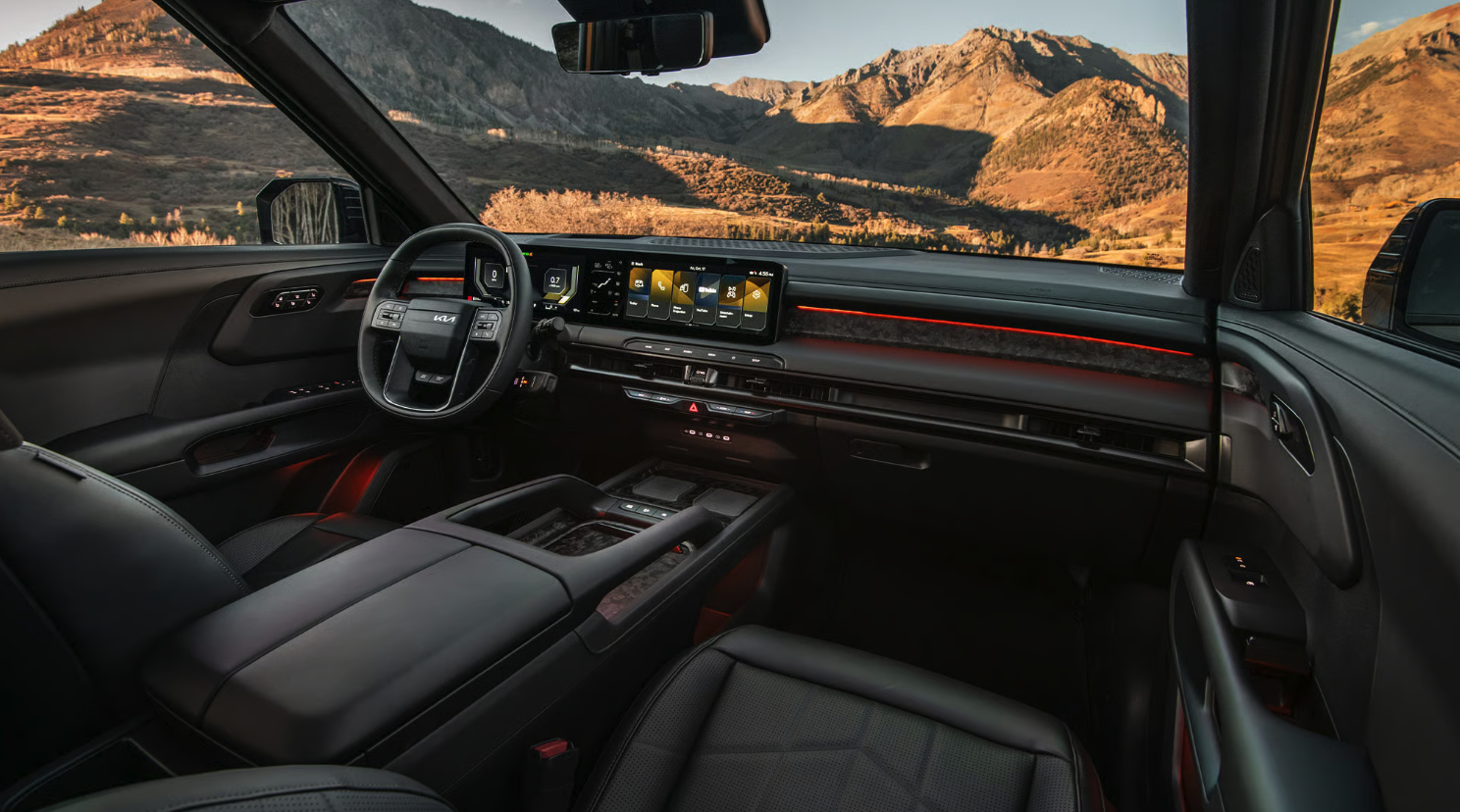
First Look: What Daphne Families Can Expect from the Redesigned 2027 Kia Telluride
The 2027 Kia Telluride brings a full redesign to one of Kia’s most popular three-row SUVs. The second-generation Telluride is larger, roomier, more powerful in gas form, and now available with the first-ever Telluride Hybrid. Gas models use a 2.5-liter turbocharged engine with 274 horsepower and 311 pound-feet of torque, while the Telluride Hybrid offers 329 horsepower, 339 pound-feet of torque, up to an EPA-estimated 35 MPG combined on EX FWD, and up to 637 miles of total driving range. At Kia of Daphne, we see the 2027 Telluride as a strong fit for families who want three-row space, confident power, available capability trims, and a practical choice between gas and hybrid driving.
The Telluride has always appealed to drivers who need real family space without giving up SUV style. For 2027, that formula becomes even more useful for shoppers around Daphne, Fairhope, Spanish Fort, Mobile, Foley, Gulf Shores, Orange Beach, Robertsdale, Loxley, Bay Minette, and Pensacola. The larger body gives families more room for passengers and cargo, while the updated powertrain lineup gives shoppers more ways to match the SUV to their daily routine.
For some families, the gas Telluride will be the best fit because it offers up to 8-passenger seating, a wide trim range, strong towing capability, and available X-Line and X-Pro models. For others, the Telluride Hybrid will make more sense because it adds stronger combined output, better fuel economy, and a long total driving range. Our team can help you compare both versions based on seating, cargo needs, towing plans, commute length, fuel economy goals, and budget.
The 2027 Telluride also matters because family SUV shoppers are asking for more than space alone. They want better technology, easier cargo flexibility, confident performance, useful safety features, strong warranty coverage, and a vehicle that feels comfortable during both weekday routines and weekend travel. That is where the redesigned Telluride becomes especially appealing for Gulf Coast drivers.
The 2027 Kia Telluride is a redesigned three-row SUV available with gas and hybrid powertrains. The gas Telluride is best for shoppers who want maximum seating, towing, and trim variety. The Telluride Hybrid is best for families who want stronger combined output, better MPG, and fewer fuel stops on longer trips.
Table of Contents
- The Bold Redesign of the 2027 Kia Telluride
- First-Ever 2027 Kia Telluride Hybrid
- 2027 Telluride Gas vs Telluride Hybrid
- Engine, Towing, and Driving Confidence
- Trim Levels, Seating, and Cabin Comfort
- Telluride X-Line vs X-Pro
- Cargo Space and Family Utility
- 2027 Telluride Pricing Notes
- Telluride vs Sorento Hybrid, Carnival Hybrid, EV9, and Palisade
- Best 2027 Telluride Fit for Daphne Drivers
- Warranty, Service, and Ownership Notes
- 2027 Kia Telluride FAQs
The Bold Redesign of the 2027 Kia Telluride
Key Takeaway: The 2027 Telluride begins a new generation with more space, a more premium cabin, updated technology, and a stronger powertrain lineup.
The 2027 Kia Telluride marks the start of the SUV’s second generation. Kia Media describes the redesign as longer overall, roomier inside, and more cargo-friendly than the previous generation. That matters for shoppers who need one vehicle to handle school drop-offs, work commutes, weekend travel, sports equipment, luggage, and visiting family.
The exterior has a stronger SUV presence, with a more upright look, bold front-end design, vertical lighting details, and a more substantial stance. The design feels more premium without losing the practical, family-first character that helped make Telluride such a popular three-row SUV.
Inside, the cabin is designed around comfort, storage, and technology. The dashboard layout keeps key information easy to see, while available premium materials and added storage solutions help the Telluride feel more upscale. Families who spend a lot of time on the road will appreciate small details such as passenger-friendly storage, available three-row comfort features, easy cargo access, and a layout that works for everyday use.
The redesign also brings a major powertrain shift. Gas Telluride models now use a 2.5-liter turbocharged engine that produces 274 horsepower and 311 pound-feet of torque. The new Telluride Hybrid pairs a 2.5-liter turbocharged engine with electric motors and a 1.65-kWh lithium-ion battery for 329 horsepower and 339 pound-feet of torque.
For Daphne drivers, the added size and updated powertrain choices make the 2027 Telluride more useful in real life. It can serve as a comfortable family SUV during the week, a road-trip vehicle on weekends, and a confident choice for drivers who need available capability for rain, beach routes, gravel parking areas, or outdoor recreation.
| 2027 Telluride Update | What Changed | Why It Matters for Families |
|---|---|---|
| New Generation | Second-generation redesign | More room, more refinement, and a fresher SUV design |
| Gas Engine | 2.5L turbo with 274 hp and 311 lb-ft | Strong response for daily driving and highway travel |
| Hybrid Option | First-ever Telluride Hybrid with 329 hp and 339 lb-ft | More power and better fuel economy potential |
| Interior Space | More roominess and cargo space | Better fit for luggage, sports gear, and growing families |
| Capability Trims | X-Line and X-Pro options | Lets shoppers choose style, traction confidence, or added rugged hardware |
| Best For | Three-row SUV shoppers | Daphne-area families comparing gas and hybrid options |
Based on Kia official website and Kia Media information.
First-Ever 2027 Kia Telluride Hybrid
Key Takeaway: The 2027 Telluride Hybrid gives families stronger combined output, better fuel economy, and up to 637 miles of total driving range on EX FWD.
The Telluride Hybrid is one of the biggest updates for 2027. It combines a 2.5-liter turbocharged gas engine with electric motors and a 1.65-kWh lithium-ion battery. Kia Media lists combined output at 329 horsepower and 339 pound-feet of torque, making the hybrid the most powerful Telluride configuration based on combined system output.
Efficiency is the main reason many shoppers will compare the hybrid first. Kia lists the Telluride Hybrid EX FWD at up to an EPA-estimated 35 MPG combined and up to 637 miles of total driving range. For drivers who regularly travel between Daphne, Mobile, Pensacola, Gulf Shores, and Orange Beach, that range can make long family trips feel easier by reducing fuel stops.
The Telluride Hybrid is also useful for families who want electrified driving benefits without plugging in. Unlike a plug-in hybrid or EV, the Telluride Hybrid does not require home charging. It uses the gas engine, electric motors, hybrid battery, and regenerative braking to support efficiency while keeping the normal gasoline fueling routine.
For shoppers who are curious about electrified Kia models, the Telluride Hybrid sits between traditional gas SUVs and full EV ownership. It does not require the charging planning of an EV, but it gives families a more efficient option than many large gas-only three-row SUVs.
The hybrid is especially appealing for families that spend a lot of time on longer routes. A Fairhope family driving to Mobile several times per week, a Gulf Shores driver who regularly travels inland, or a Pensacola-area shopper visiting family across the Eastern Shore may appreciate the combination of range, output, and three-row practicality.
| Telluride Hybrid Highlight | 2027 Telluride Hybrid | Why It Matters |
|---|---|---|
| Powertrain Type | 2.5L turbo-hybrid system | Combines gas flexibility with electric motor assist |
| Combined Output | 329 hp and 339 lb-ft | Strong response for a three-row family SUV |
| Fuel Economy Highlight | Up to 35 MPG combined on EX FWD | Useful for commuters and road-trip families |
| Total Range Highlight | Up to 637 miles | Helps reduce fuel stops on longer drives |
| Charging Requirement | No plug-in charging required | Easy transition for first-time hybrid shoppers |
| Best For | Efficiency-focused three-row SUV shoppers | Families wanting power, MPG, and range |

2027 Telluride Gas vs Telluride Hybrid
Key Takeaway: Choose the gas Telluride for maximum seating and towing priorities; choose the Telluride Hybrid for stronger combined output, higher MPG, and longer total range.
The gas Telluride is the best starting point for families who need the broadest trim selection and available 8-passenger seating. It is also the better choice if towing is a top priority, since Kia lists up to 5,000 pounds of towing capacity for the gas Telluride when properly equipped.
The Telluride Hybrid is the better starting point for shoppers who want stronger combined output and better fuel economy. Kia lists the Telluride Hybrid at up to 35 MPG combined on EX FWD and up to 637 miles of total driving range. The hybrid is also listed with up to 4,500 pounds of towing capacity when properly equipped, which is useful for many light towing needs.
For a Daphne family that needs to carry eight people, we would start with gas Telluride trims that offer the right seating layout. For a Fairhope or Mobile family that usually carries four to six people and drives longer distances, the Telluride Hybrid may be the smarter first test drive.
Budget can also affect the decision. The gas Telluride starts at a lower MSRP because the lineup begins with LX. The Telluride Hybrid starts at EX, so its entry point is higher, but it brings stronger combined output and a much stronger MPG story. Shoppers comparing both should look at payment, fuel costs, expected mileage, seating needs, and available trims.
| Spec or Priority | 2027 Telluride Gas | 2027 Telluride Hybrid | Best For |
|---|---|---|---|
| Powertrain | 2.5L turbo gas engine | 2.5L turbo-hybrid system | Choose by towing, MPG, and seating needs |
| Horsepower | 274 hp | 329 hp combined | Hybrid for stronger combined output |
| Torque | 311 lb-ft | 339 lb-ft combined | Hybrid for stronger combined torque |
| Fuel Economy Highlight | Varies by trim and drivetrain | Up to 35 MPG combined on EX FWD | Hybrid for efficiency |
| Total Range Highlight | Varies by configuration | Up to 637 miles | Hybrid for longer trips |
| Towing Highlight | Up to 5,000 lb when properly equipped | Up to 4,500 lb when properly equipped | Gas for maximum tow rating |
Based on Kia official website and Kia Media specifications.
Engine, Towing, and Driving Confidence
Key Takeaway: The gas Telluride is the stronger towing choice, while the Telluride Hybrid adds efficiency and higher combined output for daily driving and road trips.
The gas 2027 Telluride uses a 2.5-liter turbocharged gasoline direct-injection engine. With 274 horsepower and 311 pound-feet of torque, it is designed to give the SUV confident response for highway merging, passing, and carrying passengers or cargo. That torque figure is especially useful for a large family SUV because it supports everyday drivability without making the vehicle feel strained.
The Telluride Hybrid adds electric motor assistance for smoother low-speed response and better efficiency. Kia Media also highlights hybrid-specific driving technologies such as e-handling and e-ride, which are designed to support stability and ride control. For shoppers who spend time in stop-and-go Mobile traffic or take long I-10 trips, the hybrid’s combination of torque, range, and fuel economy is a major selling point.
Towing should always be matched to the exact vehicle and trailer. Kia lists up to 5,000 pounds of towing capacity for the gas Telluride when properly equipped and up to 4,500 pounds for the Telluride Hybrid when properly equipped. If towing is part of your plan, our team can help you review the trim, hitch equipment, trailer weight, passengers, cargo, payload, and owner’s manual guidance before choosing.
Available AWD and capability-focused trims can also matter for local drivers. Gulf Coast rain can arrive quickly, and road conditions can change between Daphne, Mobile, and beach areas. AWD does not replace careful driving, proper tires, or routine maintenance, but it can add confidence for families who drive in wet weather often.
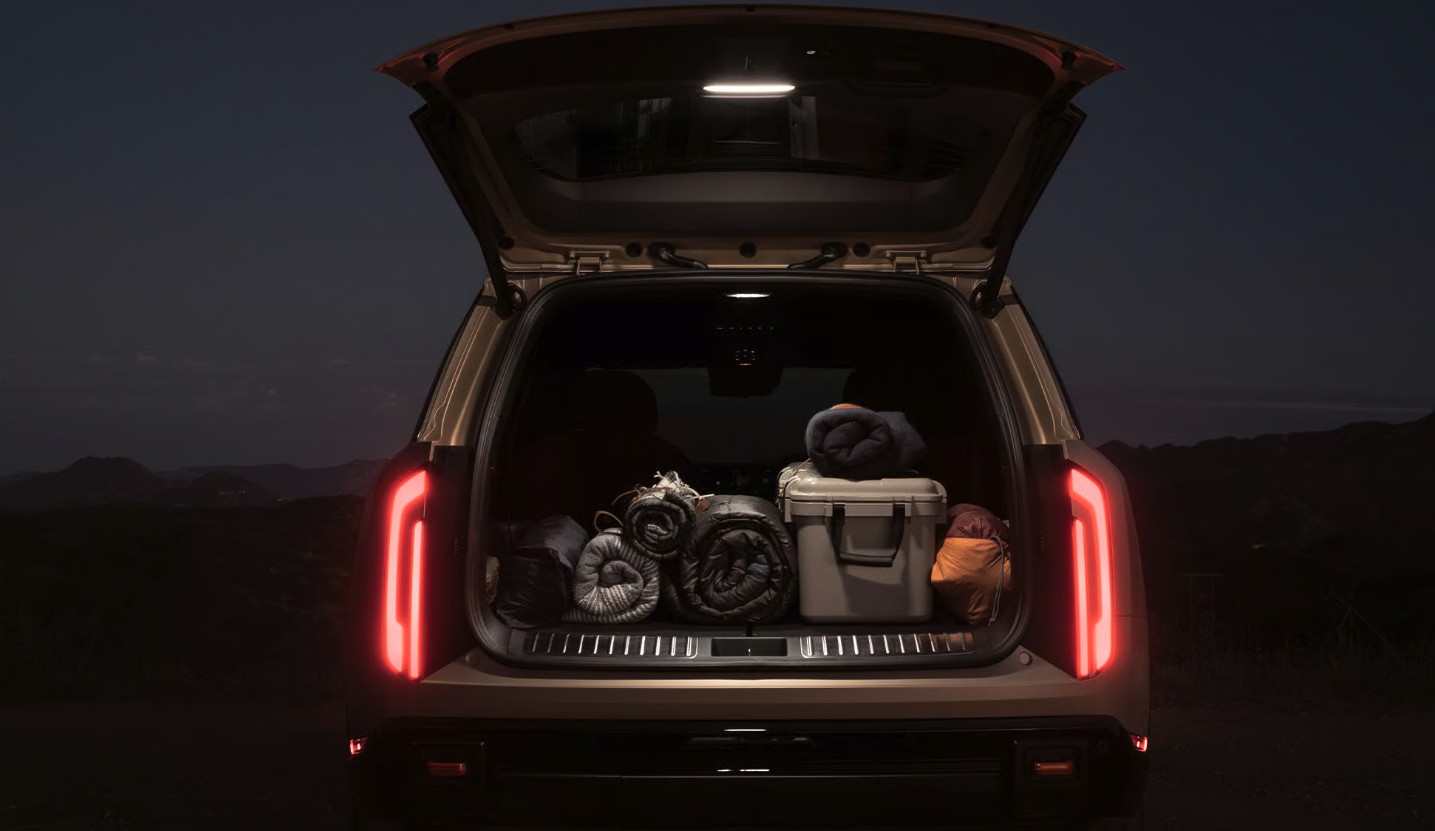
Trim Levels, Seating, and Cabin Comfort
Key Takeaway: The gas Telluride offers the broadest trim spread and up to 8-passenger seating, while the Telluride Hybrid focuses on 7-passenger comfort and efficiency.
The gas Telluride lineup includes multiple trims and capability packages, including LX, S, EX, SX, SX Prestige, X-Line, and X-Pro configurations. Depending on trim, shoppers can choose between 8-passenger seating and 7-passenger seating. The 8-passenger layout is useful for larger families or carpool duty, while the 7-passenger layout often provides easier third-row access through second-row captain’s chairs.
The Telluride Hybrid is listed with 7-passenger seating. That setup can be ideal for families that want second-row comfort and easier movement into the third row. Many families with kids prefer captain’s chairs because they reduce crowding in the second row and make third-row access more convenient.
Trim choice should start with how your family uses the vehicle. If you need eight seats often, start with a gas model that offers the right seating layout. If you want premium comfort, compare SX and SX Prestige trims. If you want bolder styling and confidence for rain or outdoor weekends, compare X-Line and X-Pro. If fuel economy and range are high priorities, include the Telluride Hybrid in the first round of test drives.
Technology and comfort features can also affect the trim decision. Shoppers who spend long hours commuting may value upgraded audio, larger displays, driver-assistance features, ventilated seating, and premium cabin materials. Families with younger passengers may care more about easy third-row access, USB ports, cargo flexibility, durable materials, and second-row comfort.
| Family Need | Best Starting Point | Why It Works |
|---|---|---|
| Maximum passenger count | Gas Telluride with 8-passenger seating | Best for larger families and carpool use |
| Second-row comfort | 7-passenger Telluride configurations | Captain’s chairs can improve third-row access |
| Long-distance fuel economy | Telluride Hybrid | Up to 35 MPG combined and up to 637 miles of range |
| Premium cabin feel | SX or SX Prestige trims | Better comfort and technology features |
| Outdoor weekends | X-Line or X-Pro | More rugged styling or added capability hardware |
| Best First Step | Choose seating needs first | Then compare gas, hybrid, features, and pricing |
Telluride X-Line vs X-Pro
Key Takeaway: X-Line is best for families who want a bolder look and everyday confidence; X-Pro is best for shoppers who will use added off-pavement capability.
Many Telluride shoppers compare X-Line and X-Pro because both trims add a more rugged personality. The difference is how far you want that capability to go. X-Line is the better fit for most families who want a bold appearance, available AWD confidence, and utility-focused design without needing the most rugged hardware.
X-Pro is the more capability-focused choice. Kia lists X-Pro with 9.1 inches of ground clearance, all-terrain tires, Ground View Monitor, Electronic Limited Slip Differential, and recovery hooks. Those features are useful for drivers who spend time around boat ramps, gravel lots, campsites, wet fields, or outdoor recreation areas.
For Daphne and Fairhope families who mostly drive paved roads but want extra confidence for rain and beach weekends, X-Line may be enough. For Gulf Shores, Orange Beach, or outdoor-focused shoppers who regularly encounter sand, gravel, wet grass, or rougher surfaces, X-Pro is worth a closer look.
The best way to decide is to think about the most demanding places you actually drive. If your Telluride will mostly handle school, work, groceries, and road trips, X-Line may give you the look and confidence you want. If your family regularly reaches campsites, boat ramps, unpaved access roads, or outdoor venues, X-Pro adds hardware that can be more useful.
| Feature or Use Case | X-Line | X-Pro | Best Fit |
|---|---|---|---|
| Primary Purpose | Style, confidence, and utility | Added off-pavement capability | Choose by weekend use |
| Ground Clearance | Varies by configuration | 9.1 inches | X-Pro for rougher areas |
| Tires | Road-focused or trim-specific wheels | All-terrain tires | X-Pro for outdoor routes |
| Traction Hardware | Available AWD confidence | Electronic Limited Slip Differential | X-Pro for uneven surfaces |
| Local Use | Rain, school, highway, beach trips | Boat ramps, gravel, fields, campsites | X-Line for most; X-Pro for outdoor families |
| Our Recommendation | Start here for daily family life | Upgrade if capability is a real need | Test-drive both if available |
Cargo Space and Family Utility
Key Takeaway: The redesigned Telluride gives families more room for passengers and gear, with up to 89.3 cubic feet of maximum cargo space cited for the new generation.
Family SUVs live or die by how well they handle real cargo. For Daphne-area shoppers, that can mean groceries, strollers, folding chairs, beach gear, sports bags, luggage, coolers, backpacks, and pet supplies. Kia Media highlights more cargo space and more interior roominess for the 2027 Telluride, which makes the redesign especially useful for growing families.
With all rows in use, the Telluride is built to carry passengers and everyday items. Fold the third row, and it becomes more useful for sports gear, road-trip luggage, and larger shopping trips. Fold both rear rows, and the Telluride becomes a serious cargo hauler for home projects, beach weekends, or moving bulky items.
If your family mostly needs easy kid access and maximum everyday practicality, the Kia Carnival Hybrid may be worth comparing. If you want a smaller three-row hybrid SUV, the 2026 Kia Sorento Hybrid may be a better fit. If you want large SUV styling, towing capability, available X-Pro hardware, and gas or hybrid powertrain options, the Telluride is the stronger match.
For local families, cargo planning often depends on the day. A school morning might need backpacks and sports bags. A Gulf Shores weekend might need towels, coolers, chairs, and umbrellas. A Mobile tournament day might require uniforms, folding chairs, snacks, and extra passengers. The Telluride’s flexible cabin helps one SUV handle all of those needs without feeling too specialized.
| Family Scenario | Telluride Advantage | Helpful Comparison | Best Fit |
|---|---|---|---|
| Daily school routine | Three-row space and easy cargo flexibility | Sorento Hybrid | Telluride if you need more room |
| Beach weekend | Room for coolers, chairs, towels, and passengers | Carnival Hybrid | Carnival if sliding doors matter more |
| Sports travel | Foldable rows and large cargo area | Telluride X-Line or X-Pro | X-Pro if dirt lots or fields are common |
| Road trip | Passenger comfort and luggage space | Telluride Hybrid | Hybrid if fuel stops matter |
| Large family use | Up to 8-passenger seating on gas models | Gas Telluride | Gas if maximum seating matters |
| Best Overall Match | Large SUV cargo plus family seating | Telluride lineup | Choose by seats, cargo, and MPG |
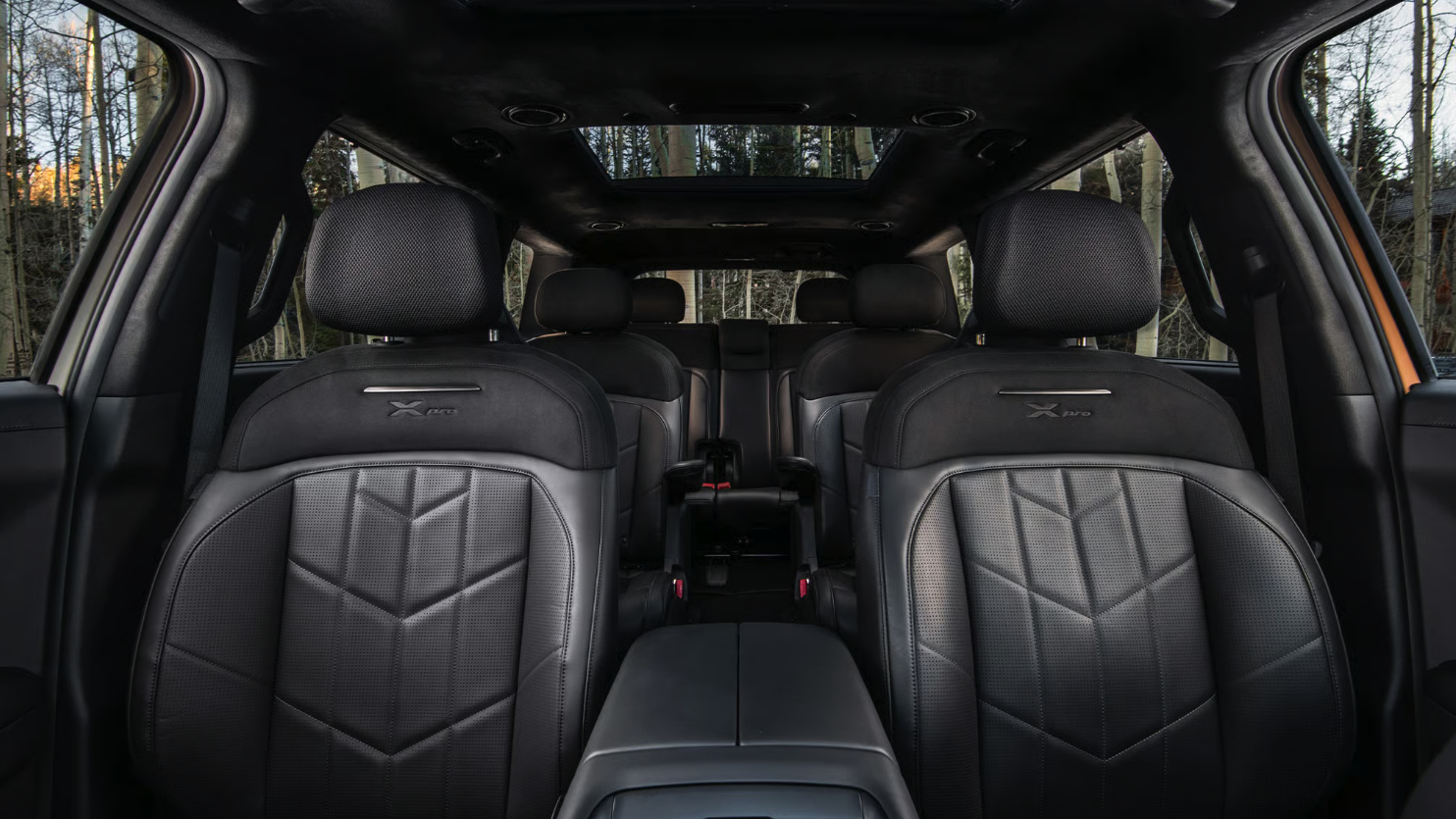
2027 Telluride Pricing Notes
Key Takeaway: The 2027 Telluride gas lineup starts below the Telluride Hybrid lineup, while the Hybrid gives shoppers better fuel economy and stronger combined output.
Kia Media lists the gas 2027 Telluride LX FWD at $39,190 MSRP, with destination listed separately. Higher gas trims increase by features, drivetrain, packages, and capability equipment. For shoppers who want the lowest starting point in the Telluride lineup, the gas LX FWD is the entry model to compare first.
The Telluride Hybrid starts higher because it begins at EX rather than LX. Kia Media lists the Telluride Turbo Hybrid starting at $46,490 MSRP for EX and reaching $57,590 MSRP for X-Line SX-Prestige, with destination listed separately. That makes the Hybrid a premium-efficiency choice for families who want better MPG, stronger combined output, and long total range.
Actual transaction price can vary based on destination charge, taxes, title, license, accessories, dealer-installed equipment, offers, availability, and selected trim. Our team can provide current numbers for the specific Telluride configuration you want to compare.
We recommend comparing gas and hybrid pricing in context. The gas model may be more affordable at the entry point. The hybrid may be more attractive if you drive enough miles for the MPG advantage to matter. A premium trim may be worth it if you value comfort and technology every day, but a lower trim may make more sense if you simply want three-row space and strong value.
| Shopping Detail | Official Pricing Note | Why It Matters |
|---|---|---|
| Gas Telluride Starting MSRP | $39,190 for LX FWD, destination separate | Lowest starting point in the lineup |
| Gas Telluride Top MSRP | Up to $56,790 for X-Pro SX Prestige, destination separate | Top gas trims add premium and capability features |
| Telluride Hybrid Starting MSRP | $46,490 for EX, destination separate | Hybrid starts at a higher trim level |
| Telluride Hybrid Top MSRP | Up to $57,590 for X-Line SX-Prestige, destination separate | Top hybrid trims add efficiency and premium equipment |
| Local Pricing | Varies by vehicle, fees, accessories, and availability | Request pricing for the exact trim |
| Best Next Step | Compare gas and hybrid quotes side by side | Helps match budget, features, and fuel savings |
Based on Kia Media pricing.
Telluride vs Sorento Hybrid, Carnival Hybrid, EV9, and Palisade
Key Takeaway: The Telluride is the strongest Kia fit when you want a large three-row SUV, but Sorento Hybrid, Carnival Hybrid, and EV9 may be better for specific family needs.
The Telluride is not the only smart family vehicle in the Kia lineup. The Sorento Hybrid may be better if you want three-row flexibility in a smaller package. The Carnival Hybrid may be better if sliding doors, easy child-seat access, and maximum family practicality matter most. The EV9 may be better if you are ready for a full electric three-row SUV and have a charging plan that fits your household.
Hyundai Palisade is also a common comparison because it serves a similar three-row SUV shopper. The Telluride stands out for families who prefer Kia design, Kia’s trim structure, available X-Line and X-Pro personality, and the new gas or hybrid powertrain choices.
For most families, the best decision starts with how often you use the third row. If adults ride back there often, Telluride is a stronger fit than smaller SUVs. If the third row is only occasional, Sorento Hybrid may be easier to live with. If small children and car seats dominate your daily routine, Carnival Hybrid may be more convenient. If lower fuel use and electric driving are top priorities, EV9 deserves a careful look.
| Vehicle | Main Strength | Trade-Off | Best For |
|---|---|---|---|
| 2027 Kia Telluride | Large three-row SUV with gas and hybrid options | Larger footprint than Sorento Hybrid | Families needing room, towing, and comfort |
| 2026 Kia Sorento Hybrid | Smaller three-row hybrid efficiency | Less passenger and cargo room than Telluride | Families that only need the third row sometimes |
| 2026 Kia Carnival Hybrid | Sliding-door convenience and family access | Not SUV-styled like Telluride | Parents with young kids or frequent car seats |
| Kia EV9 | All-electric three-row SUV driving | Requires charging planning | EV-ready families with home charging |
| Hyundai Palisade | Similar three-row SUV mission | Different styling, packaging, and dealer experience | Three-row SUV cross-shoppers |
| Our Recommendation | Start with seating and cargo needs | Then compare powertrain, price, and features | Practical family shoppers |
Best 2027 Telluride Fit for Daphne Drivers
Key Takeaway: The right Telluride depends on your seating needs, mileage, towing plans, and how often your family drives longer Gulf Coast routes.
A Daphne family with six or more passengers may want to start with gas Telluride trims that offer the seating layout they need. A Fairhope family that takes frequent road trips may want to compare the Telluride Hybrid first because of its range and fuel economy. A Spanish Fort or Mobile commuter may want available AWD confidence, while a Gulf Shores or Orange Beach driver may want X-Line or X-Pro capability for weekend conditions.
For families moving out of a smaller SUV, the Telluride offers more room and a stronger three-row experience than compact or midsize options. For families who do not need a large SUV every day, the Sorento Hybrid may be easier to park and more efficiency-focused. Our team can help compare the 2026 Kia Sorento Hybrid, 2026 Kia Carnival Hybrid, EV and hybrid vehicles, and the latest Telluride options.
We also recommend thinking about the way you load the vehicle. If you often carry strollers, sports bags, coolers, pets, and luggage at the same time, Telluride’s larger cabin can be a real advantage. If you mostly carry one or two passengers and want easier parking, a smaller Kia SUV may be more practical. The right answer is the one that fits your actual week, not just your longest road trip of the year.
| Local Driver Profile | Primary Need | Best Telluride Starting Point | Why It Fits |
|---|---|---|---|
| Daphne family of six or more | Seats, cargo, and school routines | Gas Telluride with proper seating layout | Available 8-passenger seating |
| Fairhope road-trip family | Range and comfort | Telluride Hybrid | Up to 637 miles of total range |
| Spanish Fort to Mobile commuter | Power and rain confidence | Gas AWD or Hybrid AWD | Strong torque and available AWD |
| Gulf Shores outdoor family | Beach gear, wet lots, and outdoor routes | X-Line or X-Pro | Style, confidence, or added capability hardware |
| Pensacola weekend traveler | Highway comfort and fewer fuel stops | Telluride Hybrid | Better MPG and long total range |
| Best Overall Match | Large family SUV with gas or hybrid choice | 2027 Telluride lineup | Choose by seating, MPG, towing, and capability |
Warranty, Service, and Ownership Notes
Key Takeaway: Telluride shoppers should review warranty coverage, service needs, towing setup, tire condition, and hybrid ownership details before choosing a trim.
Kia warranty coverage is an important part of the ownership conversation. Kia lists a 10-year/100,000-mile Powertrain Limited Warranty and a 5-year/60,000-mile Basic Limited Warranty under written terms. Hybrid shoppers should also review hybrid-related coverage and service requirements for the exact vehicle they choose.
Gas and hybrid Telluride owners may have different service conversations. Gas models may appeal to shoppers who want maximum towing and a broader trim spread. Hybrid models may appeal to drivers who want better MPG and long range. Both still need regular maintenance, tire care, brake inspections, fluid checks, and service records.
For Gulf Coast ownership, we recommend seasonal service checks before summer heat, tire inspections before long road trips, brake checks before towing, and A/C inspections before peak humidity. If you choose X-Pro and use the extra capability, ask our service team about tire rotation, alignment, and underbody inspections after rougher driving.
Service records can also support long-term value. Whether you plan to keep your Telluride for many years or trade it later, documented maintenance helps show that the SUV was cared for properly. Our service team can help keep your Telluride ready for daily driving, weekend trips, towing, and family travel.
2027 Kia Telluride FAQs
What is new on the 2027 Kia Telluride?
The 2027 Telluride begins a new generation with a larger body, more interior room, more cargo space, a new 2.5-liter turbo gas engine, and the first-ever Telluride Hybrid. It also expands the choice between gas power, hybrid efficiency, X-Line style, and X-Pro capability.
Does the 2027 Kia Telluride have a hybrid?
Yes. The 2027 Telluride Hybrid uses a 2.5-liter turbo-hybrid system with electric motors and a 1.65-kWh lithium-ion battery. Kia Media lists combined output at 329 horsepower and 339 pound-feet of torque. Kia lists up to 35 MPG combined and up to 637 miles of total range on the Hybrid EX FWD trim.
Should I choose the gas Telluride or Telluride Hybrid?
Choose the gas Telluride if maximum seating, maximum towing, or the widest trim range matters most. Choose the Telluride Hybrid if better fuel economy, longer total range, and stronger combined output are higher priorities. We recommend starting with your seating needs, then comparing towing, MPG, and budget.
How much can the 2027 Kia Telluride tow?
Kia lists up to 5,000 pounds of towing capacity for the gas Telluride when properly equipped. The Telluride Hybrid is listed with up to 4,500 pounds of towing capacity when properly equipped. Always confirm hitch equipment, payload, trailer weight, passengers, cargo, and owner’s manual guidance before towing.
What is the difference between Telluride X-Line and X-Pro?
X-Line is best for shoppers who want a bolder look, available AWD confidence, and utility-minded style. X-Pro is more capability-focused, with features such as 9.1 inches of ground clearance, all-terrain tires, Ground View Monitor, Electronic Limited Slip Differential, and recovery hooks.
How many passengers does the 2027 Telluride seat?
The gas 2027 Telluride offers seating for up to 8 passengers or 7 passengers depending on trim and configuration. The Telluride Hybrid is listed with spacious 7-passenger seating. Confirm the exact vehicle configuration before purchase if you need a second-row bench or captain’s chairs.
How much cargo space does the 2027 Telluride have?
Kia Media highlights more cargo space and interior roominess for the redesigned Telluride, and current Telluride information cites up to 89.3 cubic feet of maximum cargo room. Actual cargo use depends on seat position, passenger count, trim, and configuration.
How much does the 2027 Kia Telluride cost?
Kia Media lists the gas 2027 Telluride starting at $39,190 MSRP for LX FWD, with destination separate. Kia Media lists the Telluride Turbo Hybrid starting at $46,490 MSRP for EX and reaching $57,590 MSRP for X-Line SX-Prestige, with destination separate. Local pricing, taxes, fees, accessories, availability, and offers can vary.
Is the 2027 Telluride better than the Sorento Hybrid?
The Telluride is better if you need more passenger room, more cargo space, stronger towing potential, and a larger SUV feel. The Sorento Hybrid is better if you want a smaller three-row SUV with strong fuel economy and easier parking. Families who only need the third row occasionally should compare both.
Is the 2027 Telluride Hybrid a plug-in hybrid?
No. The 2027 Telluride Hybrid is a traditional hybrid, not a plug-in hybrid. That means it does not need to be charged from an outlet. It uses its gas engine, electric motors, hybrid battery, and regenerative braking to support fuel efficiency during normal driving.
Is the Telluride Hybrid eligible for federal EV tax credits?
Because the Telluride Hybrid is not a plug-in hybrid or full electric vehicle, shoppers should not assume it qualifies for federal EV tax credits. Incentive rules can change, so we recommend confirming current federal, state, and local guidance before purchase.
Is the 2027 Telluride available at Kia of Daphne?
Availability can change by trim, color, drivetrain, incoming allocation, and timing. Contact our team for current Telluride gas and hybrid status, pricing, incoming vehicles, and test-drive availability.
Leasing vs Financing a 2026 Kia in Daphne, AL

Deciding Between Leasing and Financing a 2026 Kia in Daphne
Leasing a 2026 Kia is usually better for drivers who want a newer vehicle more often, predictable mileage, and a lower short-term payment structure. Financing is usually better for drivers who want ownership, equity, unlimited mileage, and long-term control. At Kia of Daphne, we help shoppers compare both paths using real driving habits, trade value, credit application details, lease mileage needs, warranty coverage, and the specific Kia model they are considering.
Choosing between leasing and financing is not just a payment question. It is a lifestyle question. A Daphne commuter who drives predictable miles may like the flexibility of a lease. A Spanish Fort driver who crosses the Mobile Bayway every weekday may prefer financing because mileage can add up quickly. A Fairhope family planning to keep a Sorento, Carnival, Telluride, Sportage, or K4 for many years may value ownership more than a lower initial payment.
Our team can help you compare payment estimates, trade value, lease terms, available finance options, and current vehicle choices. You can start by reviewing our Kia financing options, using our payment calculator, or applying through our online pre-approval form. Final terms, APR, money factor, mileage allowance, approval, taxes, fees, availability, and offers can vary, so written contract details should always be reviewed before signing.
Leasing is an agreement to use a vehicle for a set number of months and miles. Financing is a loan used to purchase a vehicle over time. Leasing focuses on short-term use and turn-in options, while financing focuses on ownership, equity, and long-term flexibility.
Table of Contents
Main Difference Between Leasing and Financing
Key Takeaway: Leasing pays for vehicle use during a defined term, while financing pays toward vehicle ownership.
When you finance a 2026 Kia, your payments go toward purchasing the vehicle. Once the loan is paid off, you own the vehicle and can keep it, sell it, trade it, or continue driving without a monthly loan payment. That ownership path is why financing often works well for families and high-mileage drivers who want long-term value.
When you lease a 2026 Kia, you are paying to use the vehicle for an agreed term and mileage allowance. Kia Finance America notes that lease mileage is determined before the contract is signed, and that 12,000 to 15,000 miles per year is a typical range. Excess mileage can create additional charges, so mileage planning is one of the most important parts of any lease conversation.
The Consumer Financial Protection Bureau explains the distinction simply: buying means you own the vehicle once payments are made, while leasing is an agreement to use a vehicle for certain months and miles. That is why the best choice depends on how long you plan to keep the Kia, how much you drive, and whether you want to build equity.
| Decision Point | Leasing a 2026 Kia | Financing a 2026 Kia | Best For |
|---|---|---|---|
| Ownership | You use the vehicle during the lease term | You work toward owning the vehicle | Finance if ownership matters |
| Monthly Payment Structure | Often lower than financing the same vehicle, depending on terms | Often higher because the loan pays toward purchase | Lease for short-term payment focus; finance for long-term value |
| Mileage | Mileage allowance applies | No lease mileage cap | Finance for high-mileage driving |
| Customization | Limited by lease agreement | More freedom to add accessories or personalize | Finance if you plan to modify |
| End of Term | Return, buy, or choose another vehicle depending on contract | Keep, trade, sell, or refinance depending on situation | Lease for shorter cycles; finance for control |
| Ideal Use Case | Daphne driver with predictable mileage | Mobile commuter or long-term family owner | Choose based on mileage and ownership goals |
Based on Kia Finance America and CFPB guidance.
When Financing Usually Makes More Sense
Key Takeaway: Financing usually makes more sense if you drive a lot, plan to keep the vehicle, want equity, or need full control over use.
Financing is often the stronger path for drivers who plan to keep a Kia for five years or longer. Once the loan is paid, the vehicle can remain in your household without a monthly loan payment. You may also build equity over time, which can support a future trade-in or private sale.
High-mileage drivers should look closely at financing. If you drive from Spanish Fort to Mobile often, make frequent trips to Pensacola, or take regular Gulf Shores weekend drives, lease mileage limits may become a concern. Financing gives you the freedom to drive as much as needed without lease mileage charges.
Financing also makes sense if you want to personalize your Kia with accessories, carry pets and kids often, use the vehicle for sports gear, or avoid lease-end wear-and-tear reviews. You still need to maintain the vehicle, but you are not returning it under a lease condition inspection at the end of the term.
- Choose financing if you want to own your Kia.
- Choose financing if annual mileage is hard to predict.
- Choose financing if you plan to keep the vehicle beyond the loan term.
- Choose financing if you want to build possible trade-in equity.
- Choose financing if your family use may create normal wear over time.
When Leasing Usually Makes More Sense
Key Takeaway: Leasing usually makes more sense if you drive predictable mileage, want a newer Kia more often, and prefer a defined vehicle cycle.
Leasing can be a strong fit for shoppers who want to drive a new Kia every few years. If you like newer safety technology, updated infotainment, and fresh design cycles, leasing keeps you closer to the latest models. It can also help shoppers compare higher trims with a lower short-term payment structure than financing the same vehicle, depending on the lease terms.
A lease may work well for a Daphne driver with a consistent commute, a student or young professional with predictable mileage, or a family that wants to change vehicles as needs shift. It can also fit shoppers who want to drive under warranty during most or all of their lease term, depending on contract length and mileage.
The key is being realistic. If you expect to exceed the mileage allowance, modify the vehicle, or keep it for many years, financing may be cleaner. If you plan to return it and choose another Kia after the term, leasing may fit your routine better.
| Driver Profile | Lease Fit | Finance Fit | Our Recommendation |
|---|---|---|---|
| Predictable Daphne commuter | Strong | Also possible | Compare payment and mileage |
| High-mileage Mobile commuter | Riskier if mileage exceeds allowance | Strong | Start with financing |
| Family keeping vehicle long term | Less ideal | Strong | Finance for ownership |
| Tech-focused driver wanting new models often | Strong | Possible, but trade timing matters | Lease if mileage is predictable |
| Driver who wants accessories or customization | Limited | Strong | Finance if personalization matters |
| Best Overall Match | Shorter, predictable use | Longer, flexible ownership | Choose based on how you drive |
Based on Kia Finance America and CFPB guidance.
Lease Mileage, Fees, and End-of-Term Questions
Key Takeaway: A good lease decision depends on understanding mileage allowance, due-at-signing amount, acquisition fee, disposition fee, wear standards, and purchase option terms.
Lease ads can be useful, but the full contract matters more than the headline number. A lease may include a due-at-signing amount, first month’s payment, acquisition fee, taxes, title, registration, dealer fees, and other required charges. At the end of the lease, there may also be a disposition fee unless the contract or loyalty program says otherwise.
Wear-and-tear expectations also matter. A lease return inspection may review exterior damage, tires, glass, interior condition, missing equipment, and mileage. Normal use is expected, but excess wear can create additional charges. If your household includes young children, pets, sports gear, beach trips, or heavy cargo use, ask our team to explain lease-end standards before deciding.
Some drivers choose to buy their leased Kia at the end of the term. That can make sense if you like the vehicle, know its maintenance history, and the purchase option fits your budget. Ask about the residual value, purchase option fee, taxes, financing options, and timing before assuming a lease buyout is the best path.
| Lease Item | What It Means | Question to Ask |
|---|---|---|
| Mileage Allowance | Annual or total miles included in the lease | How many miles do I need per year? |
| Excess Mileage | Charges may apply if mileage exceeds the contract allowance | What is the per-mile charge? |
| Due at Signing | Amount paid at lease start | What is included in this amount? |
| Acquisition Fee | Lease setup fee from the leasing company | Is it paid upfront or included in payments? |
| Disposition Fee | Possible fee at lease return | When does it apply? |
| Purchase Option | Option to buy at lease end under contract terms | What is the buyout amount and fee? |
Daphne and Gulf Coast Driving Scenarios
Key Takeaway: Your annual mileage around Daphne, Mobile, Fairhope, Foley, Gulf Shores, and Pensacola can decide whether leasing or financing makes more sense.
Local driving patterns vary widely. A Daphne driver who mostly stays near home may fit a lease mileage plan easily. A Spanish Fort commuter crossing the Bayway daily may need the freedom of financing. A family driving between Fairhope, Foley, Gulf Shores, Orange Beach, and Pensacola may add more miles than expected during weekends and holidays.
We recommend estimating your annual mileage before you compare payments. Add work commute miles, school routes, sports travel, beach weekends, family trips, and holiday driving. If that number is close to or above a typical lease allowance, financing may be more comfortable.
| Local Driver | Driving Pattern | Lease vs Finance Fit | Why It Matters |
|---|---|---|---|
| Daphne commuter | Short, predictable daily routes | Lease or finance | Predictable mileage makes both possible |
| Spanish Fort to Mobile driver | Frequent Bayway and I-10 mileage | Finance | Higher annual mileage may challenge lease limits |
| Fairhope family | School, sports, errands, and weekend plans | Often finance | Family wear and changing mileage favor ownership |
| Gulf Shores weekend traveler | Beach trips, cargo, and longer routes | Finance or higher-mileage lease review | Extra miles can add up quickly |
| College grad or young professional | Predictable commute and newer tech preference | Lease or finance | Depends on mileage, credit, and ownership goals |
| Best Overall Step | Estimate annual miles first | Then compare payments | Mileage is often the deciding factor |
2026 Kia Models to Compare
Key Takeaway: The best payment path can change depending on the Kia model, trim, drivetrain, and how long you plan to keep it.
For a compact SUV shopper, leasing a 2026 Kia Sportage may make sense if the goal is newer technology every few years. Financing a 2026 Kia Sportage Hybrid may make sense if you drive a lot and want long-term efficiency. A family comparing three-row options may want to finance a 2026 Kia Sorento, 2026 Kia Sorento Hybrid, or 2026 Kia Carnival Hybrid if they plan to keep the vehicle through years of school, sports, and travel.
A sedan shopper may compare leasing and financing on the 2026 Kia K4 or 2026 Kia K5. A larger family may compare the latest Kia Telluride. Drivers interested in lower fuel use or electric driving can also review our EV and hybrid lineup.
We recommend choosing the vehicle first, then comparing payment paths. A lease on a higher trim may look attractive month to month, but financing may fit better if you want equity. A finance payment may be higher at first, but it can make more sense if you keep the Kia long after the loan term.
What to Ask Before Choosing
Key Takeaway: Ask for a side-by-side comparison that includes total costs, mileage, fees, trade value, warranty, and end-of-term options.
Before choosing a lease or finance plan, ask our team to walk through the full picture. The monthly payment is important, but it should not be the only detail. You should also review the term length, APR or money factor, due-at-signing amount, taxes, fees, trade value, mileage allowance, residual value, warranty coverage, and what happens at the end of the term.
If you have a trade-in, ask how the trade value affects each option. If you drive a lot, ask how much mileage the lease includes and what excess mileage costs. If you plan to keep the vehicle, ask what the payment looks like after different loan terms. If you want a lower payment now, ask how total cost changes over time.
- What is my total due at signing?
- What term length is being quoted?
- How many miles are included in the lease?
- What is the excess mileage charge?
- What fees apply at lease end?
- What is the purchase option price?
- How does my trade value affect lease vs finance?
- What warranty coverage applies during the term?
Leasing vs Financing FAQs
Is it better to lease or finance a 2026 Kia?
Leasing is usually better if you want a newer Kia every few years, drive predictable mileage, and prefer a defined term. Financing is usually better if you want ownership, equity, no lease mileage cap, and long-term control. The right choice depends on mileage, budget, credit, vehicle choice, trade value, and how long you plan to keep the Kia.
Does leasing a Kia build equity?
Regular lease payments generally do not build ownership equity because you are paying to use the vehicle during the lease term. Financing can build equity as the loan balance decreases and the vehicle retains value. A lease may include a purchase option, but that depends on the written contract.
How many miles can I drive on a Kia lease?
Lease mileage is chosen before signing the contract. Kia Finance America notes that 12,000 to 15,000 miles per year is typical, and that drivers may incur charges for excess mileage. Your exact allowance and per-mile charge will be listed in your lease agreement.
Can I buy my Kia at the end of the lease?
Many leases include a purchase option that allows you to buy the vehicle at the end of the term. The contract should list the residual value, purchase option terms, fees, and timing. If you like the Kia and know its maintenance history, a lease buyout may be worth comparing with a new lease or finance plan.
Is financing better for high-mileage drivers?
Financing is usually better for high-mileage drivers because there is no lease mileage cap. If you commute from Spanish Fort to Mobile, travel often around Alabama, or take frequent Gulf Coast road trips, financing may provide more flexibility and fewer end-of-term concerns.
Can I customize a leased Kia?
Customization on a leased Kia is limited by the lease agreement. Kia Finance America notes that lease customization is generally limited to approved accessories at lease start. If you want to add accessories, personalize the vehicle, or keep modifications long term, financing is usually the cleaner path.
What fees should I ask about before leasing?
Ask about acquisition fees, disposition fees, due-at-signing amount, taxes, registration, dealer fees, excess mileage charges, wear-and-tear standards, and purchase option fees. Lease terms can vary, so written contract details matter more than a headline payment.
Can I trade in my current vehicle when I lease or finance?
Yes. Trade value may be applied differently depending on whether you lease or finance, but it can help reduce the amount you need to cover. Our team can appraise your vehicle and show how the trade value affects each option before you choose.

Efficiency Meets Three-Row Versatility in Daphne
The 2026 Kia Sorento Hybrid is a three-row hybrid SUV built for families who want strong fuel economy, flexible seating, available AWD, and useful technology without moving into a larger SUV. It offers 227 horsepower, 258 pound-feet of torque, a 6-speed automatic transmission, standard three-row seating, and up to an EPA-estimated 37 MPG combined in EX FWD form. At Kia of Daphne, we recommend it for Daphne, Fairhope, Spanish Fort, and Mobile drivers who need family space but still want fewer fuel stops during school runs, Bayway commutes, and Gulf Coast road trips.
The Sorento Hybrid fills an important space in the Kia SUV lineup. It is larger and more flexible than a compact SUV, but easier to park and more fuel-focused than many larger three-row options. For a growing family that occasionally needs a third row, it can be the practical middle ground between a Sportage Hybrid and a Telluride. For a commuter who wants hybrid efficiency with family-ready seating, it gives daily-use value without needing a plug-in charger.
Drivers comparing electrified Kia options can also review our EV and hybrid vehicles. Our team can help you compare the Sorento Hybrid with the 2026 Kia Sportage Hybrid, Sorento Plug-in Hybrid, Carnival Hybrid, EV9, and other family vehicles based on space, fuel economy, budget, and daily driving habits.
The 2026 Kia Sorento Hybrid is a self-charging three-row hybrid SUV. It uses a turbocharged gas engine, electric motor, hybrid battery, and regenerative braking to improve fuel efficiency while keeping gasoline flexibility for longer trips.
Table of Contents
- 2026 Kia Sorento Hybrid MPG, Power, and Range
- Key Specs and Performance Details
- Three-Row Seating, Cargo Space, and Family Utility
- EX vs X-Line SX Prestige AWD
- Local Driving Fit for Daphne and the Gulf Coast
- Sorento Hybrid vs Sportage Hybrid, Telluride, and Highlander Hybrid
- Hybrid Service and Ownership Tips
- 2026 Kia Sorento Hybrid FAQs
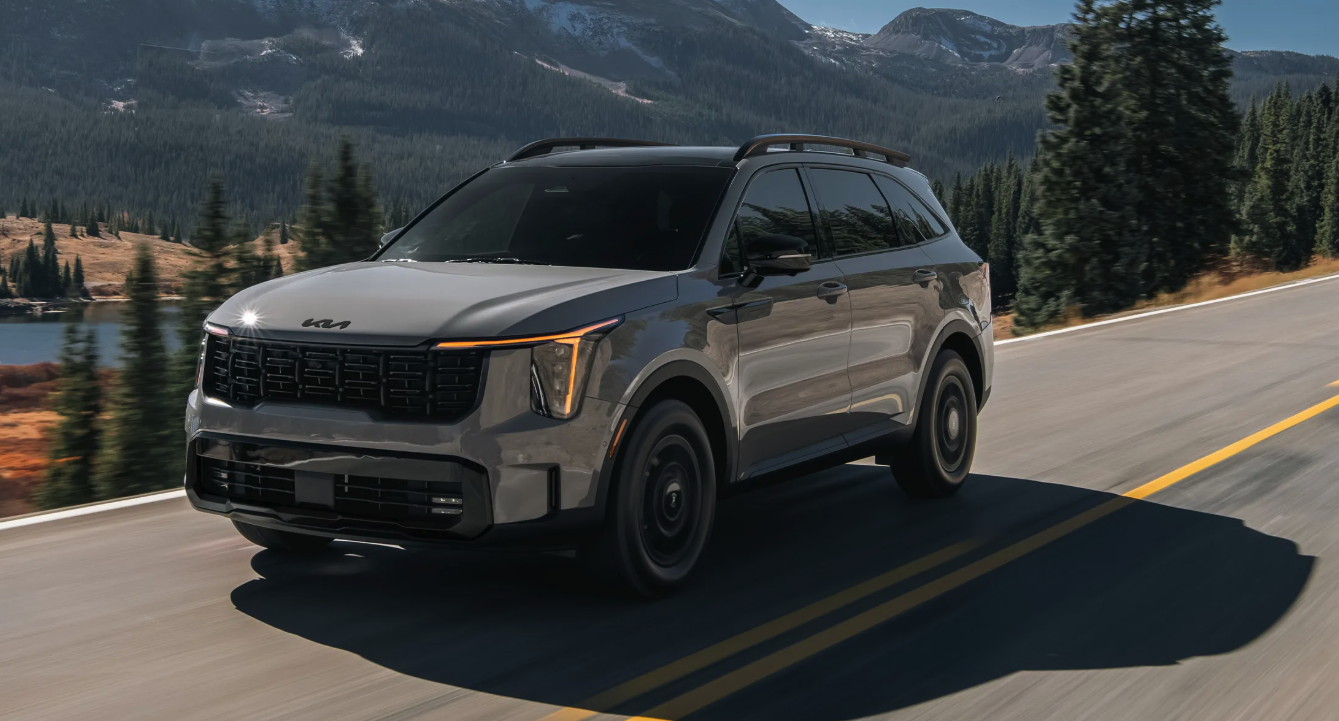
2026 Kia Sorento Hybrid MPG, Power, and Range
Key Takeaway: The 2026 Sorento Hybrid delivers its best efficiency in EX FWD form, with 37 MPG combined and an EPA-listed 655-mile total range.
The 2026 Sorento Hybrid EX FWD is EPA-estimated at 37 MPG city, 36 MPG highway, and 37 MPG combined. The EX AWD and X-Line SX Prestige AWD are EPA-estimated at 32 MPG city, 35 MPG highway, and 34 MPG combined. That difference matters for shoppers choosing between maximum fuel economy and AWD confidence.
For a Daphne driver who mostly handles local routes and wants the highest MPG figure, EX FWD is the natural starting point. For a Spanish Fort or Mobile commuter who wants added confidence during heavy rain, EX AWD or X-Line SX Prestige AWD may make more sense. Kia also lists total range at 655 miles for EX FWD and 602 miles for AWD versions, based on EPA fuel-economy estimates and tank capacity.
Unlike a plug-in hybrid, the Sorento Hybrid does not need to be connected to a charger. It uses regenerative braking and hybrid system management to support the electric motor. You fill it with gasoline, drive normally, and let the hybrid system manage the power balance.
| EPA Rating | Sorento Hybrid EX FWD | Sorento Hybrid EX AWD / X-Line SX Prestige AWD | Best For |
|---|---|---|---|
| City MPG | 37 MPG | 32 MPG | EX FWD for city efficiency |
| Highway MPG | 36 MPG | 35 MPG | Both are strong for road trips |
| Combined MPG | 37 MPG | 34 MPG | EX FWD for highest combined rating |
| Total Range | 655 miles | 602 miles | Long family trips with fewer fuel stops |
| Fuel Type | Regular gasoline | Regular gasoline | No plug-in charging required |
| Ideal Use Case | Daphne family prioritizing MPG | Bayway commuter wanting AWD confidence | Choose based on route and traction needs |
Based on Kia official website and FuelEconomy.gov.
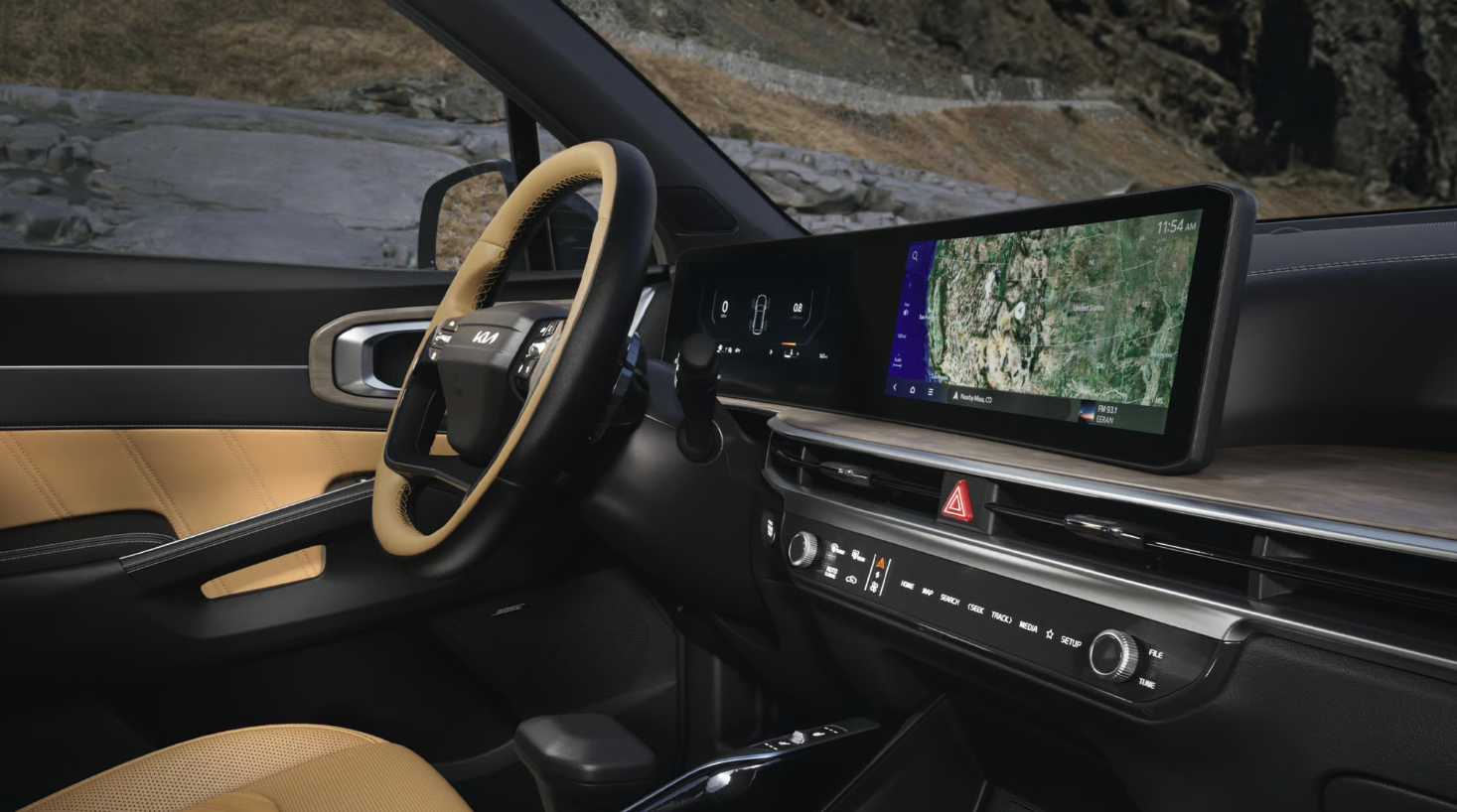
Key Specs and Performance Details
Key Takeaway: The Sorento Hybrid uses a 1.6-liter turbo-hybrid system with 227 horsepower, 258 pound-feet of torque, and a 6-speed automatic transmission.
Under the hood, the 2026 Sorento Hybrid uses a 1.6-liter turbocharged hybrid powertrain. The system produces 227 horsepower and 258 pound-feet of torque, which gives the SUV enough response for I-10 merging, school pickup lanes, and weekend travel. Kia pairs the powertrain with a 6-speed automatic transmission rather than a continuously variable transmission, giving the driving feel a more traditional shift pattern.
The hybrid system is especially useful in stop-and-go traffic because the electric motor can assist at low speeds and during initial acceleration. That helps the Sorento Hybrid perform well in the exact driving patterns many Daphne-area families experience: traffic lights, school zones, US-98 errands, parking lots, and commuter congestion around Mobile.
| Spec | 2026 Sorento Hybrid | Why It Matters |
|---|---|---|
| Engine | 1.6L turbocharged hybrid powertrain | Balances efficiency and everyday response |
| Horsepower | 227 hp | Confident acceleration for family driving |
| Torque | 258 lb-ft | Useful low-speed pull from hybrid assist |
| Transmission | 6-speed automatic | Traditional shift feel compared with many hybrids |
| AWD Availability | Available on EX; standard on X-Line SX Prestige AWD | Added traction confidence in rain |
| Terrain Mode | Standard on AWD-equipped models | Helps adapt traction for changing road conditions |
Based on Kia official website and Kia Media specifications.
Kia warranty coverage also supports long-term confidence. Kia lists a 10-year/100,000-mile Powertrain Limited Warranty and a 5-year/60,000-mile Basic Limited Warranty under written terms. Hybrid-related warranty details should be reviewed for the exact vehicle, so we recommend checking Kia warranty information with our team before purchase.
Three-Row Seating, Cargo Space, and Family Utility
Key Takeaway: The Sorento Hybrid is best for families that need three-row flexibility sometimes, not necessarily a full-size third row every day.
The 2026 Sorento Hybrid includes three-row seating, making it a practical choice for growing families, carpool duty, and occasional extra passengers. Kia Media notes that the 2026 EX HEV uses a standard second-row bench seat, while an available EX Premium Package can add second-row captain’s chairs, Bose Premium Audio, and a panoramic roof. The X-Line SX Prestige configuration is more premium and comfort-focused.
Cargo space is flexible. Kia specifications list 12.6 cubic feet behind the third row, 38.5 to 45.0 cubic feet behind the second row depending on configuration, and up to 75.5 cubic feet behind the first row. That gives families enough room to switch between passengers and gear depending on the day.
For a Fairhope family with school bags, sports gear, groceries, and occasional grandparents riding along, the Sorento Hybrid is a smart fit. For a household that carries adults in the third row every day, we recommend comparing the larger Kia Telluride. For a family that wants sliding-door convenience, we can also compare the Kia Carnival Hybrid.
| Family Need | Sorento Hybrid Advantage | When to Compare Another Kia |
|---|---|---|
| Occasional third-row use | Standard three-row layout | Telluride if third row is used daily |
| School and sports gear | Foldable rear seating and up to 75.5 cu. ft. cargo space | Carnival if sliding doors matter more |
| Daily fuel savings | Up to 37 MPG combined | Sportage Hybrid if third row is not needed |
| Rainy commutes | Available AWD and Terrain Mode | Telluride if more passenger room is needed |
| Budget-conscious family | Lower starting point than many larger three-row SUVs | Used or CPO options if price is the top priority |
| Best Overall Match | Family needing efficiency plus flexible seating | Compare size before deciding |
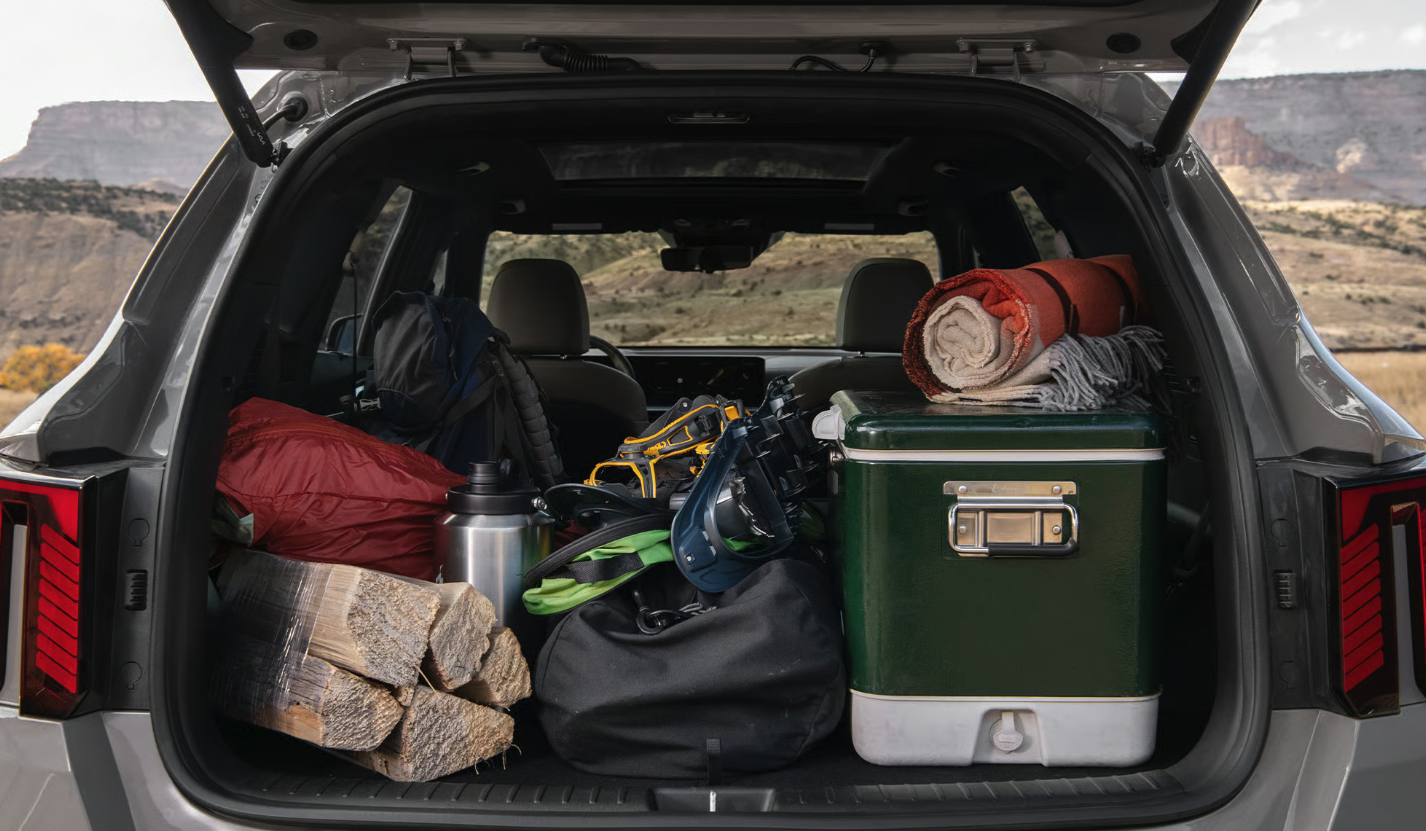
EX vs X-Line SX Prestige AWD
Key Takeaway: Choose EX for the best value and MPG potential; choose X-Line SX Prestige AWD for standard AWD, bolder styling, and premium comfort.
The 2026 Sorento Hybrid lineup is more focused than many SUV lineups, which makes the decision easier. EX FWD is the most efficient version. EX AWD adds traction confidence while keeping the EX value story. X-Line SX Prestige AWD adds a more rugged appearance, black exterior accents, gloss black wheels, standard AWD, and more premium features.
Kia Media confirms that the 2026 Sorento HEV starts at $38,890 for EX FWD, $40,690 for EX AWD, and $47,190 for SX Prestige, with destination excluded. Prices, fees, availability, offers, and retailer charges can vary, so we recommend confirming current details with our team before making final plans.
| Trim | Starting MSRP | MPG | Best For |
|---|---|---|---|
| EX FWD | $38,890, destination excluded | 37 city / 36 highway / 37 combined | Best MPG and value-focused family driving |
| EX AWD | $40,690, destination excluded | 32 city / 35 highway / 34 combined | Value plus wet-weather confidence |
| X-Line SX Prestige AWD | $47,190, destination excluded | 32 city / 35 highway / 34 combined | Premium comfort, bolder design, and AWD confidence |
| Best MPG Choice | EX FWD | 37 combined MPG | Daphne family wanting maximum efficiency |
| Best AWD Choice | EX AWD or X-Line SX Prestige AWD | 34 combined MPG | Spanish Fort or Mobile commuter |
| Our Recommendation | Start with EX, then compare X-Line SX Prestige AWD | Choose based on budget and AWD preference | Most shoppers should test-drive both if available |
Based on Kia official website, Kia Media, and FuelEconomy.gov.
Local Driving Fit for Daphne and the Gulf Coast
Key Takeaway: The Sorento Hybrid fits Gulf Coast families because it balances fuel economy, range, seating, and available AWD for mixed local and highway driving.
Daphne-area families rarely drive one kind of route. A normal week might include US-98 errands, Eastern Shore school traffic, Mobile Bayway commuting, I-10 travel, Fairhope evenings, and Gulf Shores weekend plans. The Sorento Hybrid works well in that mix because it can serve as a commuter vehicle and a family SUV at the same time.
For a Spanish Fort driver who crosses the Bayway often, AWD may be worth comparing. For a Fairhope family that wants maximum MPG and mostly stays local, EX FWD may be the cleaner fit. For a Mobile-area buyer who wants comfort, advanced features, and a more rugged look, X-Line SX Prestige AWD is the version we would show first.
| Local Scenario | Driver Need | Sorento Hybrid Benefit | Recommended Fit |
|---|---|---|---|
| Daphne school runs | Fuel savings and flexible seating | 37 MPG combined on EX FWD | EX FWD |
| Spanish Fort to Mobile commute | Rain confidence and range | AWD availability and 602-mile AWD range | EX AWD or X-Line SX Prestige AWD |
| Fairhope family errands | Easy size and family comfort | Three-row flexibility without full-size SUV bulk | EX FWD or EX AWD |
| Gulf Shores weekend trips | Highway comfort and cargo room | Up to 75.5 cu. ft. cargo space | Either trim path |
| Mobile-area tech buyer | Comfort and premium features | X-Line SX Prestige AWD equipment and styling | X-Line SX Prestige AWD |
| Best Overall Match | Family efficiency plus flexible space | Three-row hybrid SUV balance | 2026 Sorento Hybrid |
Sorento Hybrid vs Sportage Hybrid, Telluride, and Highlander Hybrid
Key Takeaway: The Sorento Hybrid is the right middle choice when you want more seating than Sportage Hybrid but do not need the full size of Telluride.
The Sorento Hybrid is not the only smart family choice. The Sportage Hybrid is better if you do not need a third row and want a smaller SUV. The Telluride is better if passenger and cargo space matter more than fuel economy. The Carnival Hybrid is better if sliding doors and kid-friendly access are top priorities. The Toyota Highlander Hybrid is a strong competitor, but many shoppers prefer the Sorento Hybrid’s size, value, warranty coverage, and traditional 6-speed automatic feel.
If you are cross-shopping, start with the number of seats you use every week. A family that rarely needs a third row may save space and money with Sportage Hybrid. A family that needs adults in the third row regularly should compare Telluride. A family that wants three rows sometimes and strong fuel economy often lands back at Sorento Hybrid.
| Vehicle | Primary Strength | Trade-Off | Best For |
|---|---|---|---|
| 2026 Sorento Hybrid | Three-row flexibility and strong MPG | Smaller than Telluride | Families needing occasional third-row use |
| 2026 Sportage Hybrid | Smaller footprint and hybrid efficiency | No third row | Commuters or small families |
| 2027 Telluride | More passenger and cargo room | Larger size and different MPG profile | Larger families |
| Carnival Hybrid | Family access and sliding-door practicality | Not SUV-styled like Sorento | Parents with small children |
| Toyota Highlander Hybrid | Larger competitor with hybrid efficiency | Pricing, size, and transmission feel may differ | Cross-shoppers comparing midsize hybrids |
| Our Recommendation | Choose based on seating use first | Then compare MPG, price, and comfort | Practical family SUV shoppers |
Drivers who want a smaller hybrid SUV can compare the 2026 Kia Sportage Hybrid. Families who need maximum space can compare the latest Kia Telluride. If you want the strongest family access and a minivan-style cabin, the 2026 Kia Carnival Hybrid may be worth a closer look.
Hybrid Service and Ownership Tips
Key Takeaway: The Sorento Hybrid does not require plug-in charging, but it still benefits from routine service, tire care, brake checks, battery inspections, and model-specific maintenance.
The Sorento Hybrid is designed to be easy to live with. You do not need to install a charger or change your daily fueling routine. Still, hybrid ownership works best when regular maintenance stays on schedule. Oil changes, tire rotations, brake inspections, cabin filters, battery checks, cooling system inspections, and software updates can all support long-term performance.
Gulf Coast driving makes service even more important. Heat can stress batteries and A/C systems. Heavy rain makes tire tread and brake condition more important. Long commutes between Daphne, Spanish Fort, and Mobile can add mileage quickly. Our service team can help you keep maintenance organized and use genuine Kia parts when replacement parts are needed.
If you are planning to keep your Sorento Hybrid long term, service records can also support warranty confidence and future trade value. You can schedule routine maintenance, ask about hybrid inspections, or discuss upcoming service through our Kia service center in Daphne.
2026 Kia Sorento Hybrid FAQs
What is the MPG of the 2026 Kia Sorento Hybrid?
The 2026 Sorento Hybrid EX FWD is EPA-estimated at 37 MPG city, 36 MPG highway, and 37 MPG combined. The EX AWD and X-Line SX Prestige AWD are EPA-estimated at 32 MPG city, 35 MPG highway, and 34 MPG combined. Actual mileage varies with driving conditions, habits, vehicle condition, weather, and options.
Does the 2026 Kia Sorento Hybrid need to be plugged in?
No. The 2026 Sorento Hybrid is a self-charging hybrid. It uses the gas engine, electric motor, hybrid battery, and regenerative braking to manage efficiency while you drive. If you want electric-only driving from a plug, ask our team about plug-in hybrid options.
How many passengers does the 2026 Sorento Hybrid seat?
The 2026 Sorento Hybrid includes three-row seating. Configuration can vary by trim and package, including bench-seat and captain’s-chair arrangements. We recommend checking the exact vehicle configuration before purchase, especially if you need six or seven seats for daily family use.
Which 2026 Sorento Hybrid trim should I choose?
Choose EX FWD if maximum MPG and value matter most. Choose EX AWD if you want added wet-weather confidence while staying closer to the EX price point. Choose X-Line SX Prestige AWD if you want standard AWD, bolder styling, and more premium comfort and technology.
Is the 2026 Sorento Hybrid good for Bayway commuting?
Yes, the Sorento Hybrid can be a strong fit for Bayway commuting because it offers long total range, strong highway MPG, and available AWD. Spanish Fort and Mobile commuters should compare EX AWD or X-Line SX Prestige AWD if wet-road confidence is a priority.
Is the Sorento Hybrid better than the Sportage Hybrid?
The Sorento Hybrid is better if you need three-row seating or more family flexibility. The Sportage Hybrid is better if you want a smaller SUV and do not need a third row. Our team recommends comparing both if you are unsure how often you will use the extra seating.
Does the Sorento Hybrid have towing capability?
The Sorento Hybrid may support light towing when properly equipped, but exact capacity, accessories, and requirements should be verified for the specific vehicle and configuration. If towing is a priority, ask our team to review the owner’s manual, hitch equipment, payload, and trailer needs before purchase.
What warranty coverage comes with the Sorento Hybrid?
Kia lists a 10-year/100,000-mile Powertrain Limited Warranty and a 5-year/60,000-mile Basic Limited Warranty under written terms. Hybrid-related coverage should be reviewed for the exact vehicle. We recommend checking warranty terms with our team before purchase so you understand what applies.
What’s Included in a Kia Lifetime Warranty?

Understanding Kia Lifetime Warranty Coverage and Factory Warranty Terms
Kia warranty coverage can include several different protection types, including factory limited warranties, powertrain coverage, certified pre-owned warranty benefits, hybrid and EV system coverage, and dealer-backed lifetime warranty programs when available. The key is understanding which coverage applies to your specific Kia model, owner status, mileage, maintenance history, and written warranty agreement.
If you are researching Kia lifetime warranty coverage, it is important to separate Kia’s official factory warranty from any dealer-backed lifetime warranty program. Kia factory warranty coverage has defined time and mileage limits. A lifetime warranty, when offered by a dealership, is usually a separate written program with its own covered components, exclusions, service requirements, deductible rules, transfer terms, and claim process.
For drivers in Daphne, Fairhope, Spanish Fort, Mobile, Foley, Gulf Shores, Orange Beach, and Pensacola, warranty clarity matters before and after purchase. Whether you drive a Kia Telluride, Sorento, Sportage, Carnival, K4, Seltos, Niro, EV6, or EV9, understanding the warranty terms can help you plan service, protect long-term value, and avoid confusion when repairs are needed.
Quick answer: Kia does not provide one universal “lifetime warranty” on every vehicle. Kia offers factory-backed limited warranty coverage, while a Kia lifetime warranty usually refers to a separate dealer-backed program that may cover select powertrain components for as long as the eligible owner keeps the vehicle, subject to the written agreement.
Table of Contents
- Kia Factory Warranty vs Dealer-Backed Lifetime Warranty
- What Does a Kia Lifetime Warranty Cover?
- Kia Lifetime Engine and Powertrain Warranty Coverage
- Factory Warranty vs Lifetime Warranty vs Extended Service Contract
- Kia Warranty Coverage by Popular Model
- Maintenance Requirements and Service Records
- How Missed Maintenance Can Affect Warranty Questions
- Warranty Transferability and Used Kia Coverage
- Hybrid, Plug-In Hybrid, and EV Warranty Coverage
- Daphne and Gulf Coast Ownership Tips
- Kia Warranty FAQs
Kia Factory Warranty vs Dealer-Backed Lifetime Warranty
Key takeaway: Kia factory warranty coverage is provided by Kia under official written terms. A dealer-backed lifetime warranty is a separate program that must be reviewed through the dealer’s written agreement.
Kia’s factory warranty program is the foundation. Kia lists a 5-year/60,000-mile Basic Limited Warranty and a 10-year/100,000-mile Powertrain Limited Warranty for eligible owners. Kia warranty coverage may also include limited anti-perforation, roadside assistance, trip interruption support, and other benefits depending on model year, ownership status, and written terms.
A dealer-backed lifetime warranty is different. It may be offered by a dealership or administered through a third-party provider. These programs often focus on long-term powertrain protection, but they do not all cover the same parts. They may also require the owner to follow a specific maintenance schedule, keep service records, and complete claims through an approved process.
For a Daphne-area driver planning to keep a Kia Telluride, Sorento, Sportage, Carnival, or K4 for many years, that distinction is important. Factory warranty coverage has defined time and mileage limits. Lifetime warranty language may provide added peace of mind, but only the signed agreement explains what is included and what is excluded.
What Does a Kia Lifetime Warranty Cover?
Key takeaway: A Kia lifetime warranty commonly refers to long-term powertrain-focused coverage, but exact coverage depends on the dealer-backed warranty agreement.
Many shoppers search for “what does the Kia lifetime warranty cover” because lifetime warranty terms can sound broad. In practice, most dealer-backed lifetime warranty programs are not bumper-to-bumper warranties. They often focus on major powertrain components, such as the engine, transmission, drive axle, or related internally lubricated parts.
A lifetime warranty may not cover normal wear items, maintenance items, cosmetic issues, brake pads, tires, wiper blades, fluids, filters, infotainment components, upholstery, glass, accessories, collision damage, environmental damage, or repairs caused by neglect or misuse. That is why the written contract matters more than the phrase “lifetime warranty.”
Before relying on lifetime warranty coverage, ask for the written agreement and confirm: covered components, excluded components, owner eligibility, maintenance requirements, deductible rules, transferability, claim process, and whether the program applies to new, used, certified pre-owned, hybrid, or EV models.
Kia Lifetime Engine and Powertrain Warranty Coverage
Key takeaway: Powertrain coverage generally focuses on the components that move the vehicle, including the engine, transmission, axles, differentials, and related internal parts.

Search interest around “Kia lifetime engine warranty,” “Kia lifetime powertrain warranty,” and “Kia engine warranty” shows that many owners want to know whether the engine is protected long term. The engine is often one of the most important parts of a powertrain-focused warranty, but coverage is still limited by the agreement.
Kia’s official Powertrain Limited Warranty applies to essential powertrain components under Kia’s written warranty terms. A dealer-backed lifetime powertrain warranty may add longer-term protection for eligible vehicles, but it may still exclude damage from poor maintenance, overheating, contamination, modifications, collision damage, or improper repairs.
| Coverage Area | What It Usually Relates To | Important Limit | Question to Ask |
|---|---|---|---|
| Engine | Internal engine components and major assemblies under written terms | Neglect, overheating, poor maintenance, or contamination may affect eligibility | Which engine parts are listed as covered? |
| Transmission | Transmission case, internal components, and related assemblies | Fluid service history and maintenance records can matter | What transmission records are required? |
| Axles and Differentials | Power delivery components for FWD, AWD, or driveline systems | Coverage depends on drivetrain and warranty language | Does coverage apply to my specific Kia drivetrain? |
| Seals and Gaskets | May be covered when tied to a covered powertrain repair | Stand-alone seepage or wear may be handled differently | Are seals and gaskets covered separately? |
| Hybrid or EV Components | May fall under separate hybrid or EV system coverage | Not always part of a powertrain-only lifetime warranty | Which warranty covers the high-voltage battery? |
Factory Warranty vs Lifetime Warranty vs Extended Service Contract
Key takeaway: Factory warranty, dealer-backed lifetime warranty, and extended service contracts can all help, but they are different tools with different coverage limits.
A factory warranty is included with the eligible vehicle and is backed by Kia under Kia’s written terms. A dealer-backed lifetime warranty may be an additional dealership program with its own rules. An extended service contract is usually purchased separately and may provide broader component protection depending on the plan.
| Coverage Type | Who Provides It | Typical Focus | Best For |
|---|---|---|---|
| Kia Factory Basic Limited Warranty | Kia | Covered factory defects during the basic warranty period | New Kia owners in the first years of ownership |
| Kia Powertrain Limited Warranty | Kia | Engine, transmission, axle, differential, and driveline components under written terms | Eligible original owners or eligible certified pre-owned buyers |
| Dealer-Backed Lifetime Warranty | Dealer or warranty administrator | Often long-term powertrain-focused protection | Long-term owners who review terms before purchase |
| Extended Service Contract | Manufacturer, dealer, lender, or third-party provider | May include broader component coverage depending on the plan | Buyers wanting protection beyond powertrain-only repairs |
| Certified Pre-Owned Warranty | Kia CPO program terms | Coverage tied to eligible certified pre-owned vehicles | Used Kia shoppers wanting added confidence |
Kia Warranty Coverage by Popular Model
Key takeaway: Kia warranty questions often vary by model, model year, powertrain, and whether the vehicle is new, used, or certified pre-owned.
Search demand shows that many shoppers compare warranty coverage by model. A Kia Carnival warranty question may involve family vehicle ownership and long-term powertrain confidence. A Kia Sorento warranty question may involve gas, hybrid, or plug-in hybrid coverage. A Kia Telluride warranty question may focus on SUV powertrain protection, while a Kia K4 warranty question may focus on new vehicle coverage.
| Kia Model | Common Warranty Question | Coverage Area to Review | Recommended Next Step |
|---|---|---|---|
| Kia Telluride | What is the warranty on a Kia Telluride? | Factory basic, powertrain, AWD components, and any dealer-backed program | Review VIN-specific warranty terms before purchase. |
| Kia Sorento | What does the Kia Sorento warranty include? | Gas, hybrid, plug-in hybrid, powertrain, and battery-related coverage | Confirm coverage by powertrain type and model year. |
| Kia Sportage | Does the Kia Sportage warranty cover hybrid components? | Factory warranty, powertrain warranty, and hybrid system terms | Ask for warranty details before choosing gas, hybrid, or PHEV. |
| Kia Carnival | What is included in the Kia Carnival warranty? | Factory coverage, powertrain coverage, and long-term family vehicle service needs | Compare new, used, and certified pre-owned options. |
| Kia K4 | What warranty does a new Kia K4 have? | New vehicle factory warranty and eligible powertrain warranty | Review the current warranty manual and ownership terms. |
| Kia EV6 and EV9 | Are EV batteries covered? | EV system warranty, high-voltage battery coverage, and charging-related systems | Confirm EV coverage separately from traditional powertrain terms. |
Maintenance Requirements and Service Records
Key takeaway: Warranty confidence depends on maintenance records because coverage questions often require proof that the vehicle was serviced correctly and on time.
Maintenance is one of the most important parts of keeping warranty coverage clear. Factory warranties and dealer-backed lifetime warranty programs usually require owners to follow the recommended maintenance schedule. That can include oil changes, filter replacements, fluid inspections, tire rotations, brake checks, software updates, and other service items listed for the specific model.
Records matter because a warranty claim may require documentation. If service is performed outside the dealership, keep receipts, mileage logs, service dates, part numbers, and repair orders. If service is performed with Kia of Daphne, our service team can help keep records organized and easier to reference.
- Follow the maintenance schedule for your exact Kia model and powertrain.
- Keep every receipt, invoice, repair order, and mileage record.
- Use fluids and parts that meet Kia specifications.
- Address warning lights, leaks, overheating, noise, or drivability issues early.
- Ask the service team to review coverage before assuming a repair is covered.
How Missed Maintenance Can Affect Warranty Questions
Key takeaway: Missing scheduled service does not automatically answer every warranty question, but it can make a claim harder to support if the repair is related to neglected maintenance.
A missed oil change, overdue fluid service, or long gap in maintenance records can create problems if a covered component fails. Warranty administrators may review whether the failure was caused by a defect, normal wear, misuse, lack of maintenance, or outside damage. If the concern appears connected to neglected service, coverage may be limited or denied under the written terms.
That is why we recommend addressing maintenance gaps quickly. If you bought a used Kia and do not know the full service history, ask our team for a service inspection. If you drive a high-mileage route between Spanish Fort and Mobile, keep oil changes and tire rotations on a predictable schedule. If your Kia is a hybrid, plug-in hybrid, or EV, ask which maintenance items apply to the gas, electric, brake, battery, and cooling systems.
Warranty Transferability and Used Kia Coverage
Key takeaway: Warranty transfer rules vary, so used Kia shoppers and owners planning to sell should confirm which coverage remains before relying on it.
Transferability is another area where shoppers should slow down and read the terms. Kia’s factory warranty may transfer differently depending on warranty type, owner status, certified pre-owned status, vehicle history, and written rules. Dealer-backed lifetime warranty programs are often limited to the original purchaser, but the exact answer depends on the agreement.
If you are buying a used Kia, ask for VIN-specific warranty information. A vehicle may still have some basic warranty, powertrain warranty, certified pre-owned coverage, or service contract coverage remaining, but those details should be verified before purchase.
Hybrid, Plug-In Hybrid, and EV Warranty Coverage
Key takeaway: Electrified Kia models may include separate EV system or battery coverage, so hybrid and EV shoppers should review those terms in addition to powertrain coverage.
Hybrid, plug-in hybrid, and EV models add components that are not always treated the same way as a traditional gasoline powertrain. Kia warranty information may include EV system coverage for key electric drivetrain components, such as the electric motor, gear drive unit, electric power control unit, high-voltage battery, and on-board charger, subject to written warranty terms.
That matters for shoppers comparing a Sportage Hybrid, Sportage Plug-in Hybrid, Sorento Hybrid, Sorento Plug-in Hybrid, Niro Hybrid, Niro EV, EV6, or EV9. A powertrain warranty may not answer every question about high-voltage battery coverage, charging components, software, or electric drive systems.
Drivers comparing electrified options can review our EV and hybrid vehicles and ask our team to explain how factory warranty, EV system coverage, service needs, and charging habits work together.
Daphne and Gulf Coast Ownership Tips
Key takeaway: Local conditions make routine maintenance especially important for long-term warranty confidence.
Vehicles in our area deal with a specific mix of conditions. Daphne and Fairhope drivers see humid summers and heavy rain. Spanish Fort and Mobile commuters add highway mileage across bridges and busy corridors. Gulf Shores and Orange Beach trips can bring sand, salt air, cargo, and long weekend drives. Those conditions do not change the written warranty, but they do make regular maintenance more important.
| Local Driving Pattern | Warranty-Related Concern | Recommended Service Habit | Best For |
|---|---|---|---|
| Daphne daily errands | Short-trip wear and battery strain | Battery tests and routine inspections | Local commuters |
| Spanish Fort to Mobile commute | High mileage and highway wear | Oil changes, tire rotations, and brake checks | Bayway commuters |
| Fairhope family driving | Kids, cargo, heat, and A/C use | Cabin filter, A/C, tire, and brake service | Family SUV owners |
| Gulf Shores weekends | Sand, salt air, luggage, and longer routes | Underbody checks and multi-point inspections | Weekend travelers |
| Hybrid or EV ownership | Battery, cooling, brakes, and software systems | Model-specific service review | Electrified Kia owners |
Kia Warranty FAQs
Does Kia have a lifetime warranty?
Kia’s official factory warranty is not a blanket lifetime warranty. Kia provides limited warranty coverage such as the 5-year/60,000-mile Basic Limited Warranty and 10-year/100,000-mile Powertrain Limited Warranty for eligible owners. A lifetime warranty may refer to a separate dealer-backed program, and the exact terms should be reviewed in writing before purchase.
What does Kia’s 10-year/100,000-mile Powertrain Limited Warranty cover?
Kia’s Powertrain Limited Warranty generally applies to essential powertrain components, including the engine, transmission, axles, differentials, and related driveline components under written terms. Coverage is limited and can vary by model year, owner status, and warranty manual.
What does a Kia lifetime engine warranty cover?
A Kia lifetime engine warranty usually refers to dealer-backed powertrain protection that may include select engine components. It is not the same as full bumper-to-bumper coverage. Covered parts, exclusions, service rules, and claim requirements depend on the written lifetime warranty agreement.
Is a dealer-backed lifetime warranty the same as Kia’s factory warranty?
No. Kia’s factory warranty is provided by Kia and follows Kia’s written warranty program. A dealer-backed lifetime warranty, when offered, is a separate program with its own eligibility rules, administrator, covered components, maintenance requirements, deductibles, exclusions, and transfer rules.
Does Kia warranty cover suspension?
Suspension coverage depends on the warranty type, vehicle age, mileage, cause of failure, and written terms. A factory basic warranty may address certain covered defects during the warranty period, while a powertrain-focused lifetime warranty may not include suspension components.
Can missing an oil change void Kia warranty coverage?
A missed oil change does not automatically answer every warranty question, but it can create problems if a related engine failure occurs and records show neglected maintenance. Warranty administrators may review whether the failure was caused by a covered defect or lack of service.
Can I service my Kia somewhere else and keep warranty coverage?
You can usually service your Kia at a licensed repair facility, but you must follow the maintenance schedule and keep detailed records. Many owners prefer dealership service because repair orders, dates, mileage, and work performed are easier to document.
Does a Kia lifetime warranty transfer when I sell the vehicle?
Dealer-backed lifetime warranties are often limited to the original purchaser, but transfer rules depend on the written agreement. Kia factory warranty transfer rules also vary by warranty type, ownership status, and certified pre-owned eligibility.
Are hybrid batteries covered by a lifetime powertrain warranty?
Hybrid and EV batteries are usually handled under separate factory warranty terms rather than a traditional dealer-backed powertrain-only lifetime program. Shoppers comparing hybrid, plug-in hybrid, or EV models should review the exact warranty section for that vehicle.
What should I bring if I have a warranty concern?
Bring your vehicle, current mileage, maintenance records, receipts, any warning-light information, and a clear description of the concern. If the vehicle was serviced elsewhere, bring those documents too. Our service team can inspect the vehicle, document the concern, and review whether the repair appears related to warranty coverage.
Connect with us


 Warranties include 10-year/100,000-mile powertrain and 5-year/60,000-mile basic. All warranties and roadside assistance are limited. See retailer for warranty details.