

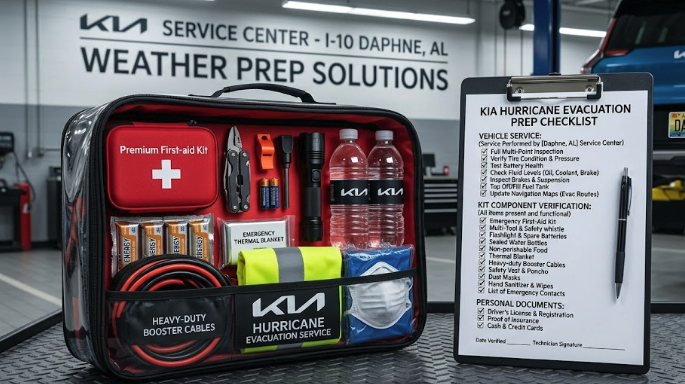
Hurricane evacuation readiness service helps confirm that your Kia is prepared for the specific stress of leaving the Gulf Coast during a storm threat. This is not a generic maintenance checklist. A pre-evacuation inspection focuses on the systems that matter most when traffic is slow, rain is heavy, visibility is poor, fuel stops are crowded, and your family may spend hours on the road. At Kia of Daphne, our service team can inspect battery health, tires, brakes, fluids, belts, hoses, lights, wipers, A/C performance, emergency readiness, and warning concerns before storm conditions make scheduling harder.
Heavy rainfall, tropical wind gusts, sudden flood warnings, and changing evacuation guidance are part of life along the Gulf Coast. When a hurricane or tropical storm threatens Baldwin County, a normal drive can become a long, slow-moving evacuation route. Your vehicle may idle for extended periods, run the air conditioning for hours, carry extra passengers and supplies, and operate in heavy rain while road conditions change quickly.
That is why the right service conversation before hurricane season is not just “is my car due for maintenance?” The better question is “is my vehicle ready to carry my family through a possible evacuation?” That focus changes what matters most. Battery reserve, tire tread, brake response, coolant condition, windshield visibility, exterior lights, spare tire condition, and warning lights all become evacuation-readiness items.
Ready.gov recommends learning evacuation routes, following instructions from local emergency managers, taking an emergency supply kit, and keeping a portable emergency kit in the car. NHTSA also recommends checking road conditions, local stations, road closures, and evacuation routes before heading out in severe weather. Our role at Kia of Daphne is to help make sure the vehicle itself is ready before your family ever needs to make that decision.
Quick Answer: Schedule hurricane evacuation readiness service if your Kia has an older battery, worn tires, brake concerns, weak wipers, overdue fluids, warning lights, cooling system concerns, A/C problems, or any symptom that could become serious during a long evacuation. The inspection should focus on evacuation-specific reliability, visibility, stopping power, wet-road traction, heat management, and emergency preparedness.
Table of Contents
- Why Hurricane Evacuation Readiness Is Different
- Battery and Electrical Readiness Before a Storm
- Tires, Tread, Spare Tire, and Wet Evacuation Roads
- Brakes for Stop-and-Go Evacuation Traffic
- Fluids, Cooling System, Belts, and Hoses
- Visibility, Wipers, Headlights, and Hazard Lights
- Flooded Roads and Why You Should Turn Around
- Vehicle Emergency Supplies for Evacuation
- When to Schedule Pre-Hurricane Service
- Hurricane Evacuation Service FAQs
Why Hurricane Evacuation Readiness Is Different
Key Takeaway: A hurricane evacuation readiness inspection prioritizes the systems that can affect safety, visibility, reliability, and comfort during a long, slow, wet evacuation drive.
A regular service checklist looks at routine maintenance. A hurricane evacuation readiness visit is more targeted. The goal is to identify anything that could make your vehicle less dependable when roads are crowded, rain is heavy, fuel stations are busy, and the drive takes longer than expected.
During an evacuation, your Kia may face conditions that are harder than a typical commute. Long idling can increase heat load on the cooling system. Repeated braking can reveal worn brake components. Heavy rain can expose weak wiper blades, poor tire tread, or headlight issues. Extra passengers and supplies can add weight. Phone charging, headlights, wipers, A/C, infotainment, and safety systems can all add electrical demand.
That is why we anchor this article to hurricane evacuation readiness instead of a general summer checklist. Oil changes, tire service, batteries, brakes, and fluids are all common maintenance topics, but here they matter because they directly affect whether your vehicle is ready to leave the coast safely if local officials issue evacuation guidance.
Our service team recommends thinking about readiness in three layers: can the vehicle start and stay running, can it stop and steer safely in heavy rain, and can your passengers remain safe and comfortable if the trip takes hours longer than planned?
| Evacuation Concern | Why It Matters During a Storm | Service Focus |
|---|---|---|
| Long idle time | Traffic may move slowly for hours | Battery, charging system, cooling system, A/C performance |
| Heavy rain | Visibility and traction can change quickly | Wipers, headlights, tires, tread depth, brake response |
| Extra cargo | Emergency supplies and passengers add load | Tire pressure, spare tire, brakes, suspension warning signs |
| Route changes | Drivers may face detours, closures, or delays | Fuel planning, warning lights, fluid condition, emergency kit |
| Flood risk | Road depth and roadbed condition may be unknown | Do not drive through flooded roads; follow local guidance |
| Best next step | Prepare before warnings create appointment demand | Schedule a pre-storm evacuation readiness inspection |
Battery and Electrical Readiness Before a Storm
Key Takeaway: A weak battery can become a serious evacuation problem because storm driving increases electrical demand from lights, wipers, A/C, phone charging, and safety systems.
Battery health matters before a hurricane because your vehicle may need to operate under a heavier electrical load than usual. During evacuation traffic, your Kia may run headlights, hazard lights, brake lights, windshield wipers, A/C, defogging, phone chargers, USB ports, navigation, and driver-assistance systems for long stretches.
Heat can also weaken automotive batteries over time. A battery that starts the vehicle on a normal morning may still struggle during an evacuation, especially if it is older, corroded, or already showing slow-start symptoms. That is why a pre-storm battery check should include more than a quick glance under the hood.
Our team can test battery condition, inspect terminals, check for corrosion, verify hold-down security, and look for charging system concerns. If your battery is near the end of its service life, replacing it before storm season is often far less stressful than dealing with a no-start condition when roads are crowded and weather is deteriorating.
Drivers should also consider the small electrical items that help during evacuation. Phone charging, battery-powered lights, and navigation access matter when routes change. Keeping the vehicle’s 12-volt system healthy helps protect those basics.
| Battery Readiness Item | Why It Matters for Evacuation | What We Check |
|---|---|---|
| Battery age and strength | Older batteries are more vulnerable under heat and electrical load | Battery test and service history review |
| Terminal condition | Corrosion can interfere with starting and charging | Terminal inspection and cleaning recommendation if needed |
| Charging system | The vehicle must keep the battery supported during long drives | Charging output and warning light review |
| Accessories | Phones, lights, and chargers may be used for hours | 12-volt and USB function check when needed |
| No-start warning signs | Slow cranking can become failure under stress | Diagnostic check before evacuation demand |
| Best next step | Test before storm season peaks | Schedule battery inspection if starts feel weak |
Tires, Tread, Spare Tire, and Wet Evacuation Roads
Key Takeaway: Tires are evacuation-critical because tread depth, pressure, and spare tire readiness affect wet-road traction, stopping distance, and roadside options.
Tires are the only contact point between your Kia and the road, so they deserve special attention before hurricane season. During an evacuation, road surfaces may be wet for long periods, debris may be present, and drivers may need to brake or steer around sudden hazards. Worn or underinflated tires reduce your margin of safety.
A tire inspection should include tread depth, uneven wear, visible damage, age concerns, sidewall condition, valve stems, and cold tire pressure. The recommended tire pressure is listed on the Tire and Loading Information Label, usually on the driver-side door jamb. That recommendation matters more than the maximum pressure printed on the tire sidewall.
The spare tire or tire mobility kit also matters. A spare with low pressure may not help when you need it most. If your Kia uses a tire mobility kit instead of a spare, check that the kit is present, accessible, and not expired. If you are unsure what your vehicle has, our team can help you check.
For evacuation planning, tire condition is not only about blowout prevention. It is also about steering control, wet braking, and confidence when rain reduces visibility. If your tires are already near replacement depth before hurricane season, do not wait until a named storm is approaching to make a decision.
| Tire Readiness Item | Why It Matters During Evacuation | Service Action |
|---|---|---|
| Tread depth | Helps channel water away from the tire contact patch | Measure tread and inspect wear bars |
| Cold tire pressure | Supports load, handling, and tire temperature control | Set pressure to vehicle label specification |
| Uneven wear | Can point to alignment or suspension concerns | Inspect wear pattern and recommend correction if needed |
| Sidewall damage | Cracks, cuts, or bulges can become dangerous under load | Inspect for visible tire damage |
| Spare tire or mobility kit | Gives you a roadside option during delays | Check pressure, condition, location, and kit expiration |
| Best next step | Correct tire concerns before a storm threat | Schedule tire inspection or replacement early |
Brakes for Stop-and-Go Evacuation Traffic
Key Takeaway: Evacuation traffic can mean hours of repeated braking, so brake pads, rotors, fluid condition, pedal feel, and warning lights should be checked before storm season.
Brakes are important every day, but evacuation traffic changes the way they are used. Slow-moving highway traffic, sudden stops, wet pavement, loaded cargo areas, and long routes can all increase brake demand. If your brakes already squeak, grind, pulse, feel soft, or trigger warning lights, those symptoms should be checked before a storm threat.
Brake readiness should include pad thickness, rotor condition, fluid level, hydraulic line inspection, pedal feel, warning lights, and any ABS or stability-control concerns. The goal is not only to make the vehicle stop, but to make sure braking feels predictable when weather and traffic are already stressful.
Brake fluid also deserves attention. If the brake fluid level is low, there may be pad wear or a leak concern. If the pedal feels soft or spongy, the vehicle should be inspected before a long evacuation drive. Brake issues do not become less important because traffic is moving slowly. Stop-and-go conditions can make them more noticeable.
Our technicians can inspect your Kia’s braking system and explain whether the vehicle is ready for wet evacuation driving or needs service before hurricane season peaks.
| Brake Symptom or Check | Evacuation Concern | Recommended Action |
|---|---|---|
| Squealing or grinding | Possible worn brake pads or rotor concern | Schedule brake inspection |
| Soft pedal | Possible hydraulic or fluid concern | Do not delay diagnosis |
| Steering wheel shake when braking | Possible rotor or tire-related issue | Inspect before long-distance evacuation |
| Brake warning light | System may require immediate attention | Schedule diagnostic service |
| Heavy cargo load | More weight can affect stopping distance | Check brakes before evacuation travel |
| Best next step | Confirm predictable stopping power | Complete brake inspection before storm season |
Fluids, Cooling System, Belts, and Hoses
Key Takeaway: Evacuation traffic can stress the cooling system because long idle time and slow speeds reduce natural airflow through the radiator.
During a coastal evacuation, engines may run for hours while traffic moves slowly. That can place extra stress on the cooling system because the vehicle is not getting as much natural airflow as it would at steady highway speed. Coolant level, coolant condition, radiator airflow, hoses, belts, and fans all matter.
Our pre-hurricane service focus includes checking engine oil level, coolant level, brake fluid, windshield washer fluid, visible leaks, belts, hoses, and warning lights. The exact inspection depends on your Kia’s model, mileage, service history, and current symptoms.
Coolant concerns are especially important. Low coolant, leaks, worn hoses, or cooling fan issues can lead to overheating, and overheating during evacuation traffic is one of the last problems any family wants to face. If you have noticed temperature gauge movement, coolant smell, visible leaks, or warning lights, schedule service before a storm threat becomes urgent.
Windshield washer fluid also matters because tropical rain can leave road spray, salt residue, debris, and grime on the windshield. A full reservoir and working washer system can help preserve visibility when road conditions are already difficult.
| Fluid or Component | Why It Matters for Evacuation | Inspection Focus |
|---|---|---|
| Engine coolant | Supports temperature control during long idle periods | Level, condition, leaks, hoses, fan operation concerns |
| Engine oil | Protects engine during extended driving | Level, condition, service interval |
| Brake fluid | Supports reliable braking response | Level and visible concerns |
| Washer fluid | Helps maintain visibility in road spray and rain | Reservoir level and spray operation |
| Belts and hoses | Cracks or leaks can become breakdowns under heat | Visual inspection for wear, leaks, softness, cracking |
| Best next step | Resolve visible leaks or overdue service before storm season | Schedule a pre-evacuation inspection |
Visibility, Wipers, Headlights, and Hazard Lights
Key Takeaway: During hurricane evacuation, visibility systems matter because heavy rain, spray, wind, and road debris can quickly make driving harder.
Visibility is one of the most important parts of hurricane evacuation readiness. Your vehicle needs to help you see the road, and it also needs to help other drivers see you. Wiper blades, washer spray, headlights, brake lights, turn signals, reverse lights, and hazard lights should all be checked before storm season.
Wiper blades should be replaced if they streak, chatter, skip, smear, split, or leave large areas of water behind. Heavy rain can turn weak wipers into a major safety problem. If your wipers are already marginal in a normal storm, they are not ready for tropical weather.
Headlights and taillights matter because evacuation traffic can include rain, low light, early morning departures, nighttime driving, and sudden stops. Hazard lights may also be needed if your vehicle becomes disabled or if traffic slows unexpectedly. Before hurricane season, it is worth confirming that every exterior light works properly.
Fogging also belongs in this conversation. If your windshield fogs repeatedly in humid weather and defrost does not clear it properly, the A/C system may not be dehumidifying the cabin as expected. That is a climate-control concern that should be checked before a long evacuation drive.
| Visibility Item | Storm-Readiness Concern | What to Check |
|---|---|---|
| Wiper blades | Heavy rain can overwhelm worn blades | Streaking, skipping, chatter, torn rubber |
| Washer system | Road spray can coat the windshield | Fluid level and spray pattern |
| Headlights | Rain and low light reduce visibility | Low beam, high beam, lens condition |
| Brake lights and turn signals | Other drivers need to see your intentions | All exterior lights and signals |
| Hazard lights | Useful if stopped or disabled | Confirm hazard operation |
| Defrost and A/C | Cabin fogging can affect forward visibility | Check defrost, airflow, and A/C dehumidification |
Flooded Roads and Why You Should Turn Around
Key Takeaway: If you encounter flooded roads during evacuation, turn around. Vehicle service readiness does not make it safe to drive through floodwater.
No inspection, tire, battery, or drivetrain feature makes it safe to drive through flooded roads. The National Weather Service warns drivers never to drive around barricades blocking a flooded road because the road may have collapsed under the water. NWS also states that it is never safe to drive or walk into flood waters.
Flooded roads are dangerous because depth is difficult to judge, water can move faster than it appears, and roadbeds can wash out. Even if your vehicle feels stable at first, water can reduce traction, hide debris, damage electrical systems, and enter the engine intake. A stalled vehicle in rising water can become life-threatening quickly.
For evacuation planning, the best flood strategy is route awareness. Follow local emergency management guidance, listen for road closure updates, use official information sources, and never move barricades or drive around them. If the road is flooded, turn around and choose a safer route.
Our service team can help prepare your Kia for storm-season driving, but we will always give the same safety advice: a ready vehicle is not a flood vehicle. Avoid flooded roads and follow official evacuation instructions.
Vehicle Emergency Supplies for Evacuation
Key Takeaway: A vehicle emergency kit supports your evacuation plan if traffic stalls, routes change, or your family faces a long delay.
Ready.gov recommends keeping a portable emergency kit in the car for evacuation planning. The kit should be easy to reach, packed in a durable container, and updated before hurricane season. Think of it as support for your family if the trip takes longer than expected.
Your vehicle kit should not replace your household hurricane kit, but it should include the items most useful on the road. Focus on communication, visibility, basic safety, hydration, and comfort. Keep the kit secured so it does not move around the cabin during sudden stops.
For families, evacuation supplies may also include medications, pet needs, child supplies, chargers, documents, and printed route information. Do not rely only on a phone if power or cellular service becomes unreliable. Physical notes, paper maps, and a charged battery bank can help.
Also plan how the vehicle will be loaded. Keep emergency items accessible rather than buried under luggage. Leave room for passengers to sit safely with seatbelts properly fastened. Cargo should be secured so it does not become a hazard during sudden braking.
| Emergency Kit Area | Suggested Vehicle Items | Why It Matters During Evacuation |
|---|---|---|
| Communication | Phone chargers, power bank, written contacts | Keeps family reachable if plans change |
| Visibility | Flashlight, extra batteries, reflective triangles | Helps if stopped in low visibility |
| Basic safety | First-aid kit, gloves, rain ponchos | Supports minor roadside needs |
| Navigation | Paper map, written evacuation route, shelter information | Provides backup if cell service is unreliable |
| Comfort | Water, snacks, medications, child or pet supplies | Helps during long traffic delays |
| Vehicle support | Tire pressure gauge, portable inflator, jump starter if available | Adds practical roadside preparedness |
Based on Ready.gov car and evacuation preparedness guidance.
When to Schedule Pre-Hurricane Service
Key Takeaway: Schedule pre-hurricane service before a storm is named or evacuation traffic begins, because appointment demand and parts demand can rise quickly.
The best time to prepare your vehicle is before there is an active evacuation order. Once a storm enters the Gulf, local drivers may rush to schedule batteries, tires, brakes, wipers, fluid services, and repairs. Waiting can make appointment times harder to find and can reduce the time available for parts or follow-up repairs.
We recommend scheduling an evacuation-readiness inspection before peak hurricane season if your vehicle is due for service, if you have warning lights, if the battery is older, if tires are near replacement, if brakes make noise, if wipers streak, if the A/C struggles, or if you have not had the vehicle checked recently.
When you schedule, tell our service team that your goal is hurricane evacuation readiness. That helps us focus the visit on reliability, wet-road traction, stopping power, visibility, heat management, and emergency readiness rather than treating the visit as a generic service appointment.
At Kia of Daphne, we want local drivers to have a clear plan before the weather turns stressful. A service visit cannot control the storm, the route, or traffic, but it can reduce the risk of a preventable vehicle issue during the trip.
Hurricane Evacuation Service FAQs
What is hurricane evacuation readiness service?
Hurricane evacuation readiness service is a pre-storm vehicle inspection focused on reliability, visibility, wet-road traction, braking, heat management, and emergency preparedness. It is designed around the conditions your Kia may face during a coastal evacuation.
How is this different from a regular service checklist?
A regular service checklist looks at routine maintenance. An evacuation-readiness inspection focuses on what could affect your ability to leave safely during heavy rain, long traffic delays, road closures, and storm-related uncertainty.
When should I schedule pre-hurricane vehicle service?
Schedule before a storm is named or evacuation guidance is issued. Appointment demand can rise quickly once a storm threatens the Gulf Coast, and early service gives you more time to handle batteries, tires, brakes, wipers, fluids, or repairs.
What should be checked before a hurricane evacuation?
Key areas include battery health, charging system condition, tire tread and pressure, spare tire or mobility kit, brake condition, coolant level, engine oil, washer fluid, belts, hoses, wipers, headlights, brake lights, turn signals, hazard lights, A/C performance, and warning lights.
Should I replace my battery before hurricane season?
If your battery is older, slow to start, corroded, or fails a battery test, replacement before hurricane season may be the safer choice. Evacuation traffic can increase electrical demand from A/C, wipers, lights, phone chargers, and safety systems.
Why are tires so important during evacuation?
Tires affect wet-road traction, braking, steering response, and load support. Before evacuation season, check tread depth, cold tire pressure, uneven wear, damage, and spare tire condition or tire mobility kit status.
Is it safe to drive through standing water during evacuation?
No. The National Weather Service advises drivers not to drive into flooded roadways or around barricades. Floodwater can hide washed-out roads, reduce traction, damage the vehicle, and create life-threatening conditions.
What should I keep in my vehicle for evacuation?
Ready.gov recommends having a portable emergency kit in the car. Useful items include phone chargers, a power bank, flashlight, first-aid kit, water, snacks, medications, pet or child supplies, paper maps, written contacts, rain gear, and visibility items such as reflective triangles.
Should I get my A/C checked before evacuating?
Yes, especially if cooling is weak, airflow is low, the cabin fogs, or the system smells musty. A/C is important during evacuation because long traffic delays in humid weather can make cabin comfort and windshield clarity more difficult.
Can Kia of Daphne help me prepare before a storm?
Yes. Kia of Daphne can inspect key evacuation-readiness items, explain any concerns, and help you prioritize service before hurricane season becomes urgent.
Connect with us


 Warranties include 10-year/100,000-mile powertrain and 5-year/60,000-mile basic. All warranties and roadside assistance are limited. See retailer for warranty details.