
Essential Safety Tips and Step-by-Step Guide to Jumpstarting Your Kia
Jumpstarting your Kia is a valuable skill that can quickly get you back on track when your battery runs flat. Unexpected battery failures often result from leaving interior lights on, exposure to extreme weather, or simply the natural aging of the battery over time. Performing a jumpstart correctly is crucial not only to restart your vehicle but to avoid harming sensitive electrical systems in your Kia.
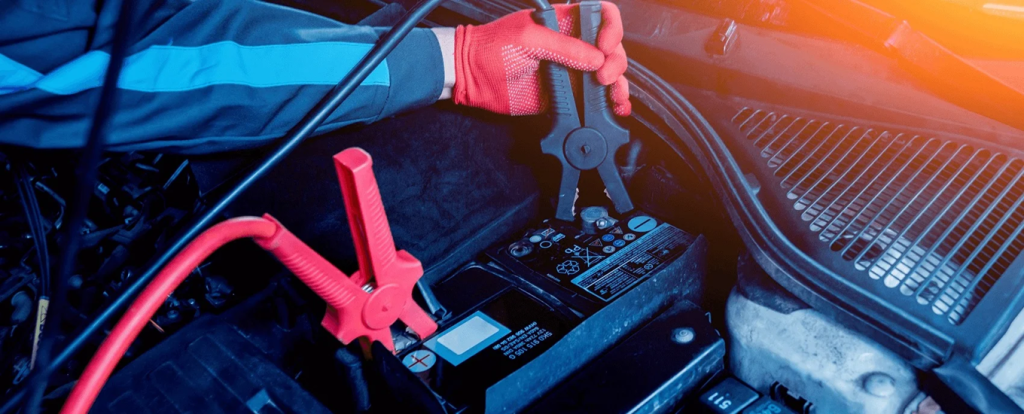
Before you begin, take important safety precautions. First, ensure both your Kia and the booster vehicle are turned off with their parking brakes applied. Position the vehicles close enough so the jumper cables can reach both batteries, but do not allow the vehicles to touch, as this could create a short circuit. Protective gloves and eye protection are highly advisable when handling the battery, as battery acid is corrosive, and batteries can emit flammable gases.
Table of Contents
- Essential Safety Tips and Step-by-Step Guide to Jumpstarting Your Kia
- Understanding Battery Locations Across Popular 2026 Kia Models
- How to Use Portable Jump Packs Safely with Your Kia Vehicle
- Specific Jumpstarting Procedures for Kia Electric Models: EV6 and EV9 Insights
- Identifying Common Causes of Dead Batteries in Kia Vehicles and Prevention Techniques
- Recognizing Warning Signs of Battery Failure and When to Seek Professional Service
- Proper Jumper Cable Removal to Ensure Safety and Protect Your Kia’s Electrical System
- Maximizing Battery Health: Recommended Practices and Maintenance at Kia of Daphne
- Navigating Kia Roadside Assistance: Benefits and How It Supports Your Vehicle’s Battery Needs
- Exploring Financing and Trade-In Options When Updating Your Kia Battery or Vehicle
- How to Jumpstart a Kia: Detailed FAQ
- What is the “12V Battery Reset” button, and how does it work on Kia Hybrids?
- Where are the jumpstart terminals located if the battery is in the trunk or under the seat?
- Can I jumpstart a Kia EV6 or EV9 electric vehicle?
- How do I start my Kia if both the car battery and the Smart Key battery are dead?
- When should I stop jumpstarting and replace my Kia’s battery instead?
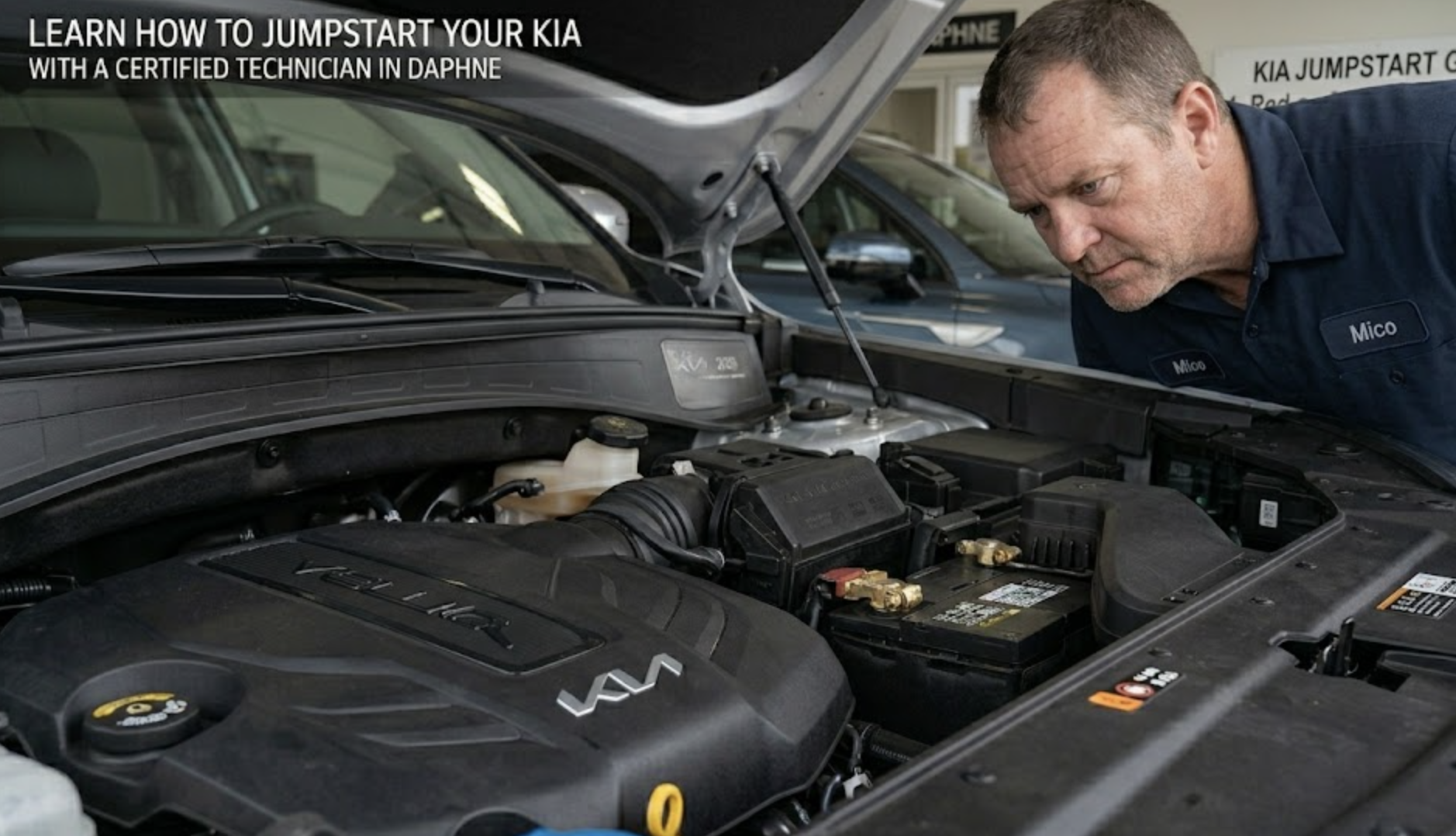
Locate the battery terminals on your Kia—positive and negative—marked clearly on most models with plus (+) and minus (–) signs and often color-coded red (positive) and black (negative). On some 2026 Kia vehicles, such as the Sportage Hybrid, the 12-volt battery may be hidden under a cover or situated in the trunk area. Reference your owner’s manual for exact locations to avoid mistakes. If you’re uncertain, Kia of Daphne’s professional service team can assist you in identifying the battery safely.
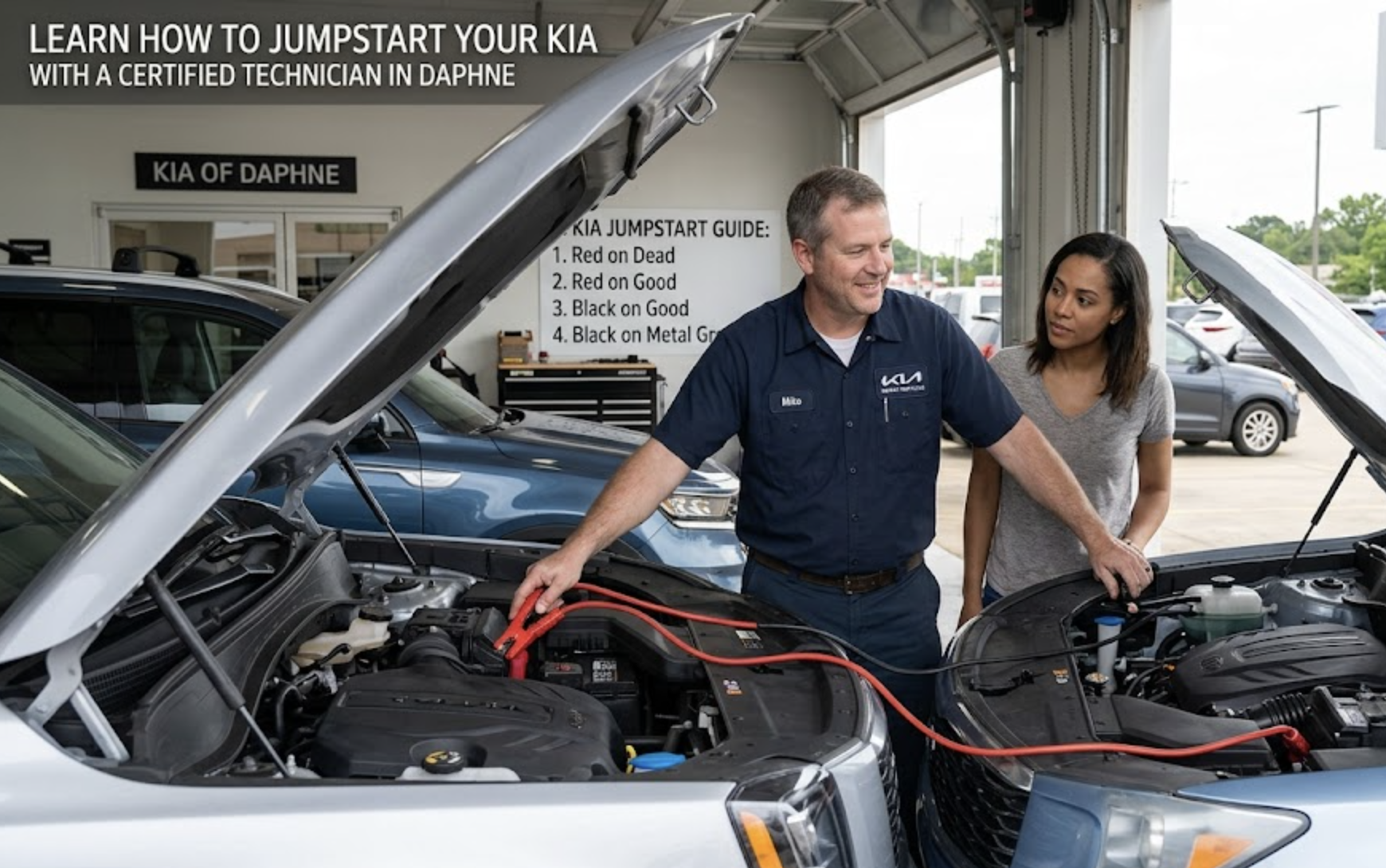
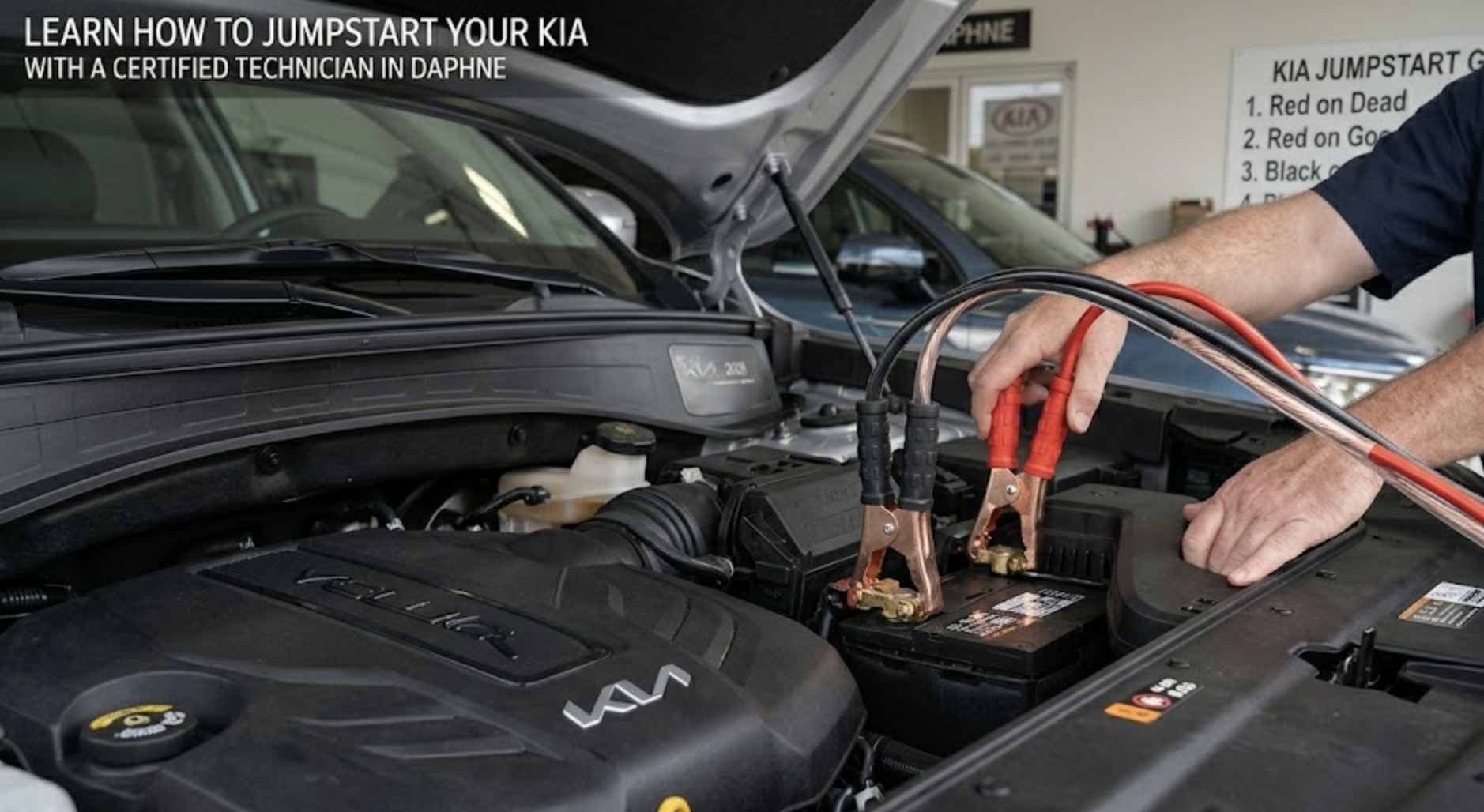
Begin by attaching the red jumper cable clamp to the positive terminal of your Kia’s dead battery. Next, connect the other end of the red cable to the positive terminal of the booster vehicle’s battery. Then, connect the black cable clamp to the negative terminal of the booster vehicle. The final connection should be the remaining black clamp to a firm, unpainted metal surface on your Kia, such as a bolt on the engine block or chassis—well away from the battery itself. This grounding step is critical because it minimizes spark risks that could ignite flammable gases emitted by the battery.
Once securely connected, start the donor vehicle to allow its battery to charge your Kia’s battery for several minutes. After this, attempt to start your vehicle. If the engine turns over successfully, avoid turning it off right away; let it run for 10 to 15 minutes to ensure the battery regains adequate charge. Driving gently during this period is even better, as it helps your alternator replenish the battery faster. Should your Kia fail to start after a few tries, it could signal a deeper issue that requires professional diagnosis and repair.
When you finish, remove the jumper cables carefully, reversing the connection order: unplug the black clamp on your Kia’s grounding point first, then the black clamp on the booster battery, followed by the red clamp on the booster battery, and finally the red clamp on your Kia’s battery. This method reduces the chance of sparks or electrical damage to your vehicle.
Keeping your Kia’s battery properly maintained—through regular inspection and using genuine replacement parts—can significantly lower the risk of needing a jumpstart. Explore helpful care tips during extreme conditions in our Summer Maintenance Tips. For any jumpstart doubts or professional service, contact Kia of Daphne at (251) 621-2277 or visit us at 29816 Frederick Blvd, Daphne, AL ( Get Directions to Kia of Daphne). Our expert technicians are equipped to provide safe, reliable jumpstart assistance and help you maintain your Kia’s battery forlong-lasting performance.
Understanding Battery Locations Across Popular 2026 Kia Models
Knowing where your Kia’s battery is located is a key step before performing any jumpstarting or maintenance tasks. The placement of the 12-volt battery varies among different models, influenced by design priorities such as cabin space, weight distribution, and vehicle type.
For 2026 Kia SUVs like the Sportage and Sorento, the battery is typically found beneath the hood on the driver’s side near the firewall. This position balances accessibility and protection from engine heat, which can affect battery longevity. Hybrids, such as the 2026 Kia Sportage Hybrid and 2026 Kia Sorento Hybrid, also feature the standard 12-volt battery in the engine compartment. However, they include a larger high-voltage battery pack located underneath the vehicle’s floor or cargo area. It’s important to only service the 12-volt battery yourself, as the hybrid’s high-voltage system requires specialized knowledge and handling.
Sedan models, including the Kia K5 and Kia K4, generally house their batteries under the hood as well but may have slightly different layouts requiring a quick check in the owner’s manual. For larger vehicles like the Kia Carnival, the battery location can sometimes be in less conventional spots such as the front passenger floor area or behind panels for secure placement.
If you’re unsure about your specific Kia model’s battery location, consulting the manual or reaching out to the service professionals at Kia of Daphne can help avoid errors during jumpstarting or maintenance. Our trained technicians are familiar with battery placements across the full Kia lineup and can assist with any questions.
For drivers interested in upgrading or browsing vehicles with known battery configurations, feel free to explore our extensive selection by viewing the full Browse New Inventory or narrow your search to hybrids with our Browse EV Hybrid Inventory page. This helps customers find a Kia that fits both their lifestyle and maintenance preferences.
Understanding these details contributes to safer and more efficient vehicle care, helping you maintain reliable performance on every journey.
Browse New Inventory
Explore current Kia models and battery-friendly configurations.
Browse New Inventory
How to Use Portable Jump Packs Safely with Your Kia Vehicle
Portable jump packs have become a highly practical alternative to traditional jumpstarting methods, offering convenience and independence when your Kia’s battery needs a boost. These compact devices store electrical energy and supply controlled power to your vehicle’s battery without requiring a second car. However, using them safely requires careful adherence to certain guidelines to protect both you and your vehicle’s sensitive electronics.
Before attempting to jumpstart your Kia with a portable jump pack, ensure the device is fully charged according to its manufacturer’s instructions. An undercharged jump pack may fail to deliver the necessary current to start your vehicle. Next, locate the 12-volt battery or the vehicle’s dedicated jump-start terminals. Some Kia models provide designated connection points under protective covers for safe access. Refer to your owner’s manual to identify these locations precisely, as correct terminal identification prevents damage from accidental connections.
Begin the process by connecting the positive (red) clamp of the jump pack to the positive terminal or jump-start point on your Kia. Then, attach the negative (black) clamp to a grounded, unpainted metal surface on the engine block or chassis away from the battery. This grounding step is crucial to minimize spark risks near the battery, which contains flammable gases. Avoid attaching the negative clamp directly to the battery unless explicitly stated in your vehicle’s manual.
After securing the clamps, switch on the jump pack and attempt to start your Kia. If the engine does not crank immediately, wait for about a minute before trying again to prevent the device from overheating. Once your vehicle starts successfully, disconnect the cables in reverse order—negative clamp first, then positive. Allow your Kia to run for at least 10–15 minutes to recharge the battery fully.
Portable jump packs offer considerable ease for emergency battery starts. For those interested in upgrading their vehicle or exploring current incentives, you can view new vehicle specials, request a vehicle quote, or request a used vehicle quote at Kia of Daphne. Safe use of jump packs, combined with regular battery maintenance, will keep your Kia reliable and ready for the road.
Specific Jumpstarting Procedures for Kia Electric Models: EV6 and EV9 Insights
Jumpstarting Kia electric vehicles such as the EV6 and EV9 requires specialized care distinct from conventional gasoline-powered cars. These models operate with a high-voltage traction battery paired with a separate 12-volt auxiliary battery that powers electrical systems like lights, infotainment, and control modules. When the 12-volt battery becomes depleted, the vehicle may fail to power on, even though the main battery remains charged, making jumpstarting the auxiliary battery the primary focus.
Before initiating any jumpstart procedure, consult the owner’s manual to understand the precise location of jumpstart terminals, which are typically marked clearly under the hood or near the front engine bay. Kia engineers design these access points to allow safe connection without tampering directly with the 12-volt battery, which may be housed in a less accessible area or under protective covers. This design minimizes risks associated with handling high-voltage components.
When connecting jumper cables or using a portable jump pack, start by attaching the positive (red) clamp to the designated positive terminal or jumpstart point on the EV. Then, connect the other positive clamp to the donor battery or jump pack’s positive terminal. Follow by connecting the negative (black) clamp to the donor battery’s negative terminal, and finally attach the remaining negative clamp to a grounded metal surface on the Kia EV—never directly to the battery terminal. This sequence helps reduce spark risk and safeguards the intricate electronics within the vehicle.
After completing the connections, allow the donor vehicle or jump pack to charge the 12-volt system for a few minutes before attempting to power on the EV. If restarting fails, it is advisable to seek assistance from qualified professionals rather than repeated jump attempts, which could cause further complications.
For Kia EV owners considering a pre-owned model or needing replacement components for their system, you can browse our Shop Used Vehicles Under $15K, schedule a test drive through our Schedule Used Car Test Drive page, and secure authentic parts through our Order Genuine Parts page. Trusted technicians at Kia of Daphne ensure all electric vehicle service is handled with care to maintain safety and warranty coverage.
Identifying Common Causes of Dead Batteries in Kia Vehicles and Prevention Techniques
Several factors contribute to dead batteries in Kia vehicles, many of which stem from everyday usage habits and environmental conditions. Recognizing these causes can help you take proactive steps to prevent battery failure and maintain your vehicle’s dependability.
One of the leading contributors is inadvertently leaving electrical components running when the car is off. Items such as headlights, interior cabin lights, or infotainment systems drain the battery if left on for extended periods. This is especially common during overnight parking or when the vehicle is unused for several days. Routinely double-checking that all electronics are turned off before leaving your Kia can significantly reduce unnecessary battery drain.
Temperatures, both hot and cold, also greatly affect battery health. Extreme heat accelerates fluid evaporation inside the battery, damaging internal plates and shortening lifespan. On the other hand, cold weather thickens the electrolyte, hindering the battery’s ability to produce sufficient current for starting. These environmental stresses underscore the importance of regular battery checks, particularly for models regularly exposed to varying weather conditions.
Short journeys present another challenge. Frequent trips that last only a few minutes do not provide enough time for the alternator to fully recharge the battery after startup. Over time, this leads to a gradual loss of capacity and eventual failure. Planning occasional longer drives or using a battery maintainer during periods of inactivity can help maintain optimal charge levels.
Corrosion on battery terminals is a physical issue that can obstruct electrical flow, causing starting difficulties. Regular cleaning during scheduled service visits prevents buildup that can interrupt proper connection and performance.
Finally, age remains a natural factor. Most car batteries last between three and five years, with performance declining steadily as they approach the end of their lifespan. Keeping track of your battery’s age and condition is essential to avoid unexpected breakdowns.
For those looking for a reliable vehicle option with a thoroughly inspected battery, our Learn About Certified Pre-Owned program offers peace of mind through extensive testing and certification standards. Additionally, exploring our View Pre-Owned Specials can help you find models that combine quality and value. Be sure to also check out our View Featured Vehicles for a curated selection of top-quality Kia models.
By understanding these common causes and taking straightforward preventive measures, Kia owners can reduce the risk of battery failure and enjoy uninterrupted driving confidence.
Learn About Certified Pre-Owned
Explore inspected Kia vehicles backed by certification standards.
Learn About Certified Pre-OwnedRecognizing Warning Signs of Battery Failure and When to Seek Professional Service
Detecting a weakening battery early can save you from inconvenient breakdowns and costly repairs. Several telltale signs often indicate that your Kia’s battery is nearing the end of its useful life and may need professional attention.
One of the most common symptoms is sluggish engine cranking. When you turn the key or press the start button, if the engine turns over slowly or takes longer than usual to start, the battery may be losing its ability to provide sufficient power. This is especially noticeable in cold weather when batteries tend to work harder.
Another indicator is dim or flickering headlights and interior lights. Since your vehicle’s electrical functions rely heavily on the battery, reduced brightness often signals deteriorating battery voltage. Electrical accessories such as power windows, dashboard instruments, or infotainment systems may also experience intermittent faults as the battery weakens.
Physical signs are equally important: corroded battery terminals with white or bluish deposits can hinder electrical flow, causing starting problems. Additionally, a battery emitting a sulfur or rotten egg smell suggests internal damage or leakage, requiring immediate inspection.
If you observe any of these warning signs, it is advisable to schedule a thorough battery and electrical system evaluation with Kia professionals. Timely diagnosis can confirm battery health and prevent sudden failures. At Kia of Daphne, our certified technicians use advanced diagnostic tools to assess your battery’s condition accurately and recommend appropriate service or replacement using genuine Kia parts.
For expert assistance, you can Schedule Service Now or Schedule Your Service Today. If you specifically need battery replacement, consider Schedule Battery Replacement to ensure your vehicle gets the right care. Regular maintenance extends battery life and helps maintain your Kia’s performance, so consider exploring our Learn About Preventative Maintenance resources and View Maintenance Schedule to keep your vehicle reliable year-round.
Proper Jumper Cable Removal to Ensure Safety and Protect Your Kia’s Electrical System
Safely disconnecting jumper cables following a jumpstart is a crucial step to prevent electrical damage and personal injury. Removing the cables in the correct order minimizes the risk of sparks that can ignite flammable gases or cause short circuits within your Kia’s electrical system.
Begin by turning off the engine of the donor vehicle or portable jump pack if still running. Then, always start removing the negative (black) cable clamp from your Kia’s grounded connection, which is typically a metal part on the engine block or chassis rather than directly from the battery terminal. This reduces the chance of accidental grounding or sparks near the battery. Next, disconnect the negative clamp from the booster vehicle or jump pack’s battery terminal.
After the negative cables are safely removed, proceed to detach the positive (red) cable clamp from the donor battery or device, followed by the final clamp on your Kia’s positive battery terminal. Removing cables in this reverse sequence from the order of attachment helps protect sensitive electronic components and prevents electrical surges that can damage onboard systems.
During removal, avoid letting the cable clamps touch each other or any metal surfaces, as this can create dangerous short circuits. It’s also wise to wear gloves and keep eyewear handy for extra safety when handling jumper cables and working near the battery.
If your Kia requires replacement parts following a battery issue, be sure to source high-quality components by visiting our Order Genuine Kia Parts page. For drivers interested in exploring reliable vehicles with strong battery performance, you can also browse our Browse Used Inventory.
Mastering proper jumper cable removal reinforces the care your Kia deserves, safeguarding your vehicle’s technology and your driving experience. If you want to experience Kia’s reliable performance firsthand, Schedule A Test Drive with us today.
Maximizing Battery Health: Recommended Practices and Maintenance at Kia of Daphne
Proper care of your Kia’s battery is crucial to avoid unexpected breakdowns and extend its lifespan. At Kia of Daphne, we emphasize routine battery inspections as part of comprehensive vehicle maintenance to ensure your battery and electrical system remain in peak condition. Regular checks help detect early signs of wear, corrosion, or electrical issues that could compromise performance.
One of the most effective ways to maximize battery health is keeping terminals clean and free from corrosion. Corroded connections can impede electrical flow and cause starting problems. Our skilled technicians use specialized tools and cleaning agents to safely remove buildup while inspecting cable tightness to maintain optimal conductivity.
In addition to physical maintenance, it’s important to monitor your Kia’s battery voltage with modern diagnostic equipment. This allows us to evaluate its capacity and predict potential failures before they occur. For customers concerned about battery reliability, professional testing during scheduled service visits at Kia of Daphne can provide peace of mind.
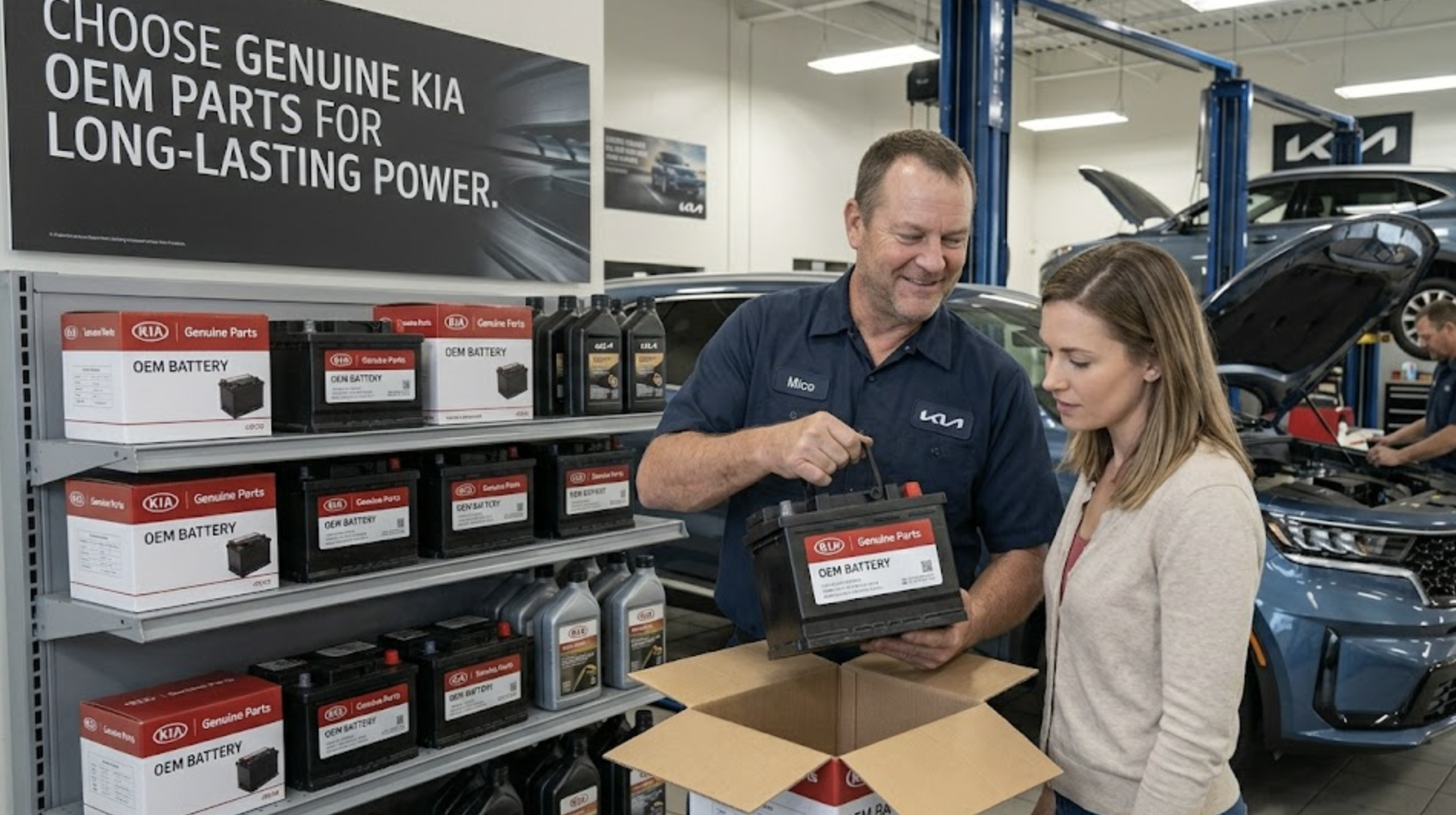
Choosing genuine Kia replacement batteries and parts is another pillar of reliable maintenance. These components are engineered specifically for Kia vehicles, ensuring proper fit and electrical compatibility. Using OEM parts supports warranty coverage and helps maintain your vehicle’s electrical integrity.
Drivers interested in upgrading or replacing their battery may also explore our extensive selection of well-maintained used vehicles through our Browse CARFAX 1-Owner Vehicles page, combining quality with affordability.
To discuss personalized battery care or any vehicle concerns, you’re encouraged to Meet Our Staff at Kia of Daphne. Our knowledgeable team provides expert advice tailored to your vehicle’s needs.
For those seeking insight into why Kia of Daphne stands out as a trusted partner in vehicle care, visit our Discover Why Buy From Us page and learn more about our commitment to quality service and customer satisfaction. Taking these proactive steps for battery maintenance helps keep your Kia running smoothly and reliably every day.
Navigating Kia Roadside Assistance: Benefits and How It Supports Your Vehicle’s Battery Needs
When facing battery troubles with your Kia, Kia Roadside Assistance offers a dependable resource designed specifically for your vehicle’s unique electrical systems and battery configurations. Unlike general emergency services, this program provides manufacturer-backed support, ensuring that any jumpstart or battery-related service matches Kia’s standards for safety and performance.
One of the key advantages of Kia Roadside Assistance is its familiarity with the precise battery and electronic system requirements of Kia models. This expertise reduces the risk of damage during emergency jumpstarts, giving you confidence that your vehicle is in capable hands. Should your battery fail unexpectedly, the service includes prompt arrival of trained professionals equipped with appropriate tools and genuine Kia parts if replacement is necessary.
Beyond immediate jumpstart support, Kia Roadside Assistance also facilitates towing to authorized service centers, such as Kia of Daphne, where expert technicians can conduct thorough diagnostics and battery maintenance. This ensures your vehicle receives proper care without compromising warranty coverage or vehicle integrity.
Regular use of this program can prevent prolonged downtime and enhance your driving peace of mind. For those interested in keeping your Kia well maintained with authentic replacement parts, our Visit Parts Department provides an extensive selection tailored to your model.
To better understand the comprehensive advantages of choosing Kia of Daphne for service needs and roadside assistance support, explore our Discover Dealership Benefits. Additionally, visual learners can benefit from practical demonstrations on vehicle care by checking out our Watch Our Video Showcase. These resources help you stay informed and prepared for any battery-related situations your Kia might encounter.
Exploring Financing and Trade-In Options When Updating Your Kia Battery or Vehicle
When it’s time to replace your Kia’s battery or consider upgrading your vehicle, understanding available financing and trade-in options can simplify the process and ease the financial impact. Kia of Daphne offers flexible financing plans tailored to fit various budgets, helping customers manage the cost of battery replacement or vehicle purchase without undue stress. You can explore these options online to find the best fit by using our convenient tools to explore financing options or get pre-approved for financing before visiting the dealership.
If you currently own a vehicle you’re looking to trade in, Kia of Daphne provides an efficient way to assess its value through our Value Your Trade-In tool. This allows you to receive a fair, competitive estimate based on market data and condition, which can then be applied toward your battery service or a new Kia vehicle purchase, streamlining the transaction and maximizing your investment.
Additionally, our dealership supports financing applications online with options to get pre-approved for credit or apply for financing directly. The financing specialists at Kia of Daphne are committed to guiding you through available programs and incentives, ensuring you make informed decisions tailored to your needs. To learn more, you can also learn about financing options or explore Kia financing options.
To experience personalized service, visit us at 29816 Frederick Blvd, Daphne, AL 36526, or (251) 621-2277 to speak with our team. For directions, find our location.
How to Jumpstart a Kia: Detailed FAQ
What is the “12V Battery Reset” button, and how does it work on Kia Hybrids?
If you drive a modern Kia Hybrid, such as the Niro, Sportage, or Sorento HEV, you may not actually need a second car or jumper cables to get back on the road. These models often feature a lithium-ion 12V battery integrated into the high-voltage pack with a built-in protection system. If the battery drain is detected, the car “disconnects” the 12V side to save power. To jumpstart it, simply locate the “12V BATT RESET” button—usually found on the lower-left dashboard near the steering wheel. Press the button, and within 15 seconds, depress the brake and push the Start button. If the car starts, make sure to drive it for at least 30 minutes to allow the high-voltage system to fully replenish the 12V charge.
Where are the jumpstart terminals located if the battery is in the trunk or under the seat?
In many newer Kia models, particularly hybrids and the Stinger, the actual 12V battery is hidden in the trunk or under the rear seat to save space and improve weight distribution. However, you should never attempt to jumpstart the car directly from the battery in these locations. Instead, Kia provides dedicated jumpstart terminals under the hood for easy access. Look for a red plastic cover labeled with a “+” sign, typically located inside the fuse box on the driver’s side. Connect your positive cable there, and attach your negative cable to a solid, unpainted metal grounding bolt on the vehicle’s frame or engine block.
Can I jumpstart a Kia EV6 or EV9 electric vehicle?
Yes, even though these are fully electric vehicles, they still rely on a standard 12V lead-acid battery to power the “brain” of the car, the lights, and the infotainment system. If this 12V battery dies, the car will not “wake up” to engage the massive high-voltage driving battery. You can jumpstart an EV6 or EV9 just like a gas car using the 12V terminals located under the front hood (frunk) area. However, it is important to note that you should only use your EV to receive a jump, not to give one to a gas-powered car, as the surge required to turn over a traditional combustion engine can damage the sensitive electrical converters in an EV.
How do I start my Kia if both the car battery and the Smart Key battery are dead?
If your 12V battery is dead, your car won’t recognize your Smart Key, but there is a manual workaround. First, use the mechanical key hidden inside your fob to unlock the driver’s door. Once you have connected your jumper cables or a jump pack to the terminals under the hood, you might find the car still won’t start because the key fob battery is also too weak to send a signal. In this case, simply use the tip of the key fob itself to physically press the Start/Stop button while holding down the brake. There is a small sensor behind the button that can read the key’s internal chip at a very close range, even without battery power in the fob.
When should I stop jumpstarting and replace my Kia’s battery instead?
A jumpstart is a temporary fix, not a permanent solution. If you find yourself needing to jump your Kia more than once in a single week, or if you notice your headlights dimming when you use the power windows, it is likely time for a replacement. Most 12V batteries have a lifespan of 3 to 5 years, especially in our hot Alabama climate which can accelerate battery wear. At Kia of Daphne, we recommend a professional battery test if your car struggles to start on chilly mornings. It’s much safer and more convenient to replace an aging battery during a scheduled service visit than to be stranded in a parking lot at the Eastern Shore Centre.


Warranties include 10-year/100,000-mile powertrain and 5-year/60,000-mile basic. All warranties and roadside assistance are limited. See retailer for warranty details.