Today: 8:30AM - 8:00PM
Blog / Kia of Daphne Service

Align Your Kia for Thanksgiving Road Trips

As Thanksgiving approaches, many families in Daphne plan long drives to see loved ones across the Gulf Coast. Before you load up the Kia and head toward Mobile, Fairhope, Robertsdale or even Pensacola, it pays to make sure your tires and wheels are ready for the miles ahead. One of the most important services to schedule is Kia tire alignment before Thanksgiving trips. Proper alignment helps your tires wear evenly, supports confident handling and can even improve fuel efficiency according to Kia owner resources that describe how incorrect alignment contributes to abnormal tire wear. When you combine that benefit with a busy holiday travel period, a quick visit to the Kia of Daphne service lane becomes a smart way to protect your family and your vehicle.

Benefits of Kia Tire Alignment Before Thanksgiving Trips

When you book Kia tire alignment before Thanksgiving trips, you set your vehicle up for safer and more relaxing holiday travel. A precise alignment ensures each wheel is angled correctly so your Kia tracks straight instead of drifting to one side, which can reduce fatigue on long highway drives. Kia owner guidance notes that abnormal tire wear is often linked to improper wheel alignment, so keeping things in spec helps your tires last longer and keeps tread depth more even across all four corners. That matters when you suddenly hit rain on Interstate 10 or a slick bridge near Mobile Bay, because even tread gives you more consistent grip.

Correct alignment can also support better fuel economy. When wheels are out of spec, your Kia has to work harder to move forward, which wastes energy and fuel. By keeping everything lined up, the tires roll with less resistance, which may help you go farther on every tank during busy Thanksgiving weekends. Kia of Daphne technicians also check tire pressure during service, and proper inflation is another factor that supports efficiency and safety, especially when Kia resources explain that tire pressure monitoring systems are designed to alert you to low pressure for these very reasons.

Finally, alignment service gives trained technicians a chance to look closely at your suspension and steering components. If there is unusual wear on a tire or a loose component causing the vehicle to wander, they can point it out before you leave Daphne. That peace of mind lets you focus on the fun parts of the holiday instead of worrying about how your Kia will behave on a crowded interstate.

How Proper Wheel Alignment Protects Your Kia Tires

Proper wheel alignment does more than keep your steering wheel centered. It protects the tires that carry your family to every Thanksgiving gathering. When camber, caster and toe are within the correct ranges, each tire meets the road with an even footprint. This balance reduces the chance of feathered edges, cupping or severe wear on the inside or outside shoulder. Kia maintenance information explains that alignment, tire pressure and rotation all work together to prevent abnormal wear patterns, so bringing these items into harmony helps you get the full life from your tires.

Alignment service often pairs with a tire rotation, since many Kia owner manuals recommend rotating roughly every ten thousand kilometers, or about sixty five hundred miles. Rotating and aligning before Thanksgiving means your tires share the workload during long trips from Daphne to out of state destinations. Even wear helps maintain predictable traction in wet or cool weather, which is especially important when holiday traffic suddenly slows or stops. Over time, that consistency saves money on replacement sets and protects the ride comfort you enjoy every day on Highway 98 or neighborhood streets around Baldwin County.

When Daphne Drivers Should Schedule Kia Tire Alignment Before Thanksgiving

Not every driver knows when alignment should move from the to do list to the done list. A good rule of thumb is to schedule Kia tire alignment before Thanksgiving trips if you notice certain warning signs or if it has been a year since your last check. One of the most common signals is a vehicle that pulls to one side on a straight road, even though the tires are properly inflated. Another is a steering wheel that sits off center when you are traveling straight. Kia service information highlights these behaviors as potential signs of incorrect alignment that can lead to abnormal tire wear if left uncorrected.

You should also look closely at the tread on each tire. If you see the inside edges wearing faster than the outside, or notice a scalloped pattern across the tread blocks, your alignment may be out of specification. Vibration through the steering wheel can point to balance issues, but it may also appear when alignment and wear problems combine. Before the busy Thanksgiving period, when roads around Daphne and Mobile see heavier traffic and more sudden slowdowns, it is wise to address these concerns. Kia owner resources recommend checking tire condition regularly and visiting an authorized Kia dealer when you see abnormal wear patterns, which makes your local Kia of Daphne service center a convenient choice.

Finally, think about any recent impacts. If you hit a deep pothole near Spanish Fort, bumped a curb while parking in Fairhope or drove through a construction zone full of debris, your alignment may need attention even if you do not notice obvious symptoms yet. Booking a quick alignment check before your Thanksgiving trip lets technicians catch small issues early and helps you leave town with full confidence.

Thanksgiving Travel Conditions Around Daphne, AL

Thanksgiving travel around Daphne creates a unique mix of road conditions. Morning fog over Mobile Bay, sudden afternoon showers along Interstate 10 and stop and go shopping traffic near local centers all put extra demands on your tires and suspension. When your Kia is properly aligned, the tires maintain better contact with the pavement as conditions change, which supports confident steering inputs and shorter stopping distances. Even something simple like staying in your lane during crosswinds over long bridges feels more stable when the alignment is correct and the tires work together instead of fighting each other.

The Gulf Coast also brings a variety of road surfaces. You might cruise on smooth interstate segments, then drop onto older county roads with patched pavement as you visit relatives outside Daphne. Misaligned wheels can cause the vehicle to follow grooves in the road, which becomes tiring over the course of a long Thanksgiving weekend. By scheduling Kia tire alignment before Thanksgiving trips, you give your vehicle the best chance to stay composed on each surface you encounter. That stability pairs nicely with the comfort and technology that Kia models already provide, making holiday drives less stressful for both the driver and passengers.

What to Expect From Kia Tire Alignment Service at Kia of Daphne

When you arrive at Kia of Daphne for alignment service, you are greeted by a team that focuses on Kia vehicles every day. The dealership describes its technicians as highly trained and certified, with access to state of the art equipment and regular Kia specific training. That means your Kia is measured and adjusted according to factory specifications instead of generic settings. During a typical visit, the team inspects the tires, checks air pressure, mounts the vehicle on an alignment rack and takes precise readings at each wheel. If they see unusual wear or a component that needs further attention, they explain the findings in clear language so you can make informed decisions before a Thanksgiving trip.

Kia of Daphne also emphasizes the use of genuine Kia parts and attention to overall vehicle health. If an alignment reveals a worn suspension bushing, a bent component or a tire that should be replaced before a long highway run, they can source parts that match original engineering standards. Many local drivers take advantage of the online service scheduler, which allows appointments to be booked at any time and lists tire rotation, alignment and replacement among the most common options. For residents of Daphne, Mobile, Fairhope, Robertsdale and nearby communities, this combination of convenience and expertise makes it simple to prepare for Thanksgiving travel without disrupting daily routines.

Why Local Drivers Trust Kia of Daphne for Alignment

Local drivers return to Kia of Daphne for alignment because they value a service team that understands both the Kia brand and the roads in Baldwin County. The dealership highlights its role as a trusted, locally owned business that serves customers from Daphne, Mobile, Fairhope, Robertsdale and Pensacola with an emphasis on honesty and transparency. That philosophy shows up in straightforward explanations, clear pricing and a focus on long term relationships instead of quick transactions. When you bring your Kia in before Thanksgiving, you work with people who know how busy the season can be and who want to keep your family safe on every mile of your trip.

Another reason for that trust is the comprehensive nature of the service experience. The same facility that handles alignments also provides oil changes, brake care, battery testing and other maintenance that often goes along with holiday travel preparation. Service hours during the week and on Saturdays give drivers flexibility, and online tools simplify scheduling and communication. Knowing that the technicians are factory trained and that genuine Kia parts are used when needed helps drivers feel confident that their Kia Sorento, Sportage, Telluride or Carnival is ready for the road. When you combine that confidence with the welcoming atmosphere described in Kia of Daphne’s community focused messaging, it is easy to see why alignment service there fits so well into Thanksgiving travel plans.

Additional Thanksgiving Road Trip Preparation Tips

Beyond Kia tire alignment before Thanksgiving trips, there are other simple steps that help your vehicle handle holiday driving. Check all fluid levels, including engine oil, coolant and windshield washer fluid, so you do not have to stop unexpectedly on the way to your destination. Inspect your wiper blades for streaking or chatter, especially if you expect rain during the drive. Make sure all exterior lights work properly so other drivers can see you clearly during early morning departures or late night arrivals. Finally, clear unnecessary items from the cargo area so weight is balanced and your Kia can stop and steer as designed even when the cabin is full of passengers and luggage.

How Often to Combine Alignment and Tire Rotation

Many drivers wonder how often they should pair alignment with tire rotation. A useful approach is to follow the tire rotation interval in your Kia owner manual and ask for an alignment check whenever you notice uneven wear or steering changes. Kia guidance connects abnormal wear to causes such as incorrect tire pressure, improper wheel alignment and severe braking, which shows how closely these services relate. Rotating tires at regular intervals helps them share the work, while alignment keeps them pointed in the right direction. When the holidays approach, combining both services before a long trip provides a fresh starting point, so you can track wear patterns confidently moving into the new year.

Budgeting and Booking Service During a Busy Season

Thanksgiving is one of the busiest times of the year for both travel and service departments. Planning ahead gives you more appointment options and helps you budget for maintenance without stress. Check current Kia of Daphne service specials, which may include savings on inspections, rotations or other routine care that pairs nicely with alignment. Consider setting aside a small amount in the weeks leading up to November so the cost of service feels easier to manage. When you schedule online, you can choose a time that fits between work, school events and packing for the trip, which keeps the entire holiday season more organized and enjoyable.

Visit Kia of Daphne Online

If you are preparing for Kia tire alignment before Thanksgiving trips and want expert help, visit Kia of Daphne online at kiaofdaphne.com. There you can explore detailed information about tire change service and maintenance, learn more about the service team and use the online scheduler to reserve your alignment appointment. The site helps drivers across Daphne, Mobile, Fairhope, Robertsdale and Pensacola compare maintenance options and discover current offers before they arrive at the dealership. Taking a few minutes to schedule now can save time later and ensures your Kia is ready for every mile of your Thanksgiving journey.

Scheduling Kia tire alignment before Thanksgiving trips is one of the simplest yet most effective ways to make holiday travel safer and more comfortable. Proper alignment supports even tire wear, confident handling and better use of every gallon of fuel. Kia of Daphne backs that service with factory trained technicians, genuine parts and a strong commitment to the local communities it serves. When you combine these advantages with regular tire rotation, pressure checks and a quick inspection of other key systems, you can head out from Daphne knowing your Kia is ready for busy highways and family visits alike. Before the holiday rush begins, consider reserving your alignment so you can focus on the moments that matter most.

Posted in:

Related Posts

kia ac service

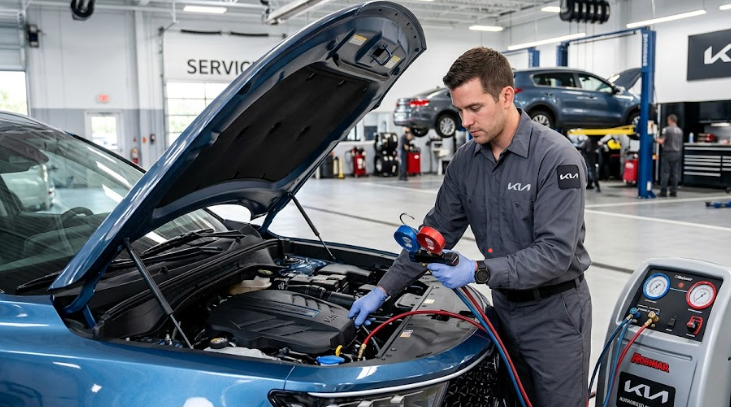
Kia A/C Service in Daphne, AL for Gulf Coast Heat

Kia A/C diagnostics and service help identify why your climate system is blowing warm air, producing weak airflow, creating musty odors, fogging the glass, cycling irregularly, or failing to cool the cabin during humid Gulf Coast weather. At Kia of Daphne, our service team focuses on the full A/C system, including vent temperature, airflow, cabin filter condition, refrigerant level, refrigerant type, system pressure, compressor operation, condenser condition, leak points, drain flow, sensors, controls, and electrical operation. If your cabin no longer feels cool, dry, and comfortable, the best next step is a focused A/C inspection rather than a general summer checklist. Summer humidity around Daphne, Fairhope, Spanish Fort, Mobile, Foley, Gulf Shores, Orange Beach, Robertsdale, Loxley, Bay Minette, and Pensacola places real demand on your vehicle’s air conditioning system. The system is not only cooling air. It is also helping remove moisture from the cabin, support windshield clarity, and keep interior comfort stable while outside temperatures and humidity rise. That is why A/C symptoms should not be ignored. Warm air, intermittent cooling, a musty smell, poor defogging, water inside the cabin, loud blower noise, or sudden airflow loss can all point to different causes. Some problems are simple, such as a dirty cabin air filter. Others require specialized equipment, such as refrigerant recovery, evacuation, leak detection, and precise recharge by weight. This article stays focused on A/C diagnostics and service. We are not turning this into a broad summer maintenance list. Tires, batteries, oil changes, and wipers matter for vehicle care, but this guide is written specifically for drivers trying to understand climate control issues, cooling performance, refrigerant service, cabin airflow, and when to schedule A/C service at Kia of Daphne. Quick Answer: Schedule Kia A/C diagnostics when the system blows warm air, cools only sometimes, has weak airflow, smells musty, makes unusual noises, fogs the glass, leaks water into the cabin, or stops cooling during humid weather. A proper A/C inspection checks airflow, vent temperature, cabin filter condition, refrigerant charge, system pressure, leak points, compressor operation, condenser condition, drain flow, and climate control operation. Table of Contents Why Gulf Coast Humidity Makes A/C Diagnostics Important What a Kia A/C Diagnostic Service Checks Why Your Kia A/C May Blow Warm Air Weak Airflow, Cabin Filters, and Vent Performance Refrigerant Type, System Pressure, and Leak Testing Musty Vents, Evaporator Moisture, and Drain Concerns Foggy Glass, Defrost, and Cabin Humidity Symptoms Hybrid and EV A/C Diagnostic Notes When to Schedule A/C Service at Kia of Daphne Kia A/C Service FAQs Why Gulf Coast Humidity Makes A/C Diagnostics Important Key Takeaway: In Daphne-area humidity, your A/C system has to cool the cabin and remove moisture, so small problems can become noticeable quickly. Heavy, moisture-laden air is part of summer driving near the bay. When the outdoor air feels thick and damp, your vehicle’s climate control system becomes the main barrier between a comfortable drive and a sticky, foggy cabin. A healthy A/C system helps cool the air, reduce cabin humidity, and keep the windshield clearer during hot, wet weather. When the system is not working correctly, the symptoms can feel different from a simple “not cold enough” complaint. You might notice that the air starts cold and turns warm, the windshield fogs even with defrost selected, the cabin smells musty after the A/C starts, or the blower sounds loud while airflow still feels weak. Those symptoms point to different possible causes, which is why a diagnostic check matters. Gulf Coast driving also gives the system fewer easy days. Short trips, stop-and-go traffic, high humidity, frequent rain, and long periods of A/C use can all make small weaknesses more obvious. A system that felt acceptable in spring may feel overwhelmed by July or August. Our team approaches A/C service by looking at the symptom first, then testing the system that produces that symptom. Warm air may involve refrigerant charge, compressor operation, blend door function, condenser airflow, or an electrical issue. Weak airflow may involve the cabin air filter, blower motor, evaporator icing, or vent control. Musty vents may involve evaporator moisture or drain concerns. A focused diagnostic path helps avoid guessing. A/C Symptom Possible A/C-Related Cause Diagnostic Focus Warm air from vents Low refrigerant, compressor issue, system pressure concern, condenser restriction, control issue Vent temperature, pressure readings, leak check, compressor command Cold air at first, then warm Evaporator icing, low charge, airflow restriction, sensor or control concern Airflow, cabin filter, evaporator behavior, refrigerant charge Weak airflow Dirty cabin filter, blower concern, restricted evaporator, vent door issue Cabin filter inspection, blower speed, air distribution Musty odor Moisture on evaporator, dirty filter, drain concern, microbial growth Filter condition, evaporator area, drain flow, odor treatment need Foggy windshield Humidity control issue, A/C not dehumidifying, recirculation or defrost concern Defrost function, A/C operation, humidity removal, air intake mode Best next step Focused A/C inspection Diagnose the system before replacing parts Need focused A/C diagnostics for warm air, weak airflow, or musty vents? Schedule Kia A/C Service What a Kia A/C Diagnostic Service Checks Key Takeaway: A proper A/C diagnostic service checks performance, airflow, refrigerant condition, leak points, controls, electrical operation, and cabin comfort symptoms. A/C diagnosis should be more precise than adding refrigerant and hoping for the best. If a system is low, there may be a leak. If airflow is weak, the problem may not be refrigerant at all. If the cabin smells musty, the concern may involve moisture and filtration. If the windshield keeps fogging, the system may not be removing humidity properly. At Kia of Daphne, our A/C service process begins with your symptom. We want to know when the problem happens, how long it lasts, whether it changes with fan speed, whether it happens at idle or highway speed, and whether there are odors, noises, or fogging concerns. Those details help our technicians choose the right diagnostic path. From there, the inspection can include vent temperature testing, blower operation checks, cabin air filter inspection, visual inspection of A/C lines and condenser, pressure testing, refrigerant recovery and recharge when needed, leak detection, drain inspection, electrical testing, and climate control function checks. The exact process depends on the symptom and the vehicle. Kia owner information notes that low refrigerant reduces A/C performance and that overfilling also has a negative effect on the system. That is why refrigerant service needs to be measured and performed with proper equipment rather than treated as a quick top-off. Diagnostic Area What We Check Why It Matters Customer symptom Warm air, weak airflow, odor, fogging, noise, intermittent cooling Guides the diagnostic process Vent temperature Temperature output at selected vents Confirms actual cooling performance Airflow Fan speed, vent output, filter restriction, distribution modes Separates airflow problems from refrigerant problems Refrigerant system Correct refrigerant type, amount, system pressure, leak concerns Protects compressor and cooling performance Compressor and condenser Compressor operation, condenser airflow, visible damage or restriction Supports heat transfer and pressure control Cabin comfort Humidity removal, defrost function, odor source, drain behavior Restores cool, dry, comfortable cabin conditions Based on Kia owner manual guidance and Kia of Daphne service workflow. Why Your Kia A/C May Blow Warm Air Key Takeaway: Warm air can come from refrigerant level, compressor operation, condenser performance, electrical faults, or climate control issues, so diagnosis should happen before parts are replaced. Warm air is the most obvious A/C complaint, but it has several possible causes. If the system is low on refrigerant, the A/C may not absorb and move heat properly. If the compressor is not operating correctly, the refrigerant may not circulate as needed. If the condenser is restricted or damaged, the system may struggle to release heat. If a control module, sensor, relay, fuse, blend door, or switch is not operating correctly, the system may not respond to driver input. That is why our service advisors will ask whether the air is always warm, warm only at idle, cold at first and then warm, or cold on one side and warm on the other. Each pattern tells us something different. A system that cools at highway speed but not at idle may have a different issue than a system that never cools at all. Low refrigerant also deserves careful attention because refrigerant should not simply disappear from a sealed system. If the charge is low, our technicians may need to locate the leak rather than only recharge the system. Leak points can include hoses, seals, service ports, condenser damage, evaporator concerns, or compressor-related areas. A correct repair plan depends on measured results. The service team may need to recover refrigerant, measure the amount removed, inspect the system, perform leak detection, evacuate the system, recharge by the specified amount, and retest performance. That process protects the vehicle better than guesswork. Is your A/C blowing warm air or cooling only sometimes? Visit Our Kia Service Center Weak Airflow, Cabin Filters, and Vent Performance Key Takeaway: Weak airflow is often an airflow problem first, so the cabin air filter, blower motor, vents, and evaporator area should be checked before assuming the refrigerant is low. Weak airflow can make a healthy cooling system feel broken. If air cannot move through the vents properly, the cabin will take longer to cool, the blower may sound louder, and the A/C may feel less effective during hot weather. In many cases, the cabin air filter is one of the first areas to inspect. Kia owner information says the climate control air filter should be replaced according to the maintenance schedule, and if the vehicle is operated in severe conditions such as dusty or rough roads, more frequent inspections and changes may be required. A clogged filter can reduce airflow and place extra strain on the blower system. Daphne-area driving can make filter condition important. Pollen, dust, road debris, moisture, and coastal humidity can all affect cabin air quality and airflow. If the filter becomes damp or dirty, the cabin may cool more slowly and may also develop odors. Weak airflow is not always a filter issue, though. The blower motor, blower resistor or control module, vent doors, evaporator icing, or duct restrictions can also affect output. Our diagnostic process checks the likely causes in a logical order so we can recommend the right repair. Weak Airflow Clue Possible Cause What A/C Service Checks Low airflow at all fan speeds Cabin filter restriction or blower concern Filter condition, blower operation, air intake path Airflow changes by vent setting Mode door or vent distribution issue Climate control modes and vent operation Blower is loud but air is weak Restriction in filter, evaporator area, or duct path Filter and airflow path inspection Air starts strong, then fades Possible evaporator icing or control issue Temperature behavior, airflow change, refrigerant and sensor checks Musty smell plus weak airflow Dirty filter or damp evaporator area Filter replacement and odor source inspection Best next step Airflow-focused A/C diagnostic Check airflow before replacing cooling components Based on Kia owner manual guidance for climate control air filter replacement. Refrigerant Type, System Pressure, and Leak Testing Key Takeaway: Refrigerant service requires the correct type, correct amount, proper recovery equipment, and trained technicians because A/C systems operate under pressure. Modern automotive A/C systems are sensitive to refrigerant type and amount. Kia owner information states that the actual refrigerant type and amount should be checked on the vehicle’s A/C refrigerant label. That label is typically located under the hood or inside the motor room area, depending on the vehicle. This is important because different Kia vehicles and model years may use different refrigerants, lubricant specifications, and charge amounts. We do not recommend assuming the refrigerant type from a generic online chart. The correct approach is to verify the vehicle label and service information for the exact model and system. Kia owner information also warns that vehicles equipped with R-1234yf use refrigerant that is mildly flammable and operates at high pressure, and that the A/C system should only be serviced by trained and certified technicians. The same official guidance notes that using the correct type and amount of refrigerant and oil is important, and that refrigerants should be reclaimed with proper equipment rather than vented. If refrigerant is low, the cause must be found. Refrigerant does not get “used up” like gasoline. A low charge may indicate a leak, and recharging without leak testing can lead to repeated loss of cooling performance. Our technicians can inspect for visible signs, test pressure, use leak-detection methods, and recommend the correct repair before recharging the system by the specified amount. Refrigerant Service Step Why It Matters Customer Benefit Check refrigerant label Confirms refrigerant type, amount, and lubricant classification Prevents incorrect service Measure system performance Identifies whether cooling is truly below expected range Avoids unnecessary repairs Recover refrigerant properly Protects people, vehicle components, and the environment Supports proper certified service Inspect for leaks Low refrigerant usually has a cause Helps prevent repeat warm-air issues Recharge by weight Both low charge and overfill can hurt performance Restores system operation correctly Retest performance Confirms cooling, pressure, and airflow after service Gives the driver confidence before leaving Based on Kia owner manual refrigerant label and A/C service warnings. Need refrigerant diagnosis, leak testing, or a measured A/C recharge? Schedule Climate System Service Musty Vents, Evaporator Moisture, and Drain Concerns Key Takeaway: A musty odor from the vents usually points to moisture, filter condition, evaporator area concerns, or drain issues, not a general maintenance problem. A musty odor when the A/C first turns on is one of the most common humidity-related complaints. The evaporator is cold during operation, so moisture from the cabin air can condense on it. Normally, that moisture drains out of the vehicle through the condensate drain. In humid weather, the system may produce a noticeable amount of water underneath the vehicle, which can be normal. Problems start when moisture stays where it should not. A dirty cabin filter, a damp filter, restricted airflow, or a drain concern can create conditions where odor-causing buildup develops. The result is a sour or musty smell that enters the cabin through the vents. Our diagnostic process for musty vents can include cabin filter inspection, drain flow inspection, evaporator area evaluation, and odor treatment recommendations. If the filter is dirty, replacing it may be part of the solution. If the evaporator area needs treatment, our team can recommend a service designed for that concern. It is also important to distinguish between normal condensation and a problem. Water dripping under the vehicle while the A/C is running can be normal. Water dripping into the passenger footwell, damp carpet, or a persistent mildew smell inside the cabin is different and should be inspected. Odor or Moisture Symptom Likely A/C Area to Inspect Recommended Service Path Musty smell at startup Cabin filter and evaporator area Filter inspection and odor source evaluation Weak airflow with odor Filter restriction or damp filter Replace filter if needed and inspect airflow path Water under vehicle Normal condensate drain operation Usually normal if water is outside the cabin Water inside cabin Drain restriction or case concern Inspect drain and evaporator housing Odor returns quickly after cleaning Moisture source not fully corrected Check drain, airflow, and filter condition Best next step Odor-focused A/C diagnostic Treat the cause, not just the smell Foggy Glass, Defrost, and Cabin Humidity Symptoms Key Takeaway: Foggy glass during humid weather can mean the A/C system is not removing moisture properly or the climate controls are not directing air correctly. In Gulf Coast humidity, visibility can change quickly. If your windshield fogs even when the defrost setting is selected, the A/C system may not be dehumidifying the air properly. It may also mean the air intake mode, temperature blend, blower output, or vent distribution is not operating as expected. Modern climate systems often use A/C operation during defrost because dry air helps clear glass more effectively. If the A/C compressor is not operating, the refrigerant charge is incorrect, airflow is restricted, or the cabin filter is heavily clogged, defogging performance can suffer. Fogging can also happen if recirculated cabin air holds too much moisture. Switching to fresh air can help in some conditions, but if the vehicle keeps fogging unexpectedly, the system should be inspected. A persistent fogging problem is a safety concern because it can reduce forward visibility during rain, night driving, or heavy traffic. Our team can test defrost operation, A/C performance, air intake function, vent modes, cabin filter condition, and humidity-related symptoms. The goal is to restore a cabin that cools, dries, and clears the glass properly. Foggy windows or poor defrost performance in humid weather? Ask Our Service Team Hybrid and EV A/C Diagnostic Notes Key Takeaway: Hybrid and EV climate systems may use electric A/C components, so diagnosis should be handled by technicians familiar with Kia system requirements. Kia hybrid and electric vehicles can have climate systems that operate differently from traditional belt-driven setups. Some systems use electric compressors or integrated thermal management components that support cabin comfort and vehicle system temperature control. Because of that, diagnosis should be handled carefully and according to the exact vehicle’s service information. If you drive a Kia hybrid or EV and notice weak cooling, reduced range during heavy A/C use, unusual climate system noises, or inconsistent pre-cooling, we recommend scheduling a focused A/C diagnostic visit. The service approach may involve high-voltage safety precautions, software checks, compressor command verification, temperature sensor review, or cooling system inspection depending on the model. The important point is that hybrid and EV A/C concerns should not be treated like a generic recharge job. The system needs to be identified correctly, and the repair should follow Kia service information for the exact vehicle. That protects the climate system, electrical components, and overall vehicle performance. Our advisors can help route the appointment properly when you tell us the model, symptom, and whether the problem happens during remote climate start, normal driving, charging, or after the vehicle has been parked in the sun. When to Schedule A/C Service at Kia of Daphne Key Takeaway: Schedule A/C service as soon as cooling performance, airflow, odor, noise, fogging, or water drainage changes noticeably. Many A/C problems are easier to correct when they are caught early. A slightly weak system today can become a no-cooling complaint during the hottest part of the season. A small leak can lead to low refrigerant, poor compressor lubrication, and more expensive repairs. A clogged cabin filter can reduce airflow, strain the blower, and make the cabin feel damp. We recommend scheduling A/C diagnostics if the system is not cooling like it used to, if one vent feels warmer than another, if airflow is weak, if the blower is noisy, if the cabin smells musty, if glass fogs unexpectedly, if water appears inside the cabin, or if the A/C cycles in a way that feels unusual. When you schedule, tell us exactly what you are experiencing. “Warm at idle,” “cold for five minutes then warm,” “musty smell on startup,” and “foggy windshield in rain” are all more helpful than simply saying “A/C not working.” Clear symptom details help our technicians reproduce and diagnose the concern. Our team can also review current service and parts specials, discuss genuine Kia parts when replacement is needed, and explain the inspection results before any repair work begins. The goal is straightforward: restore cool, dry, reliable cabin comfort for Daphne-area driving. Ready to restore cool, dry cabin comfort? Schedule A/C Diagnostics View Service Specials Kia A/C Service FAQs Why is my Kia A/C blowing warm air? Warm air can be caused by low refrigerant, a refrigerant leak, compressor operation concerns, condenser restriction, electrical issues, or climate control faults. A proper diagnostic check measures system performance before recommending parts or a recharge. Can I just add refrigerant to my Kia A/C system? We do not recommend guessing or topping off without diagnosis. Kia owner information notes that low refrigerant reduces A/C performance and that overfilling can also negatively affect the system. The correct refrigerant type and amount should be verified for the exact vehicle. How do I know what refrigerant my Kia uses? Kia owner information says the refrigerant type and amount can be found on the A/C refrigerant label located under the hood or inside the motor room area, depending on the vehicle. Our technicians verify the vehicle label and service information before performing refrigerant work. Why does my Kia A/C smell musty? A musty A/C smell usually comes from moisture in the evaporator area, a dirty or damp cabin air filter, poor airflow, or drain concerns. The service path may include cabin filter replacement, drain inspection, and odor treatment depending on the findings. Is water dripping under my Kia normal when the A/C is running? Yes, water dripping under the vehicle can be normal because the A/C system removes moisture from cabin air and drains condensation outside the vehicle. Water inside the cabin, wet carpet, or a persistent mildew smell should be inspected. Why is my A/C airflow weak? Weak airflow can come from a clogged cabin air filter, blower motor concern, vent door issue, evaporator icing, or an airflow restriction. The cabin filter is often one of the first items to inspect because it directly affects airflow through the climate system. Why does my windshield fog even when I use defrost? Fogging can happen when the climate system is not removing enough moisture, the A/C is not operating correctly, the air intake mode is wrong for the conditions, or airflow is restricted. Persistent fogging should be inspected because it can affect visibility. Can a dirty cabin air filter affect A/C performance? Yes. Kia owner information says the climate control air filter should be replaced according to the maintenance schedule and inspected more frequently under severe conditions. A dirty filter can reduce airflow and make the A/C feel weaker. Do hybrid and EV Kia models need different A/C diagnostics? They can. Hybrid and EV climate systems may use electric compressors or integrated thermal management components. Service should follow the exact vehicle’s Kia service information and may require technicians familiar with hybrid or EV system precautions. When should I schedule A/C diagnostics? Schedule A/C diagnostics when you notice warm air, weak airflow, musty odors, fogging, unusual noises, water inside the cabin, intermittent cooling, or reduced performance during hot and humid weather. Early diagnosis can help prevent more expensive repairs. Have a specific A/C symptom you want us to check? Contact Kia of Daphne More Service Guides Related Service Articles Keep your Kia ready for everyday driving with these service-focused guides from our Kia of Daphne team. Battery Service How Do You Jumpstart a Kia? Review safe jumpstart steps, cable connection order, battery warning signs, and when to schedule battery service. Read Article Warning Lights All Kia Dashboard Lights and What They Mean Learn what common Kia dashboard symbols mean and when a warning light should be checked by our service team. Read Article Alignment Service5 Align Your Kia for Thanksgiving Road Trips See why alignment service matters for tire wear, handling, fuel use, and longer drives around Daphne and the Gulf Coast. Read Article Engine Diagnostics How to Diagnose Kia Engine Knocking Sounds Before They Get Worse Understand knocking, ticking, and grinding noises, plus when to schedule a professional engine diagnostic visit. Read Article

how to jumpstart a kia banner

How Do You Jumpstart a Kia?

How to Jumpstart a Kia Safely Jumpstarting your Kia can help you get moving again when the 12-volt battery is low, but the connection order matters. The safest process is to connect the positive cable first, use a proper ground for the negative cable, start the helper vehicle or jump pack, and remove the cables in reverse order. If you are unsure where your Kia battery, jump points, or positive and negative terminals are located, check your owner’s manual or schedule battery service with Kia of Daphne. Quick Answer: Where Do the Positive and Negative Cables Go? The red jumper cable goes to the positive terminal, usually marked with a plus sign (+). The black jumper cable connects to the negative terminal on the booster battery, then to a solid, unpainted metal ground point on your Kia. Avoid placing the final negative clamp directly on the dead battery unless your owner’s manual specifically instructs you to do so. Table of Contents How to Jumpstart a Kia Safely Step-by-Step Kia Jumpstart Instructions Kia Battery Positive and Negative Terminals Kia Model Jumpstart Guide Jumpstarting Kia Hybrid Models Jumpstarting Kia EV6 and EV9 Models How to Use a Portable Jump Pack Common Causes of a Dead Kia Battery When to Replace Your Kia Battery Kia Jumpstart FAQ Step-by-Step Kia Jumpstart Instructions Before you begin, make sure both vehicles are parked safely, turned off, and in Park with the parking brakes applied. Keep the vehicles close enough for the jumper cables to reach, but do not let them touch. Wear protective gloves and eye protection when possible, and keep sparks, flames, and cigarettes away from the battery area. Find the battery or jumpstart terminals. Locate the 12-volt battery or the designated jumpstart posts under the hood. Look for the positive (+) terminal and a safe metal ground point for the negative cable. Connect the red cable to your Kia’s positive terminal. Attach one red clamp to the positive (+) terminal or jump point on the Kia with the dead battery. Connect the other red clamp to the booster battery. Attach the other red clamp to the positive (+) terminal on the working vehicle or portable jump pack. Connect the black cable to the booster battery. Attach one black clamp to the negative (-) terminal on the working battery or jump pack. Ground the final black clamp on your Kia. Attach the remaining black clamp to a clean, unpainted metal surface on your Kia, away from the battery. Start the booster vehicle or power on the jump pack. Let it run or charge for a few minutes, then try to start your Kia. Let your Kia run before turning it off. After it starts, let it run for 10 to 15 minutes or take a short drive so the charging system can help restore battery power. Safety note: If your Kia does not start after a few tries, stop jumpstarting. Repeated attempts can point to a deeper battery, starter, alternator, fuse, or electrical system issue. Schedule service with Kia of Daphne before trying again. Need battery help right away? Schedule Service Now Schedule Battery Replacement Kia Battery Positive and Negative Terminals Many drivers search for the Kia battery positive and negative locations because the terminal layout can vary by model, powertrain, and year. In most vehicles, the positive terminal is marked with a plus sign (+) and may have a red cover. The negative terminal is marked with a minus sign (-), but for jumpstarting, the final negative connection should usually be made to a metal ground point instead of the dead battery itself. If your battery is under a cover, in the trunk, under a seat, or not immediately visible, do not guess. Look for the dedicated jumpstart terminal under the hood, check your owner’s manual, or contact Kia of Daphne for help. Connecting cables to the wrong point can damage electronics or create a safety risk. Connection Where It Goes What to Look For Important Note Red clamp 1 Dead Kia battery positive terminal Plus sign (+), red cap, or positive jump post Connect this first. Red clamp 2 Booster battery positive terminal Plus sign (+) Keep clamps from touching metal surfaces. Black clamp 1 Booster battery negative terminal Minus sign (-) Connect after both positive clamps are secure. Black clamp 2 Ground point on your Kia Clean, unpainted metal bolt or bracket Keep away from the battery when possible. Kia Model Jumpstart Guide Search data shows strong demand for model-specific Kia jumpstart instructions, especially for Sportage, Sorento, Carnival, and hybrid models. The safest approach is always to confirm the battery or jump terminal location in your owner’s manual, but the guide below can help you understand what to look for before you start. Kia Model Common Search Need What to Check First Recommended Action Kia Sportage Sportage battery positive and negative, Sportage jump start Battery terminals or under-hood jump points Confirm the positive post and use a safe ground point for the negative clamp. Kia Sportage Hybrid Sportage Hybrid battery jump start, 2023 Sportage battery jump start 12-volt system, jump posts, or battery reset procedure if equipped Do not touch high-voltage hybrid components. Use only approved 12-volt jump points. Kia Sorento Sorento jump start, Sorento battery jump start Battery placement and under-hood access points Follow the red-positive and black-ground sequence carefully. Kia Sorento Hybrid Sorento Hybrid jump start, Sorento battery positive and negative 12-volt battery support system and owner’s manual instructions Use the 12-volt jump procedure only. Avoid high-voltage components. Kia Carnival Carnival jump start, Carnival battery location Battery location or dedicated jump terminals Check the manual if the battery is not visible under the hood. Kia Telluride Telluride jump start, Telluride Hybrid jump start 12-volt battery or jumpstart posts Use the standard 12-volt battery procedure unless the manual says otherwise. Schedule Battery Service Get your Kia battery tested, diagnosed, or replaced by the Kia of Daphne service team. Schedule Service Order Genuine Kia Parts Find the right battery-related parts and accessories for your Kia model. Order Parts Jumpstarting Kia Hybrid Models Kia hybrid models still rely on a 12-volt system to power important electronics, even though they also use a high-voltage hybrid battery. If the 12-volt system is depleted, the vehicle may not start or wake up properly. The key is to only work with the approved 12-volt battery jump points and avoid touching orange high-voltage cables or hybrid system components. Some Kia hybrid models may include a 12V Battery Reset feature. If your vehicle has this feature, the reset button may help restore 12-volt power without jumper cables. Because availability and location vary by model and year, check your owner’s manual before using it. Can You Jump Start a Kia Sportage Hybrid? Yes, but you should follow the specific 12-volt battery procedure listed for your Sportage Hybrid. Search demand around “Kia Sportage Hybrid battery jump start” and “how to jump start Kia Sportage Hybrid” suggests this section should directly answer the question. Use the positive jump point or battery terminal indicated in the owner’s manual, then connect the final negative clamp to an approved ground point. Can You Jump Start a Kia Sorento Hybrid? Yes, but only use the 12-volt system and approved connection points. If your Sorento Hybrid has a 12V Battery Reset button, consult the manual to confirm whether that should be used first. If the vehicle does not wake up after following the correct procedure, schedule service instead of repeated jump attempts. Can You Jump Start a Kia Carnival Hybrid? If your Carnival Hybrid has a low 12-volt battery, the correct process depends on its battery layout and dedicated jump points. Check the owner’s manual before connecting cables, especially if the battery is not immediately visible under the hood. Jumpstarting Kia EV6 and EV9 Models Fully electric Kia models such as the EV6 and EV9 use a high-voltage battery for driving, but they also depend on a 12-volt battery for vehicle electronics. If the 12-volt battery is dead, the vehicle may not power on even if the main battery has charge. You can usually jumpstart the 12-volt system using the approved jumpstart points listed in the owner’s manual. Do not attempt to jumpstart or service the high-voltage battery. Also, do not use an EV6 or EV9 to jumpstart a gas-powered vehicle, because the power demand from another vehicle may damage EV electrical components. EV safety reminder: Only jumpstart the 12-volt system. If you see high-voltage warnings, orange cables, damaged wiring, smoke, burning smells, or warning lights that do not clear, stop and contact Kia of Daphne service. How to Use a Portable Jump Pack Safely with Your Kia A portable jump pack can be a practical alternative when another vehicle is not available. Before using one, make sure the jump pack is charged and rated for your vehicle. Locate the positive terminal or jump post, then connect the positive clamp first. Connect the negative clamp to an approved ground point, power on the jump pack, and try to start your Kia. If your Kia starts, remove the clamps in reverse order and let the vehicle run for at least 10 to 15 minutes. If it does not start after a short attempt, wait before trying again. If it still does not start, schedule a professional diagnosis. Not sure if your battery is still good? Schedule Battery Replacement Schedule Service Common Causes of a Dead Kia Battery A dead battery can happen for several reasons. Some are simple, such as leaving interior lights on overnight. Others may point to an aging battery, charging system issue, parasitic drain, corroded terminals, or short trips that do not give the battery enough time to recharge. Interior lights, headlights, or accessories left on after parking. Battery age, especially after several years of use. Corrosion around the positive or negative terminals. Extreme Alabama heat or sudden cold weather. Frequent short trips that limit battery recharge time. A weak alternator or charging system issue. Electrical draw from accessories when the vehicle is off. If your Kia keeps needing a jumpstart, the battery may not be the only issue. A service inspection can test the battery, alternator, starter, terminals, and charging system. When to Replace Your Kia Battery Instead of Jumpstarting A jumpstart is a temporary fix. If your Kia needs repeated jumpstarts, struggles to crank, shows dim headlights, has electrical glitches, or the battery is several years old, it may be time to replace the battery. Hot Gulf Coast weather can also accelerate battery wear, making routine battery testing especially important for Daphne and Mobile-area drivers. At Kia of Daphne, our service team can test your battery health and recommend the right next step. If replacement is needed, using the correct battery helps protect vehicle electronics, fitment, and performance. Schedule Service Book a battery test or electrical diagnosis with Kia of Daphne. Schedule Service Visit Parts Department Get help finding genuine Kia battery parts and accessories. Visit Parts Department View Maintenance Schedule Stay ahead of battery, brake, tire, and fluid maintenance. View Maintenance Schedule Kia Jumpstart FAQ Which cable goes on first when jumpstarting a Kia? Connect the red positive cable first. Attach it to the positive terminal or jump point on your Kia, then to the positive terminal on the booster battery or jump pack. After both positive connections are secure, connect the black negative cable to the booster battery and then to a safe ground point on your Kia. Where is the positive terminal on a Kia battery? The positive terminal is usually marked with a plus sign (+) and may have a red protective cover. Some Kia models use a dedicated under-hood positive jump post instead of requiring direct access to the battery. Check your owner’s manual if the battery is hidden or covered. Where does the negative cable go when jumpstarting a Kia? The final negative clamp should usually attach to a clean, unpainted metal ground point on your Kia, such as a metal bracket or bolt away from the battery. This helps reduce spark risk near the battery. Can I jumpstart a Kia Sportage Hybrid? Yes, but only use the approved 12-volt battery jumpstart procedure. Do not touch high-voltage hybrid components. If equipped, review the 12V Battery Reset instructions in your owner’s manual before connecting jumper cables. Can I jumpstart a Kia Sorento Hybrid? Yes. Follow the Sorento Hybrid owner’s manual for the correct 12-volt jump points and cable sequence. If the vehicle does not power on after the approved procedure, schedule service with Kia of Daphne. Where is the Kia Carnival battery located? Kia Carnival battery placement can vary by model year and configuration. If the battery is not easily visible under the hood, check the owner’s manual for the battery location or dedicated jumpstart terminals before connecting cables. Can I jumpstart a Kia EV6 or EV9? Yes, but only the 12-volt system should be jumpstarted. Never attempt to jumpstart the high-voltage EV battery. Also, do not use a Kia EV to jumpstart a gas-powered vehicle. What is the 12V Battery Reset button? Some Kia hybrid models may include a 12V Battery Reset button that can help restore power to the 12-volt system. Availability and location vary by model and year, so confirm the correct process in your owner’s manual. When should I stop trying to jumpstart my Kia? Stop if your Kia does not start after a few attempts, if the cables become hot, if you smell burning, if warning lights remain on, or if you are unsure where to connect the cables. A professional battery and electrical inspection is the safest next step. Need Kia battery support in Daphne, AL? Schedule Service Contact Kia of Daphne Kia of Daphne is located at 29816 Frederick Blvd, Daphne, AL 36526. For battery testing, jumpstart concerns, or genuine Kia battery replacement, schedule service online or contact our team for support.

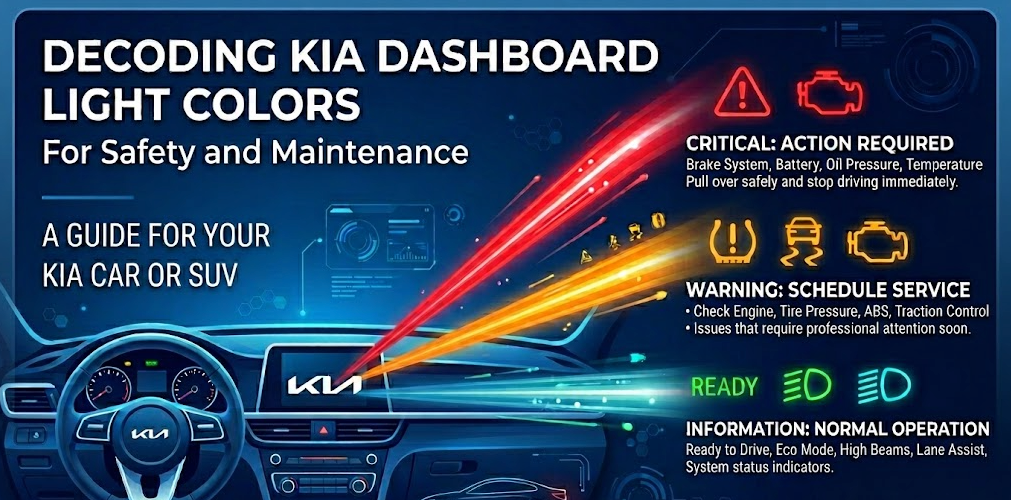
decoding kia dashboard light colors

All Kia Dashboard Lights and What They Mean

Decoding Kia Dashboard Light Colors for Safety and Maintenance Kia vehicles utilize a strategic color-coded dashboard light system that helps drivers quickly assess the status of various vehicle functions and potential issues. Recognizing what these colors signify is essential for maintaining your vehicle’s health and ensuring your safety while on the road. At the most urgent level, red dashboard lights indicate critical problems requiring immediate action. These lights warn of serious issues such as low engine oil pressure, brake system failures, or airbag malfunctions. When a red light appears, it’s imperative to stop driving as soon as safely possible to prevent damage or a hazardous situation. For example, the red oil pressure light means the engine is not receiving proper lubrication, and continuing to drive can cause severe engine damage. Similarly, a red brake warning light might suggest low brake fluid or a malfunction that greatly affects your vehicle's stopping ability, posing a serious safety risk. Table of Contents Decoding Kia Dashboard Light Colors for Safety and Maintenance Urgent Protocols When Red Dashboard Indicators Activate in Your Kia Solid Versus Flashing Check Engine Lights: Kia Owner Insights Understanding ABS and Electronic Stability Control Warnings on Kia Dashboards Managing Kia TPMS Alerts: Causes, Resets, and Sensor Replacements Critical Procedures for Responding to Kia’s Red Engine Oil Pressure Alerts Unique Dashboard Alerts in Kia Electric Vehicles: What the Turtle Light Indicates Frequent Dashboard Warnings: Common Causes and Preventative Care Strategies for Kia Models Benefits of Checking Kia Dashboard Lights Without Starting the Engine Advanced Dashboard Warning Technologies in the 2026 Kia Lineup Why Kia of Daphne Is Your Trusted Partner for Dashboard Light Diagnosis and Repairs Kia Dashboard Lights: The Color Code Guide Yellow or orange lights typically serve as caution indicators. They highlight problems that should be addressed soon but do not usually require immediate cessation of driving. A common yellow light is the check engine warning, which can mean anything from a loose gas cap to a sensor malfunction affecting emissions. It is a prompt to schedule a diagnostic check to avoid more costly repairs down the road. Another frequent caution light is the Tire Pressure Monitoring System (TPMS) alert, which indicates tire pressure levels are outside the recommended range. Proper tire inflation is vital for efficient handling, fuel economy, and tire longevity, so paying attention to this light helps preserve your vehicle’s performance. Green, blue, or white lights on your Kia’s dashboard usually represent system status confirmations rather than warnings. For instance, a blue light often shows that high beams are active, while green lights might indicate that cruise control or turn signals are engaged. These colors reassure you that certain features are operating correctly, allowing you to focus on driving safely. Understanding this color hierarchy can help you respond promptly and appropriately to dashboard alerts. In Daphne, Alabama, if your Kia’s dashboard signals require service or inspection, the team at Kia of Daphne is ready to assist. You can Schedule Service Now to ensure your vehicle receives expert care. For planning regular upkeep, consult our Learn About Preventative Maintenance resource to keep your Kia running smoothly. If you’d like directions to our service center, click here to Get Directions to Kia of Daphne, or (251) 621-2277 to speak with our service experts directly. By familiarizing yourself with the meaning behind each dashboard color and corresponding alert, you build confidence in managing your Kia’s needs proactively. This knowledge helps prevent minor concerns from turning into costly repairs and supports consistent vehicle reliability and safety on Daphne’s roads. Schedule Service Now Get expert help for dashboard warning lights and routine maintenance. Schedule Service Now Learn About Preventative Maintenance See how routine service helps keep your Kia running smoothly. Learn About Preventative Maintenance Urgent Protocols When Red Dashboard Indicators Activate in Your Kia When a red warning light illuminates on your Kia’s dashboard, it signals a critical condition requiring immediate action. These lights are designed to catch your attention because they indicate serious malfunctions that could threaten your safety or lead to significant mechanical damage. Prompt response can prevent costly repairs and ensure your vehicle operates safely. The first priority upon noticing a red dashboard light is to pull over safely as soon as possible. Continuing to drive risks further harm to your Kia and can jeopardize your well-being. For example, a red engine oil pressure warning means the engine is not receiving sufficient lubrication. Ignoring this may cause irreversible engine damage in minutes. Similarly, a red brake warning could imply dangerously low brake fluid or a failure in the braking system, reducing your car’s stopping ability. Once stopped, consult the Kia owner’s manual to confirm the warning’s specific meaning and suggested immediate steps. Many red alerts need professional diagnosis, as they could involve complex systems requiring specialized tools to identify faults accurately. At this stage, avoid trying to drive further or performing repairs on your own unless you have the expertise. If your vehicle’s red indicator relates to an urgent mechanical issue, arrange for professional assistance immediately. Contacting a certified Kia service center ensures technicians can provide precise diagnostics and repairs using authentic Kia components that maintain your vehicle’s integrity and warranty. Handling these warnings through expert service prevents escalation and supports long-term vehicle reliability. For those interested in upgrading their vehicle while addressing urgent maintenance, browse our Shop Used Vehicles Priced Under MSRP or consider getting Get Pre-Approved For Credit for a smoother buying experience. When you're ready, feel free to Schedule A Test Drive to explore your next Kia. Taking immediate and informed action when red dashboard lights activate is crucial for your safety and your Kia’s longevity. Proper attention and professional care preserve vehicle function and your confidence every time you get behind the wheel. Schedule Service Now Schedule Service Now Schedule A Test Drive Solid Versus Flashing Check Engine Lights: Kia Owner Insights The check engine light on your Kia’s dashboard is an important indicator of your vehicle’s engine and emissions system health. Understanding the difference between a steady and a flashing check engine light can help you respond effectively and prevent serious damage. A solid check engine light generally points to a non-immediate issue that the vehicle’s onboard computer has detected. Common causes include minor sensor malfunctions, a loose fuel cap, or slight irregularities in the emissions system. While the vehicle may still be drivable with a steady light on, it’s advisable to have a diagnostic check scheduled soon to identify and address the underlying problem before it escalates. Delaying service could result in reduced fuel efficiency or worsening mechanical conditions. In contrast, a flashing check engine light warns of a more serious problem that requires urgent attention. This flashing often signals engine misfires, which can rapidly damage the catalytic converter—a critical and expensive emission-control component. Driving with a flashing light risks severe engine damage and potential safety hazards. When this happens, you should reduce speed, minimize acceleration, and arrange for professional inspection as soon as possible. Kia vehicles benefit from advanced diagnostic technology that allows trained technicians to accurately pinpoint the cause behind any check engine light. Certified experts can replace faulty sensors, ignition parts, or emission control components using genuine Kia parts designed to maintain your vehicle’s warranty and performance standards. If your check engine light changes from solid to flashing or remains illuminated after repairs, it's important to revisit a qualified service center without delay. Kia of Daphne’s knowledgeable service team is available to assist you, ensuring your vehicle continues to operate safely and efficiently. For a convenient service experience or to explore your options for a quality used vehicle, browse our Browse Used Inventory or speak with our knowledgeable team at Meet Our Staff. Additionally, you can Explore Kia Financing Options to find a solution that fits your budget. Understanding ABS and Electronic Stability Control Warnings on Kia Dashboards Your Kia’s Anti-lock Braking System (ABS) and Electronic Stability Control (ESC) lights are key to alerting you about critical safety features that help maintain vehicle control during challenging driving conditions. These indicators, typically yellow or amber, inform you when there is a malfunction or when the system is actively assisting to keep your Kia stable and secure. The ABS warning light usually appears as “ABS” inside a circle and signals potential faults within the anti-lock brake system, which prevents wheel lockup during emergency braking. If this light stays illuminated, it could mean that the system isn’t functioning correctly, although your regular brakes will still work. However, loss of ABS can compromise your ability to steer during hard braking, especially on wet or slippery roads. It’s important to have the system inspected as soon as possible to restore full braking functionality. Similarly, the ESC light, sometimes labeled as “ESC” or “ESP,” monitors your vehicle’s stability control system that helps prevent skidding or loss of traction in sharp turns or slippery surfaces. A flashing ESC light indicates that the system is actively intervening to maintain control, which is normal during challenging maneuvers. But if it remains steadily lit, that suggests a problem with the system’s components, such as sensors or wiring faults, potentially reducing your vehicle’s handling safety. Since ABS and ESC systems rely on sensors, wiring, and control modules, timely diagnostics are essential for pinpointing failures. Certified technicians at Kia of Daphne use specialized tools to accurately diagnose these warnings and complete repairs using genuine Kia parts that uphold your vehicle’s safety standards and warranty coverage. If you notice these warning lights, arranging a service appointment quickly ensures peace of mind and continued reliable braking performance. You can also explore service and parts specials to maintain your Kia’s advanced safety systems affordably. For those considering a vehicle upgrade, browse our CARFAX 1-Owner Vehicles and apply for financing to find a Kia that meets your safety and performance expectations. Understanding and reacting promptly to ABS and ESC indicators protects your Kia’s handling integrity and contributes to safer driving on every trip. Managing Kia TPMS Alerts: Causes, Resets, and Sensor Replacements The Tire Pressure Monitoring System (TPMS) in your Kia plays a vital role in ensuring safe and efficient driving by continuously monitoring the air pressure inside each tire. When the TPMS indicator light blinks or stays illuminated on your dashboard, it signals that attention is needed—either due to actual tire pressure issues or sensor malfunctions that affect system accuracy. One common cause for a blinking TPMS light is a loss of communication between the sensors and your vehicle’s onboard computer. This can happen if a sensor’s battery is depleted, if there is damage to the sensor itself, or if interference disrupts the signal. If the light remains steady, it often means that one or more tires have pressure levels outside the manufacturer’s recommended range, which can lead to compromised handling and reduced fuel efficiency. Addressing a TPMS alert begins with manually checking tire pressures using an accurate gauge, adjusting them to the precise levels specified in your Kia’s owner’s manual or on the sticker inside the driver’s door. Once tire pressures are corrected, some Kia models automatically reset the TPMS after a short drive. Others require a manual reset using the vehicle’s infotainment system or a specific sequence of ignition and button presses outlined in the manual. If the TPMS light continues blinking or stays on after pressures are reset, sensor replacement may be necessary. TPMS sensors typically have a lifespan aligned with battery life, which averages 5 to 10 years. Faulty or damaged sensors should always be replaced with authentic components to ensure proper functionality and compliance with safety standards. At Kia of Daphne, we provide customers with access to high-quality OEM sensors and expert installation to restore your system’s accuracy. You can visit our parts department, order genuine parts, or order genuine Kia parts directly to maintain your Kia’s integrity. Regularly maintaining proper tire pressure and promptly addressing TPMS alerts contributes to safer driving, enhanced fuel economy, and longer tire life. For professional guidance or sensor service, our technicians at Kia of Daphne are ready to assist you with reliable diagnostics and repairs. Order Genuine Parts Order Genuine Parts Visit Our Parts Department Critical Procedures for Responding to Kia’s Red Engine Oil Pressure Alerts When your Kia’s red engine oil pressure light comes on, it signals a potentially severe issue requiring immediate intervention. This alert means that your engine’s oil pressure is dangerously low, which can cause insufficient lubrication and lead to accelerated wear or even engine failure. Swift action is essential to protect your vehicle’s critical components. First, safely pull off the road and turn off the engine to prevent further damage. Continuing to drive under low oil pressure increases the risk of serious mechanical failure. After stopping, inspect for visible oil leaks beneath the car. If you feel comfortable and knowledgeable, check the oil level using the dipstick. If the oil is low, adding the correct type of motor oil may temporarily alleviate the problem, but this is not a long-term solution. If the oil level appears normal, the issue might lie with the oil pump, a clogged oil filter, or a faulty oil pressure sensor. Such problems require professional diagnosis to accurately determine the root cause. At this stage, avoid restarting your vehicle without proper inspection, as doing so could worsen engine damage. Scheduling service with certified technicians familiar with Kia vehicles ensures that any underlying faults are identified and addressed promptly. Repairs might involve replacing worn parts or performing a thorough engine inspection with specialized diagnostic tools. Using genuine Kia components is crucial for maintaining optimal performance and protecting your vehicle’s warranty. For drivers considering a reliable used Kia as a replacement or upgrade, explore our Learn About Certified Pre-Owned options or check current View Pre-Owned Specials. If you wish to assess the trade-in value of your current vehicle, use our Value Your Trade-In tool for a quick estimate. Addressing red oil pressure warnings promptly preserves your Kia’s engine health and maximizes its lifespan, ensuring dependable performance on every journey. Unique Dashboard Alerts in Kia Electric Vehicles: What the Turtle Light Indicates Kia’s electric vehicles, including models like the EV6 and EV9, feature dashboard alerts tailored specifically to electric drivetrain systems, which differ from traditional gasoline-powered cars. One distinctive symbol is the turtle light, an important indicator that signals a reduction in vehicle power to protect critical components such as the battery and electric motor. When the turtle light appears, it typically means the EV has entered a limited power mode to conserve remaining battery life or prevent damage due to detected system abnormalities. For example, this can happen when the battery charge is critically low, or when the vehicle’s management system senses an electrical issue that could affect performance or safety. The turtle icon serves as a visual cue to slow down and avoid heavy acceleration, helping to extend driving range and minimize stress on the electric drivetrain. Drivers encountering the turtle light should adjust their driving behavior by easing off the throttle and seeking a charging station as soon as possible, since the reduced power mode is designed as a protective measure rather than a fix. Ignoring this warning risks further battery depletion and potential shutdown of the electric motor, which could leave the vehicle immobilized. Given the unique technology in Kia’s EV lineup, professional evaluation is essential if the turtle light remains illuminated or flashes frequently. The certified technicians at Kia of Daphne possess specialized expertise and diagnostic tools to assess electric powertrain components and carry out necessary repairs or software updates with genuine Kia parts. If you’re exploring electric options, browsing our EV Hybrid Inventory allows you to see the latest models featuring advanced monitoring systems like the turtle light. Proper care and understanding of these alerts help maximize your EV investment while ensuring a safe, efficient driving experience. You can also Browse New Inventory to find the latest Kia models or Search All Inventory to explore a wider selection. Frequent Dashboard Warnings: Common Causes and Preventative Care Strategies for Kia Models Dashboard warning lights can illuminate for various reasons, often signaling issues that range from minor to severe. Understanding common causes behind these alerts helps Kia owners maintain their vehicles more effectively and avoid unnecessary repairs. One frequent trigger for dashboard warnings is sensor malfunction. Sensors such as oxygen sensors, mass airflow sensors, or tire pressure monitoring system components can become dirty, corroded, or damaged over time. This degradation causes inaccurate readings, leading to persistent warning lights even when the underlying systems function properly. Regular inspections and cleanings during routine maintenance can prevent this problem. Another common cause is fluctuating or low fluid levels. Insufficient engine oil, coolant, brake fluid, or transmission fluid often activates dashboard alerts. Monitoring fluid levels and ensuring timely top-offs or replacements according to your Kia’s maintenance schedule helps keep these warnings at bay. Neglecting fluid maintenance can escalate wear on critical parts, leading to costly repairs. Electrical system difficulties, such as battery deterioration or charging system faults, also provoke dashboard alerts. For example, a failing alternator or a weak battery can cause the battery warning light to stay lit. Regular battery tests and charging system evaluations during service visits allow early detection and replacement before failure. Wear or damage to brake components, including worn pads or ABS sensor issues, commonly triggers brake system warnings. Maintaining scheduled brake inspections ensures safe stopping power and reduces unexpected alerts. Taking proactive maintenance steps such as following manufacturer-recommended service intervals, using genuine Kia parts, and addressing alerts promptly prevents frequent dashboard warnings. Kia of Daphne’s certified technicians offer detailed diagnostics and skilled repair services to help you keep your vehicle in top condition. If you’re considering a vehicle upgrade, explore our Find Your Used Car selection or Schedule Used Car Test Drive to experience dependable performance firsthand. You can also browse our Find Your Dream Car inventory for the latest models. By recognizing and addressing the typical triggers behind dashboard lights, Kia owners can extend their vehicle’s lifespan and enjoy safer, more reliable driving. Additional advice on maintaining used cars can be found in our Learn Used Car Buying Tips guide, helping you make informed decisions on maintenance and vehicle care. Find Your Used Car Browse dependable used vehicles available now. Find Your Used Car Schedule Used Car Test Drive Get behind the wheel and experience dependable performance firsthand. Schedule Used Car Test Drive Find Your Dream Car Explore the latest Kia models and available inventory. Find Your Dream Car Benefits of Checking Kia Dashboard Lights Without Starting the Engine Inspecting your Kia’s dashboard lights without starting the engine offers several practical advantages that support proactive vehicle care. By simply turning the ignition to the accessory or “on” position, you activate the self-diagnostic system, causing all the dashboard warning lights to briefly illuminate. This initial test confirms that the indicator bulbs and electronic circuits are functioning correctly before you start driving. Performing this check helps you detect any immediate issues early—such as alerts related to low oil pressure, tire problems, or electrical faults—without engaging the engine or draining battery power. It’s particularly useful when preparing for long drives or after your vehicle has been idle for a while, giving you peace of mind that your Kia’s critical systems are ready for safe operation. Regularly checking the dashboard lights in this way aids in early problem recognition, allowing timely scheduling of maintenance with professional technicians. Catching warning signals before they escalate helps prevent potential breakdowns and costly repairs, ensuring your Kia’s reliability. At Kia of Daphne, we encourage drivers to embrace this simple diagnostic routine as part of responsible vehicle ownership. For additional benefits, explore why so many customers choose our dealership and entrust their service needs to our expert team. Additionally, if you're considering an upgrade, value your trade-in with us to get the best offer. Keeping a close eye on dashboard indicators without starting your engine plays an essential role in maintaining your Kia’s performance and safety over time. Advanced Dashboard Warning Technologies in the 2026 Kia Lineup The 2026 Kia models feature cutting-edge dashboard warning systems designed to provide real-time, precise feedback on vehicle health and operational status. These innovations elevate driver awareness by combining advanced sensor technology with intuitive visual alerts tailored specifically to Kia’s diverse lineup, including hybrids and electric vehicles. Central to these systems is the use of high-resolution LED displays integrated into the instrument cluster, providing crisp, clear signals visible in all lighting conditions. The color-coding scheme—from urgent red alerts to informational green and blue indicators—helps drivers quickly interpret the severity and nature of any issue. In addition, some models employ customizable digital clusters that adapt display priorities depending on driving scenarios, highlighting critical warnings during higher-risk conditions such as highway travel or off-road excursions. The 2026 Kia models also utilize enhanced onboard diagnostic protocols, leveraging CAN bus and OBD-II technologies for comprehensive system monitoring. This allows the vehicle to detect and communicate faults across engine performance, braking, emissions, and electrical systems with high accuracy. For example, tire pressure monitoring now relies on direct pressure sensors with faster recalibration and error detection, ensuring safer handling and early detection of leaks or sensor failures. Hybrid and electric models benefit from uniquely programmed alerts, such as battery health warnings and drivetrain protections like the turtle light. These specialized indicators are part of Kia’s commitment to ensuring optimal performance and longevity of electrified powertrains while educating drivers on energy conservation. Drivers interested in learning more about these technologies or exploring how to interpret dashboard alerts can enhance their knowledge by viewing our Watch Our Video Showcase. Additionally, prospective buyers may Get Pre-Approved For Financing to experience these innovative features firsthand. For those planning their budgets, our Calculate Your Payments provides valuable assistance tailored to your financial needs. Harnessing these advanced dashboard systems reinforces Kia’s dedication to safety, reliability, and driver empowerment for the modern vehicle owner. Why Kia of Daphne Is Your Trusted Partner for Dashboard Light Diagnosis and Repairs When it comes to understanding and addressing dashboard warnings on your Kia, having reliable, expert support is essential. Kia of Daphne stands out as the trusted choice for comprehensive dashboard light diagnostics and repairs, combining advanced technology with specialized knowledge of Kia vehicles. Our team of certified technicians is trained specifically to interpret the full range of Kia dashboard alerts, ensuring that no issue goes unnoticed or untreated. We utilize cutting-edge diagnostic tools designed for Kia’s unique onboard systems. This precision equipment allows us to swiftly identify the precise cause behind each warning light, from sensor faults to more complex mechanical concerns. Paired with our commitment to using only genuine Kia parts, this approach guarantees repairs that maintain your vehicle’s performance and preserve its warranty protection. Located conveniently at 29816 Frederick Blvd in Daphne, our service center offers a seamless experience, from your first call to the final repair. Whether you’re reacting to a sudden warning or scheduling routine maintenance, our knowledgeable staff ensures your Kia receives attentive care tailored to its specific needs. To experience expert service that keeps your Kia performing at its best, you can Get Directions to Kia of Daphne or (251) 621-2277 for assistance. Learn more about why customers choose us by visiting our Discover Why Buy From Us page. Rely on Kia of Daphne to keep your vehicle safe, reliable, and responsive to every indicator on the dashboard. Kia Dashboard Lights: The Color Code Guide What does it mean when a Red warning light appears on my Kia dashboard? A red light on your dashboard is the most urgent signal your Kia can give you and should be treated with the same seriousness as a stoplight. These lights indicate a critical safety issue or a mechanical problem that could lead to catastrophic engine failure if ignored. If you see a red symbol—such as the oil pressure "dripping can" or the engine temperature "thermometer in water"—you should pull over to a safe location as soon as possible and turn off the engine. Driving with a red warning light active can result in expensive repairs or even a dangerous breakdown on I-10. It is always best to have your vehicle towed to Kia of Daphne for an immediate inspection when a red light is illuminated. How should I react to Yellow or Amber dashboard lights? Yellow or amber lights are "caution" signals, indicating that a system is not working correctly or that a maintenance task is overdue. While these lights generally don't require you to pull over immediately, they are not meant to be ignored. Common yellow lights include the "Check Engine" symbol (a stylized engine block) and the Anti-lock Braking System (ABS) indicator. When a yellow light appears, your Kia is telling you that it needs professional attention soon to prevent a more serious problem from developing. You can typically continue your drive home to Daphne or Spanish Fort, but you should schedule a service appointment within the next day or two to have the diagnostic codes scanned by our technicians. What do the Green and Blue lights on my Kia dashboard indicate? Unlike the urgent warning colors, green and blue lights are purely informational and let you know that a specific system is active and functioning as intended. For instance, a green "ECO" or "SPORT" light tells you which drive mode is currently engaged, while a green "AUTO HOLD" light confirms that the vehicle is holding the brakes for you at a stoplight. Blue lights are most commonly used for your high-beam headlights or to indicate that the engine is still cold. A blue thermometer icon is perfectly normal when you first start your car on a chilly morning in Daphne; it simply means the engine hasn't reached its optimal operating temperature yet and should disappear after a few minutes of driving. What is the difference between a solid yellow Check Engine light and a flashing one? Understanding the behavior of your Check Engine light is vital for the health of your engine. A solid yellow light usually indicates a non-emergency issue, such as a faulty oxygen sensor or even a loose gas cap, which can often be fixed with a simple adjustment or part replacement. However, a flashing yellow Check Engine light is a major emergency signal. This indicates a "severe misfire" that is sending unburned fuel into your exhaust system, which can destroy your expensive catalytic converter in just a matter of minutes. If you see this light blinking, you must stop driving immediately, turn off the engine, and call for a tow to avoid thousands of dollars in secondary damage. Why does my Tire Pressure (TPMS) light come on during cold Alabama mornings? The Tire Pressure Monitoring System (TPMS) light looks like a yellow horseshoe with an exclamation point, and it’s one of the most common lights we see here in Baldwin County. Because air contracts when it gets cold, a sudden drop in temperature—common during our Gulf Coast winter "cold snaps"—can cause your tire pressure to dip just below the safety threshold, triggering the light. While it might go off once the tires warm up from driving, you should always check your pressures at a local station. Driving on under-inflated tires not only reduces your fuel economy but also affects your Kia's handling and can lead to a dangerous blowout on the highway. What should I do if the Red Oil Pressure light comes on while I’m driving? The red oil pressure light is perhaps the most dangerous symbol on your dashboard because it means your engine is no longer being properly lubricated. Without sufficient oil pressure, the metal components inside your engine will grind against each other, creating intense heat that can "seize" the engine in seconds. This is not just a "low oil" reminder; it is a "stop now" emergency. If this light appears, safely pull off the road and shut down the vehicle. Check your oil dipstick—if it’s bone dry, you may have a major leak. Do not attempt to restart the engine until the oil level is corrected and the system has been checked by a professional. What is the difference between the Brake warning light and the ABS light? It is important to distinguish between the red "BRAKE" light and the yellow "ABS" light. The yellow ABS light indicates a fault in the computer-controlled anti-lock system; your car will still stop using traditional braking, but you won't have the "pump-and-steer" safety feature in an emergency. The red "BRAKE" light, however, can mean one of three things: your parking brake is still engaged, your brake fluid is dangerously low, or there is a serious hydraulic failure in the system. If you've confirmed the parking brake is off and the red light stays on, your braking power could be compromised. You should test your pedal feel carefully and bring the car to Kia of Daphne immediately to ensure your primary safety system is intact. © 2026 Kia of Daphne. All rights reserved.